
Polyethylene, as a widely used thermoplastic material, has become an indispensable material in modern industry and daily life due to its excellent chemical stability, good mechanical properties, and diverse processing methods.
However, not all polyethylene is the same. Different types of polyethylene exhibit significant differences in molecular structure, density, branching degree, crystallinity, and molecular weight, resulting in considerable variations in their mechanical strength, flexibility, heat resistance, chemical resistance, processing methods, and service life.
This article provides a detailed introduction to the main types of polyethylene,covering their material properties, production processes, and typical applications to help readers gain a comprehensive understanding of the diversity of polyethylene and its important role across various industries.
What Is Polyethylene?
Polyethylene (PE) is a versatile thermoplastic polymer primarily composed of repeating ethylene monomer units, with the chemical formula (C2H4)n.
It is one of the most widely produced plastics globally due to its excellent chemical resistance, durability, and adaptability to various manufacturing processes.
Currently, the global annual production of polyethylene has exceeded 110 million tons, accounting for about 30%-35% of the total plastic production, making it the undisputed leader in the plastics industry.
PE injection molding is a widely used manufacturing process that can efficiently and repeatedly produce complex and precise polyethylene parts, making it an ideal choice for manufacturing containers, bottle caps, automotive components, and household items.
Material Properties Of Polyethylene
Polyethylene exhibits a unique combination of material properties that make it highly versatile and widely used across various industries. Its properties are largely influenced by the polymer’s molecular structure, density, and degree of branching.
Chemical Resistance
One of the key characteristics of polyethylene is its excellent chemical resistance. It is resistant to many acids, bases, and solvents, which allows it to be used safely in packaging and containers for chemicals and food products.
However, it is not resistant to strong oxidizing agents such as concentrated nitric acid and fuming sulfuric acid, which can degrade the material.
Thermal Properties
Polyethylene melt behavior varies depending on the specific type, influencing processing methods such as extrusion and molding. For example, LDPE has a lower melting point and more fluid melt compared to HDPE, which has a higher melting point and greater melt strength.
Mechanical Properties
The mechanical properties of polyethylene include good impact resistance and flexibility, especially in lower density variants like LDPE and LLDPE.
HDPE, on the other hand, demonstrates high abrasion resistance, tensile strength, and rigidity, making it suitable for structural applications. UHMWPE stands out for its exceptional toughness, wear resistance, and low friction, which is why it is used in demanding applications such as artificial joints and bulletproof vests.
Electrical Insulation Properties
Polyethylene is also an excellent electrical insulator, with a dielectric constant ranging from 2.2 to 2.4. This makes it valuable in electrical and electronic applications, including cable insulation and protective coatings.
Despite its many advantages, polyethylene is not readily biodegradable, presenting environmental challenges related to plastic waste management and pollution.
Research is ongoing to develop bio-based polyethylene and methods to enhance its recyclability and environmental sustainability.
The Manufacturing Processes Of Polyethylene
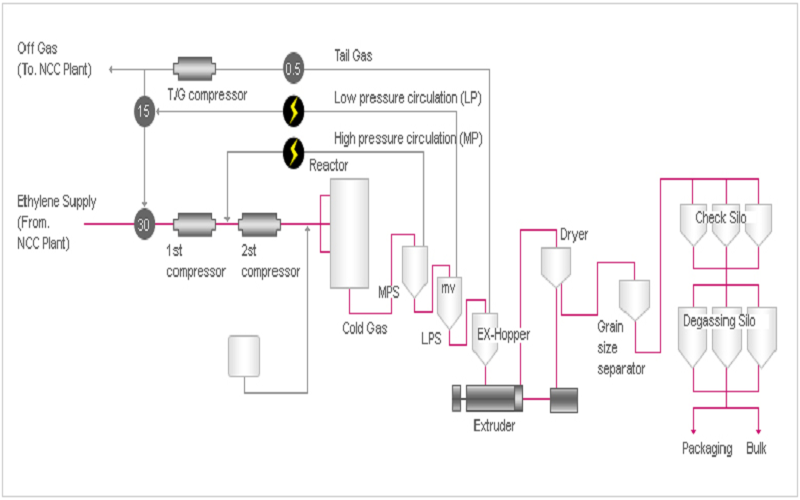
The manufacturing of polyethylene begins with the polymerization process, where ethylene molecules (C2H4) are chemically bonded to form long polymer chains.
This polymerization process is fundamental in determining the polymer structure, which directly influences the properties and applications of the resulting polyethylene.
There are two primary polymerization processes used in polyethylene production: high-pressure radical polymerization and low-pressure catalytic polymerization.
High-Pressure Polymerization Process: This method is mainly used to produce Low-Density Polyethylene (LDPE). It involves free radical polymerization of ethylene under high pressure (up to 3000 bar) and high temperature (around 200-300°C), resulting in highly branched polymer chains that give LDPE its low density and good flexibility.
Low-Pressure Polymerization Process: This process produces High-Density Polyethylene (HDPE), Linear Low-Density Polyethylene (LLDPE), and Medium-Density Polyethylene (MDPE). It operates under lower pressure (1-50 bar) and temperature (70-300°C), using Ziegler-Natta or Phillips catalysts.
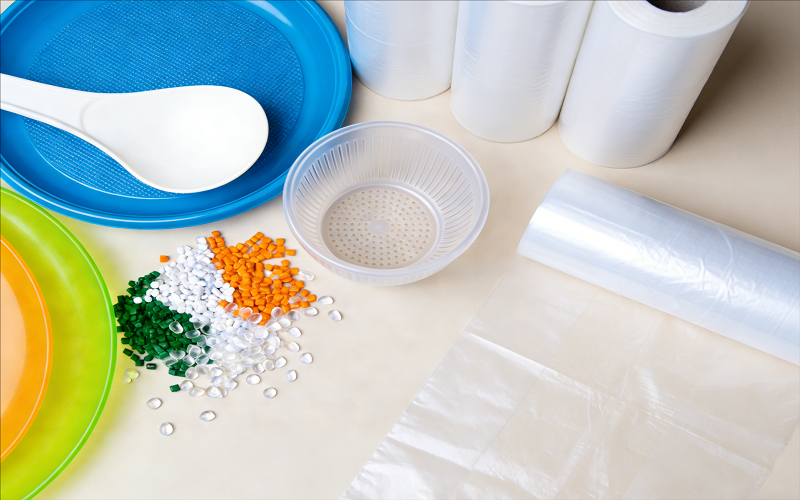
Polyethylene resins in pellet form are commonly used as raw material for extrusion and injection molding processes, facilitating mass production of diverse polyethylene products.
These polyethylene pellets are indispensable intermediate raw materials in manufacturing processes involves several processing techniques, such as extrusion molding, injection molding, blow molding, and rotational molding, each suited for different applications and product forms.
The choice of manufacturing process and catalyst system affects the polymer’s structural characteristics , which in turn determines the material’s mechanical strength, chemical resistance, and suitability for specific applications such as food packaging, pipe manufacturing, or film production.
Main Types Of Polyethylene
Polyethylene is categorized into several main types based on its density, molecular structure, and branching characteristics. These differences significantly affect their physical properties and suitability for various applications.
The primary types of polyethylene include Low-Density Polyethylene (LDPE), Linear Low-Density Polyethylene (LLDPE), Medium-Density Polyethylene (MDPE), High-Density Polyethylene (HDPE), Ultra-High Molecular Weight Polyethylene (UHMWPE), and Cross-Linked Polyethylene (PEX or XLPE).
Low-Density Polyethylene (LDPE)
LDPE features a highly branched molecular structure, resulting in a lower density range typically between 0.910 and 0.940 g/cm³.
This branching reduces the polymer’s crystallinity, making LDPE more flexible and transparent but with lower tensile strength and heat resistance compared to higher-density polyethylenes.
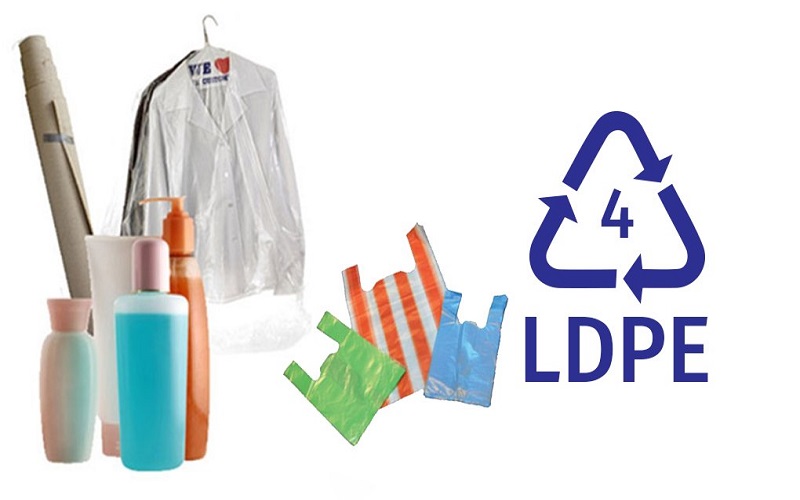
LDPE exhibits excellent impact resistance and is widely used for plastic bags, plastic wrap, squeeze bottles and extrusion coatings. Its superior flexibility and puncture resistance make it a preferred material for packaging materials and plastic films.
Linear Low-Density Polyethylene (LLDPE)
LLDPE is produced by copolymerization of ethylene with short-chain alpha-olefins, resulting in a density range of 0.915–0.925 g/cm³ and improved tensile strength and puncture resistance compared to LDPE.
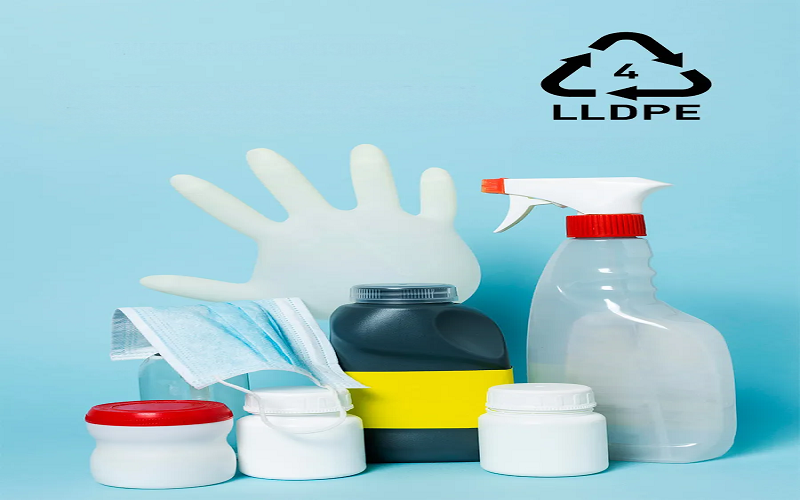
Due to its superior durability and resistance properties, LLDPE injection molding is extensively used in plastic bags, plastic wrap, agricultural films, and plastic lumber. Its linear structure allows for better processability and mechanical performance, making it a versatile material in the packaging industry.
Medium-Density Polyethylene (MDPE)
MDPE occupies the density range between 0.926 and 0.940 g/cm³, bridging the gap between LDPE and HDPE. It offers a balance of good impact resistance, tensile strength, and chemical resistance.
MDPE is less notch-sensitive than HDPE and provides better stress-cracking resistance.These properties make it suitable for applications such as piping systems, shrink films, packaging films, and carrier bags.
MDPE also finds use in industrial applications requiring superior durability and structural integrity.
High-Density Polyethylene (HDPE)
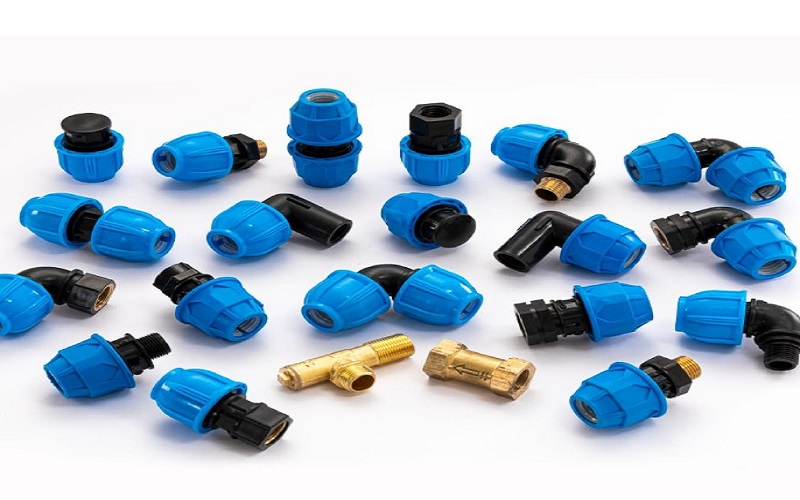
HDPE is distinguished by its mostly linear molecular structure with minimal branching, leading to a high density typically above 0.941 g/cm³.
This linear structure enables strong intermolecular forces, resulting in high tensile strength, superior abrasion resistance, and excellent chemical resistance. HDPE plastic is widely used in plastic bottles, fuel tanks, piping systems, storage tanks, and plastic lumber.
Its high molecular weight contributes to superior durability and impact resistance, making it the preferred material for many industrial applications, including automotive manufacturing and the packaging industry.
Ultra-High Molecular Weight Polyethylene (UHMWPE)
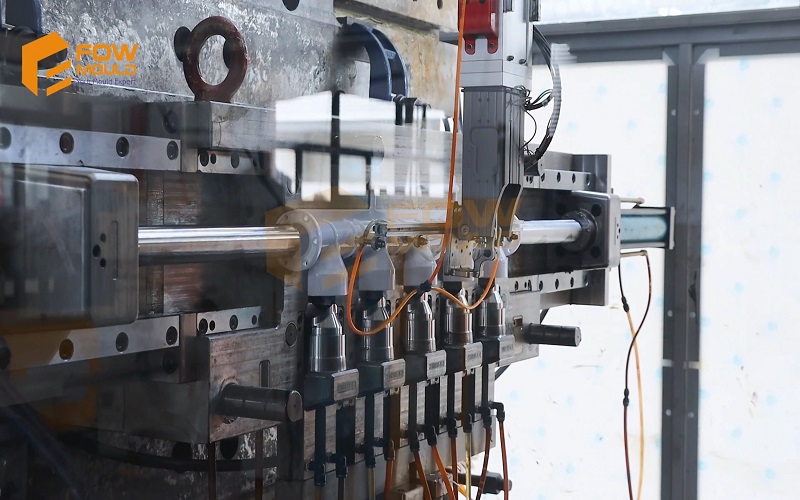
Ultra-High Molecular Weight Polyethylene (UHMWPE) has a molecular weight ranging from 3.5 to 7.5 million amu, making it extremely tough and suitable for applications such as artificial joints and bulletproof vests.
Its superior durability and shock absorption capabilities make it invaluable in sectors requiring long-lasting, resilient materials.
UHMWPE is also employed in aerospace components, where its exceptional toughness and wear resistance are critical for performance under extreme conditions.
Cross-Linked Polyethylene (PEX or XLPE)
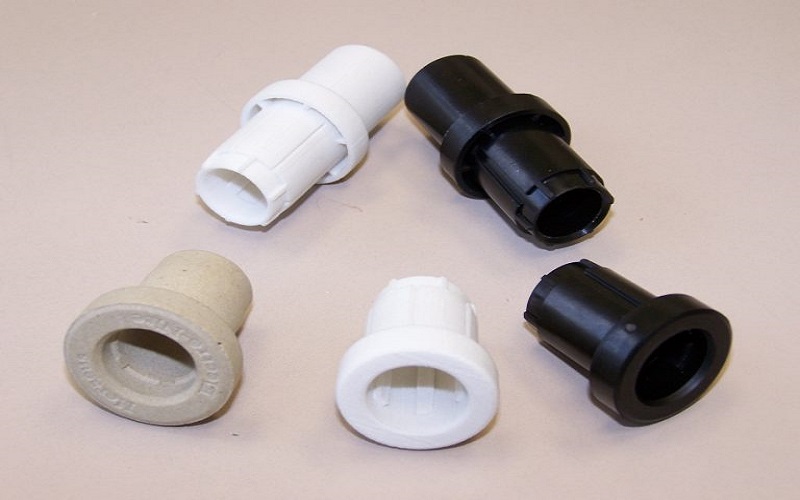
Cross-linked polyethylene is formed by chemically or physically bonding polymer chains to create a network structure. This cross-linking enhances the material’s temperature and pressure resistance, structural integrity, and chemical resistance.
PEX is extensively utilized in hot and cold water piping systems, underfloor heating, and storage tanks. The cross-linked molecular network prevents the plastic from “unzipping” under stress, providing superior durability and safety in industrial and residential applications.
.png)
Each type of polyethylene can be tailored further through additives and copolymerization to meet specific performance requirements, such as improved sound insulation, oxidation resistance, or compatibility with other materials like ethylene vinyl acetate copolymer.
Performance Indicators | HDPE | LDPE | LLDPE | UHMWPE |
|---|---|---|---|---|
Density (g/cm³) | 0.941 – 0.965 | 0.910 – 0.940 | 0.915 – 0.925 | 0.930 – 0.935 |
Crystallinity (%) | 70 – 80 | 50 – 60 | 55 – 65 | 50 – 60 |
Melting Point (°C) | 120 – 130 | 105 – 115 | 120 – 125 | 130 – 136 |
Tensile Strength (MPa) | 20 – 37 | 8 – 12 | 20 – 30 | 40 – 60 |
Flexural Modulus (MPa) | 800 – 1500 | 200 – 400 | 400 – 700 | 1000 – 1500 |
Flexibility / Impact Resistance | Relatively rigid, good impact resistance | Excellent flexibility, superior impact resistance | Good flexibility and impact resistance | Extremely high toughness and wear resistance |
Common Uses For Various Types Of Polyethylene
Packaging, construction, healthcare, automotive, and consumer goods are major industries utilizing various types of polyethylene.
Packaging
In the packaging industry, polyethylene is extensively used for manufacturing films, bags, and containers. LDPE and LLDPE are favored for flexible packaging applications like plastic bags, shrink wraps, and agricultural films due to their excellent flexibility and puncture resistance.
HDPE molding is commonly employed in rigid packaging such as milk jugs and detergent bottles, offering durability and chemical resistance essential for storing household products.
Piping
The construction sector utilizes polyethylene in piping systems, insulation materials, and geomembranes. MDPE and HDPE are often chosen for water and gas pipes because of their strength and resistance to stress cracking.
PEX is preferred for hot and cold water plumbing and underfloor heating systems due to its enhanced temperature and pressure resistance.
Automotive
In automotive manufacturing, polyethylene contributes to lightweight automotive components, improving fuel efficiency while maintaining strength and durability. UHMWPE is used in high-wear parts and protective gear, including bulletproof vests, due to its exceptional toughness and abrasion resistance.
Electronic
Additionally, polyethylene’s electrical insulating properties make it suitable for cable insulation and protective coatings. Its resistance to chemicals like sulfuric acid and hydrochloric acid adds to its utility in chemical storage and handling equipment.
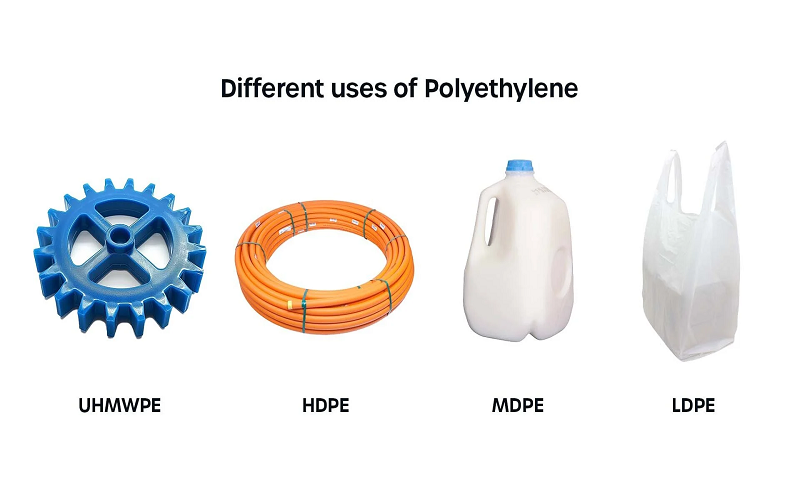
Overall, the market demand for polyethylene continues to grow, driven by its wide-ranging applications and advantageous properties. Efforts to improve recycling and reduce waste and energy consumption are ongoing to address environmental concerns associated with polyethylene use.
Application | Resin Proportion | Examples |
|---|---|---|
Film Products | LDPE-50%, HDPE-10%, LLDPE-70% | Packaging films, trash bags, cling films, agricultural films |
Injection Molding Products | HDPE-30%, LDPE-10%, LLDPE-10% | Pots, tubs, baskets, boxes, cups, toys, etc. |
Bulk Control Products | Mainly HDPE | Containers for food oils, alcohol, gasoline, and chemical reagents |
Pipe Products | Mainly HDPE | Water pipes, gas pipes |
Cable Products | Mainly LDPE | Cable insulation and protection materials |
Which Type Of Polyethylene Is Recyclable?
Most types of polyethylene are recyclable, which contributes to their widespread use and environmental management efforts.
The recyclability of polyethylene depends largely on its density, branching, and molecular structure, as well as the presence of additives or cross-linking.
Recyclability of Common Polyethylene Types
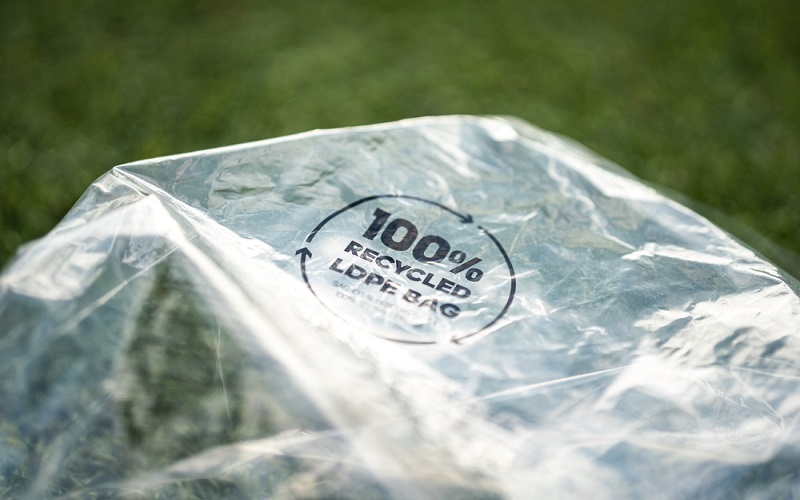
Low-Density Polyethylene (LDPE): LDPE can be recycled, often through plastic film recycling programs, and reused for items like trash can liners and floor tiles. However, its flexible film form can be hard to process in some facilities.
Linear Low-Density Polyethylene (LLDPE): LLDPE is recyclable like LDPE and used in films and packaging, but copolymers may affect recycling.
Medium-Density Polyethylene (MDPE): MDPE is recyclable but less commonly separated due to lower volume; often recycled with HDPE.
High-Density Polyethylene (HDPE): HDPE is widely recycled, accepted in most curbside programs, and turned into products like containers and plastic lumber.
Ultra-High Molecular Weight Polyethylene (UHMWPE): UHMWPE is rarely recycled conventionally due to its high molecular weight; specialized processes are needed.
Cross-Linked Polyethylene (PEX or XLPE): PEX can’t be recycled mechanically because of its cross-linked structure, but chemical recycling and energy recovery are being explored.
Recycling Codes and Identification
Polyethylene products are commonly identified by recycling codes #2 (HDPE) and #4 (LDPE) to facilitate sorting and recycling. Proper identification helps recycling facilities process materials efficiently and produce high-quality recycled resins.
Environmental Considerations
While polyethylene is recyclable, challenges remain in collecting, sorting, and processing, especially for flexible films and cross-linked variants.
Increasing recycling rates and developing advanced recycling technologies are critical for reducing plastic pollution and improving the sustainability of polyethylene products.
Japan, for example, has increased plastic recycling efforts since 2008, but still faces challenges with large amounts of plastic wrapping waste. This situation highlights a significant potential market—estimated at US$90 billion—for plastic recycling innovations and infrastructure improvements.
Future of Polyethylene Recycling
Research continues into enzymatic and microbial degradation of polyethylene, aiming to develop biological methods to break down polyethylene more efficiently.
Additionally, advances in chemical recycling technologies may enable the recovery of monomers or valuable chemicals from polyethylene waste, reducing reliance on virgin fossil resources.
Overall, understanding the recyclability of different polyethylene types is essential for manufacturers, consumers, and policymakers to promote effective waste management and environmental protection.
Conclusion
In summary, polyethylene stands as a fundamental plastic material with diverse types tailored to meet various industrial and consumer needs.
Its unique combination of chemical resistance, mechanical strength, and adaptability enables applications ranging from flexible packaging films to high-performance components in automotive and medical fields.
Understanding the distinctions among LDPE, LLDPE, MDPE, HDPE, UHMWPE, and PEX allows for informed material selection that optimizes product performance and durability.