
Injection molding is a complex multiphysics process involving multiple aspects such as flow, heat transfer, phase change, and stress. Traditional methods mainly rely on engineers’ experience and multiple physical trial moldings, which have problems of high cost, long cycles, and high risks.
Mold flow analysis uses computer-aided engineering (CAE) software to simulate the flow behavior of molten plastic in the mold, helping engineers predict and solve potential manufacturing issues. It is an indispensable and important technology in the injection molding process.
With the increasing complexity of the injection molding process, mold flow analysis not only optimizes mold design and improves product quality but also effectively reduces production costs and shortens development cycles.
This article will delve into the specific applications and multifaceted advantages of mold flow analysis in injection molding, particularly aimed at injection molding manufacturers and process engineers, helping them achieve efficient and precise production management, improve product quality, and reduce production costs.
What Is Mold Flow Analysis?
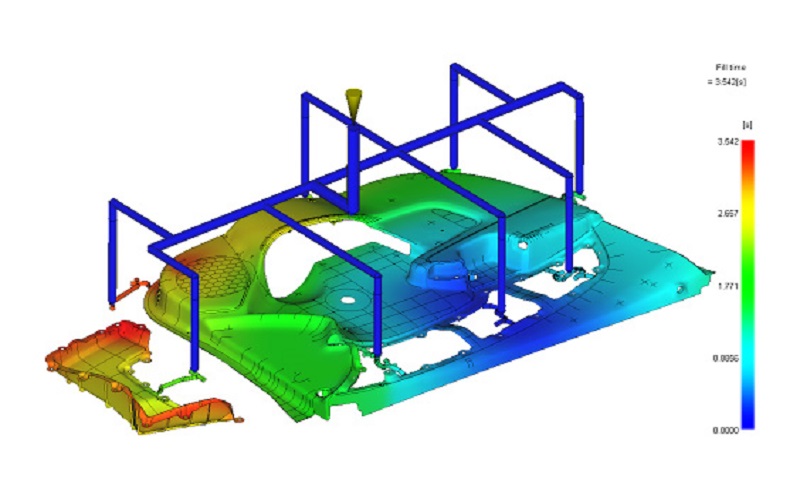
Mold flow analysis is a simulation technique that uses sophisticated mold flow analysis software to model the behavior of molten plastic as it flows into the mold cavity during the injection molding process.
By simulating the filling process, mold flow analysis helps predict flow patterns, pressure distribution, temperature distribution, and potential defects such as air traps, weld lines, and sink marks.
This analysis assists engineers in optimizing the design phase by evaluating key aspects like gate locations, mold cavity geometry, and wall thickness to ensure uniform filling and balanced flow.
It also helps in selecting appropriate materials based on their flow characteristics and mechanical properties, as well as determining optimal process parameters such as injection pressure, melt temperature, mold temperature, and packing pressure.
Mold flow analysis predicts how the material flow will behave during the filling stage and cooling phase, allowing manufacturers to minimize defects and improve part quality.
By identifying potential issues early, it contributes to cost savings and production efficiency, making the manufacturing process more reliable and efficient.
Software Options For Mold Flow Analysis In Injection Molding Process
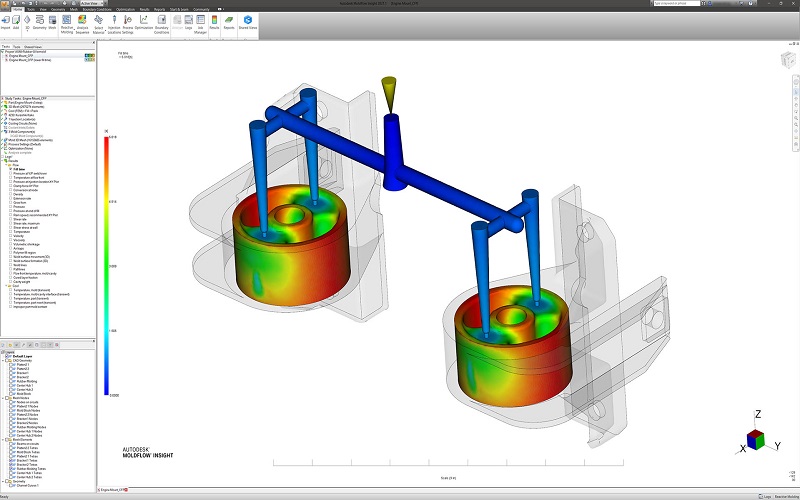
Currently, mainstream mold flow analysis software includes Autodesk Moldflow, Moldex3D, Sigmasoft, and others, which have become indispensable tools in injection molding product development.
These simulation software packages typically include extensive material databases containing thousands of plastic materials with detailed material properties like thermal conductivity, viscosity, and shear stress behavior.
Autodesk Moldflow: Autodesk Moldflow is the most widely used mold flow software, provides comprehensive tools for simulating filling analysis, cooling efficiency, warpage prediction, and gate location optimization. It supports simulation of complex geometries and can accurately predict filling behavior, cooling efficiency, and potential defect locations during the injection molding process.
Moldex3D: Moldex3D is renowned for its powerful 3D simulation capabilities, suitable for analyzing complex mold structures and multi-cavity molds. It can simulate detailed flow characteristics, helping optimize gate locations and cooling system designs to improve the quality and production efficiency of injection molded parts.
Sigmasoft: Sigmasoft excels in multi-physics coupled simulation, simultaneously considering the interactions of flow, heat conduction, and stress fields, providing support for high-precision injection molded part design.
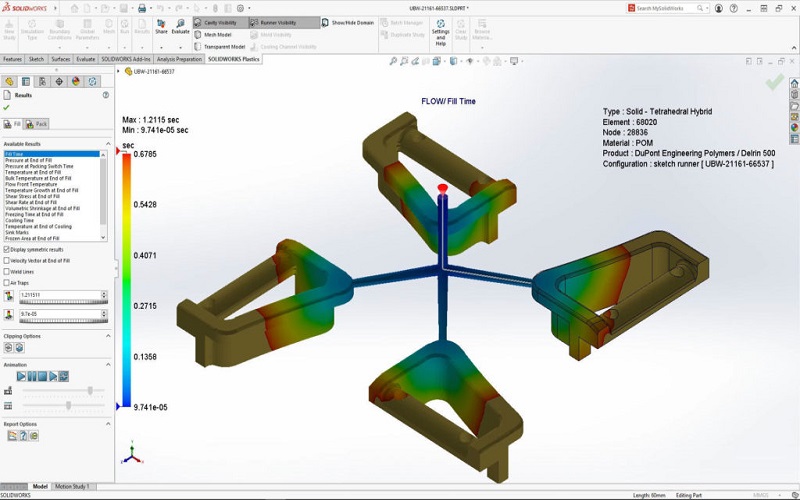
SolidWorks Plastics: Integrates directly inside the SolidWorks CAD environment for ease of use by designers, enabling seamless transition from design to simulation. This software supports detailed flow analysis, cooling simulation, and warpage prediction, helping optimize part geometry and mold design.
By using these sophisticated software tools, manufacturers can simulate actual production conditions, predict potential defects such as air entrapment and weld lines, and optimize process conditions like injection speed and cooling line layout. This leads to improved quality control, reduced cycle times, and minimized production costs.
Overall, choosing the right mold flow software is a critical step in the design process for plastic injection molding, enabling manufacturers to achieve balanced filling, uniform cooling, and high-quality injection molded parts suitable for mass production.
The Basic Process Of Mold Flow Analysis
Mold flow analysis typically follows a standardized workflow—ranging from model preparation to result optimization—that forms a complete, closed-loop process. The basic steps are as follows:
Model Preparation
The first step is preparing the 3D CAD model of the part and mold. This includes cleaning up the geometry to ensure it is suitable for simulation, defining parting lines, and identifying critical features such as thin walls, ribs, and bosses. The model is then imported into the mold flow analysis software.
Mesh Generation
The software generates a computational mesh over the part and mold geometry. The mesh divides the model into small elements where the flow equations will be solved. Mesh quality and density are crucial for accurate simulation results, especially in areas with mold complexity or thin walls.
Material Selection
Engineers select the plastic material to be used for the part from the software’s extensive material database. This database includes thousands of plastic resins with detailed properties such as viscosity, thermal conductivity, and shrinkage behavior.
Selecting the correct material, such as PC/ABS for its low shrinkage properties, is essential for accurate predictions.
Process Parameter Setup
Key injection molding process parameters are defined, including melt temperature, mold temperature, injection pressure, injection speed, packing pressure, and cooling time.
Mold flow analysis assists in estimating the clamping force required during injection to ensure the mold remains securely closed, preventing defects caused by mold separation. Non-uniform cooling causes uneven internal shrinkage leading to warpage.
Simulation Execution
The mold flow analysis software runs simulations of the filling, packing, cooling, and warpage stages. It calculates flow patterns, pressure distribution, temperature gradients, residual stresses, and potential defects such as weld lines, air traps, and potential sink marks.
Result Interpretation
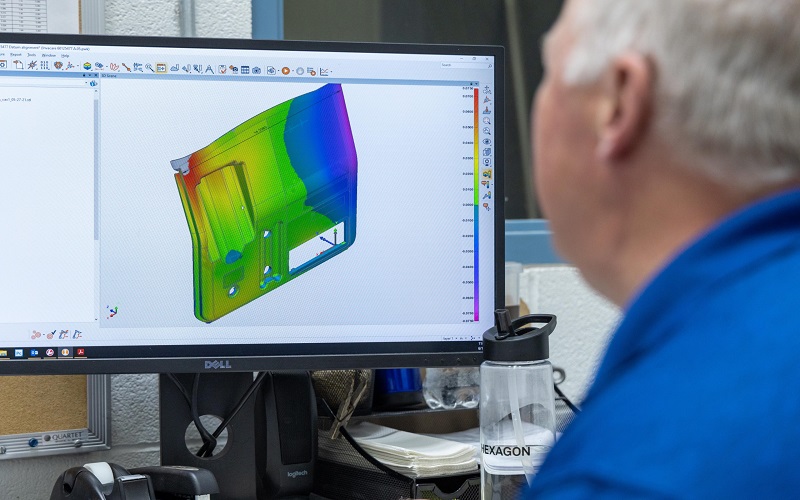
The software provides visual and numerical outputs such as contour lines showing flow fronts, pressure maps, temperature distribution, and weld line locations. Engineers analyze these results to identify areas where the plastic may flow poorly, potential weld lines may form, or residual stresses may cause warpage.
Design Optimization
Based on the simulation results, engineers can make informed decisions to optimize the mold and part design. This may include changing wall thickness, relocating gate locations to minimize weld lines, adjusting cooling channel layouts to reduce cycle times and residual stresses, or modifying the tooling process to address mold complexity.
Validation and Iteration
The optimized design is re-simulated to confirm improvements. This iterative process continues until the mold flow analysis predicts a balanced fill, minimal defects, and optimal process conditions.
By following this structured process, mold flow analysis enables manufacturers to minimize costly trial-and-error in physical mold making, reduce defects, and improve overall production efficiency.
The process optimization achieved through mold flow analysis is particularly valuable in industries with high-quality requirements and complex parts, such as the automotive industry.
Benefits Of Mold Flow Analysis
Mold flow analysis offers numerous benefits that significantly enhance the injection molding process, ensuring higher quality parts, reduced costs, and improved efficiency. Here are some of the key advantages:
1. Early Detection of Potential Defects
By simulating the injection molding process before actual production, mold flow analysis helps identify potential defects such as air traps, weld lines, sink marks, short shots, and warpage.
Detecting these issues early allows engineers to make necessary design or process adjustments, avoiding costly mold rework and production delays.
2. Optimized Mold Design
Mold flow analysis enables precise optimization of mold components including gate locations, runner systems, and cooling channels.
Mold flow analysis accounts for gate freeze and backflow prevention.Proper gate placement ensures uniform mold filling, reducing the risk of weld lines and air traps.
Optimized runner systems improve flow balance and reduce pressure drops, while efficient cooling channel design shortens cycle times and minimizes residual stresses.
3. Improved Part Quality
Through accurate prediction of flow behavior, temperature distribution, and pressure profiles, mold flow analysis helps produce parts with better dimensional accuracy, consistent surface finish, and reduced internal stresses. This leads to higher strength, better aesthetics, and improved overall performance of the injection molded parts.
4. Cost and Time Savings
By minimizing trial-and-error during mold design and manufacturing, mold flow analysis reduces the number of physical prototypes and mold modifications required. This accelerates the product development cycle, lowers tooling costs, and decreases material waste, resulting in significant cost savings for manufacturers.
8. Increased First-Run Success Rate
With thorough simulation and optimization, mold flow analysis increases the likelihood of producing defect-free parts on the first production run. This reduces downtime, scrap rates, and the need for costly troubleshooting during initial manufacturing.
In conclusion, mold flow analysis is a vital tool that empowers manufacturers to design and produce high-quality injection molded parts efficiently and cost-effectively. Its ability to predict and mitigate manufacturing challenges before production begins makes it indispensable in modern injection molding processes.
When Use Mold Flow Analysis In Manufacturing Process?
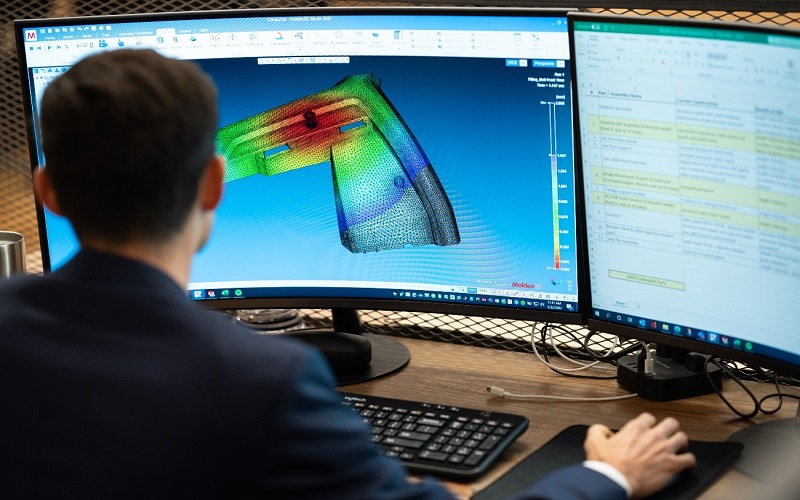
Mold flow analysis is a crucial step throughout various stages of the injection molding manufacturing process. It is not only beneficial during the initial design phase but also plays an important role during mold fabrication, process optimization, and quality control.
1. Design Phase
Early in the product design phase, mold flow analysis helps engineers validate the manufacturability of the part design.
It assists in evaluating the feasibility of complex geometries, wall thickness uniformity, and potential problem areas like thin sections or sharp corners that could cause flow hesitation or incomplete filling.
By integrating mold flow simulation early, designers can make informed decisions to modify the part geometry or select appropriate materials to ensure smooth production.
2. Before Mold Fabrication
Prior to machining the mold, mold flow analysis is used to optimize mold design features such as gate locations, runner systems, and cooling channels. This preemptive analysis reduces the risk of costly mold modifications after fabrication.
It ensures that the mold design promotes uniform filling, minimizes defects, and supports efficient cooling to reduce cycle times.
3. During Process Parameter Setup
Mold flow analysis provides valuable insights for setting optimal injection molding parameters including injection speed, pressure, temperature, and packing profiles.
By simulating different scenarios, manufacturers can establish robust process windows that accommodate material behavior and machine capabilities, leading to consistent part quality and reduced trial runs.
4. Production Phase
For high-volume manufacturing, mold flow analysis supports continuous process improvement by monitoring and optimizing cycle times, cooling efficiency, and mold wear. It helps maintain consistent quality and productivity over extended production runs.
In summary, mold flow analysis should be integrated at multiple points in the manufacturing process to maximize its benefits.
Its use enables manufacturers to anticipate and mitigate potential issues, optimize designs and processes, and ultimately produce high-quality injection molded parts efficiently and cost-effectively.
Conclusion
Mold flow analysis is an essential technology in the injection molding industry that significantly enhances product quality, reduces production costs, and shortens development cycles.
By leveraging advanced simulation software, manufacturers can predict and address potential manufacturing issues such as air traps, weld lines, and warpage before physical mold production begins.
This proactive approach optimizes mold design, material selection, and process parameters, leading to improved dimensional accuracy, uniform mold filling, and efficient cooling.
Integrating mold flow analysis throughout the design, fabrication, and production stages ensures higher first-run success rates and consistent part quality, making it a vital tool for injection molding manufacturers and process engineers striving for efficient and precise production management.