
High Density Polyethylene(HDPE) is a popular material due to its excellent processability and low moisture absorption rate. Injection molding is the most prevalent method for HDPE molding, where melted HDPE resin is injected under high pressure into a metal mold.
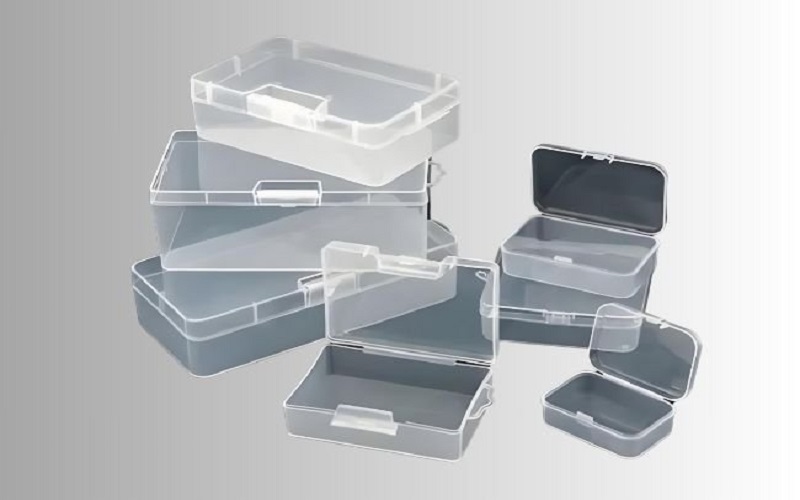
HDPE injection molding is employed to create a diverse range of injection molded hdpe products, common applications of HDPE include plastic bottles, food storage containers, and piping.
For a comparison and insight into LDPE injection molding, It offers a cost-effective and efficient solution for producing high-quality complex parts.
In this article, we will explore the key properties of HDPE, detail the injection molding process, and highlight its advantages along with diverse applications.
What Is High Density Polyethylene (HDPE)?
HDPE, or high-density polyethylene, is a commodity plastic renowned for its excellent combination of strength, durability, and chemical resistance.
Its high strength-to-density ratio makes it lightweight yet remarkably tough, ideal for a wide range of consumer and industrial products.
HDPE Properties
|
Property |
Value |
Unit |
|---|---|---|
|
Density |
0.96 |
g/cm³ |
|
Melt Temperature |
356 – 536 |
°F (180 – 280 °C) |
|
Tensile Strength |
~31.7 |
MPa |
|
Impact Resistance (Izod) |
0.69 |
J/cm |
|
Hardness |
70 |
Shore D |
|
Moisture Absorption |
0.1 |
% by weight |
|
Thermal Expansion Coefficient |
100 – 200 |
µm/m·K |
|
Shrinkage Rate |
1.5 – 4.0 |
% |
This table summarizes key HDPE properties relevant for injection molding and product design, aiding in material selection and processing considerations.
HDPE’s combination of lightweight, durability, chemical resistance, and versatility makes it an excellent material for a broad spectrum of injection molded products across many industries.
Lightweight
HDPE is lightweight with a density of around 960 kg/m³, making it suitable for thin-walled products.
Impact Resistance
HDPE plastic exhibits outstanding impact resistance, allowing it to withstand sudden forces without cracking or breaking, which is crucial for applications such as playground equipment, chemical containers, and cutting boards.
Chemical Resistance
Its chemical resistance extends to many acids, bases, and reducing agents, which ensures HDPE parts maintain their integrity even when exposed to harsh chemicals.
Environmental Resistance
One of the key advantages of HDPE is its low moisture absorption, making it highly resistant to water and ideal for outdoor applications where exposure to moisture and UV radiation is common.
Although HDPE is flammable, additives can be incorporated to improve its fire resistance for safer use in various environments.
FDA Grades
Additionally, HDPE plastic is FDA-approved in certain grades, making it suitable for food contact and medical applications.
The melt temperature of HDPE typically ranges between 356°F to 536°F, allowing for efficient injection molding processes that can produce complex parts with consistent shape and durability.
HDPE’s overall toughness and recyclability make it a cost-effective choice for manufacturing large quantities of durable products.
However, designers must consider certain disadvantages such as its susceptibility to environmental stress cracking and relatively high shrinkage during cooling, which can affect the final product’s dimensional stability.
Advantages Of HDPE Molding
HDPE is a thermoplastic polymer supplied in pellet form for injection molding. Using injection molding to produce HDPE parts has several benefits:
Cost-Effective Production
HDPE is classified as a commodity plastic and is relatively low-cost compared to other plastics, such as polypropylene. HDPE injection molding services can provide fast turnaround times for prototypes and production parts.
Excellent Impact Resistance
Injection molded HDPE parts exhibit high impact resistance, providing durability and toughness for demanding applications such as playground equipment and chemical containers.
Lightweight and Strong
HDPE offers a high strength-to-weight ratio, allowing for lightweight yet robust parts suitable for various industrial and consumer products.
Environmentally Friendly
As a recyclable thermoplastic polymer, HDPE supports sustainable manufacturing by enabling reuse and reducing environmental impact.
FDA-Approved Grades Available
Certain HDPE grades are FDA-approved, making them safe for food contact and medical applications.
Common Issues In HDPE Injection Molding
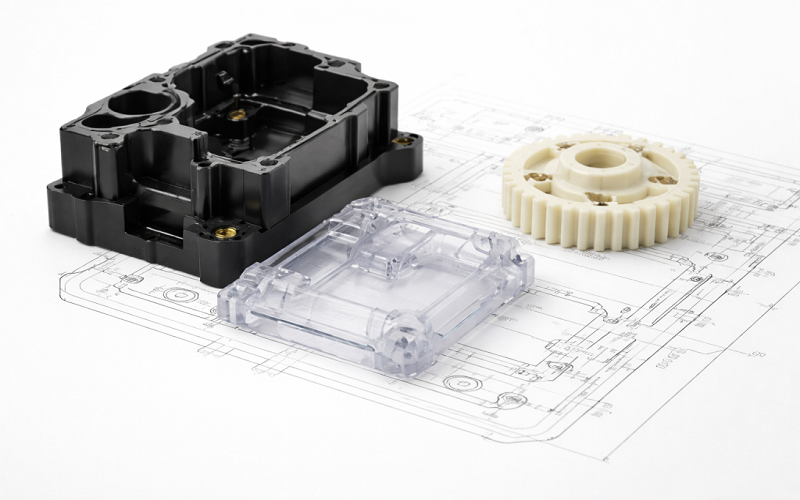
A major challenge in HDPE injection molding is its high coefficient of thermal expansion (approximately 100–200 µm/m·K), which causes parts to expand and contract significantly with temperature changes, leading to dimensional instability.
Careful attention must be paid to mold tolerances and uniform cooling during design and manufacturing to avoid warping.
Another issue is HDPE’s low surface energy, making it difficult to bond securely with adhesives or coatings. This limits techniques such as overmolding, often requiring special surface treatments (e.g., plasma or flame treatment) or mechanical fastening methods for assembly.
Additionally, HDPE is prone to Environmental Stress Cracking (ESC), especially under long-term tensile stress or exposure to certain chemicals (such as surfactants and solvents). Stress concentration areas (e.g., sharp corners) may develop cracks, compromising part durability.
This can be mitigated by adding anti-cracking agents or optimizing design (avoiding sharp corners and using smooth transitions).
Flammable hdpe will burn at high temperatures. Although flame retardants can be added to improve fire resistance, this increases cost and complexity, so extra caution is needed for applications with strict fire safety requirements.
Finally, mold design is critical: uniform wall thickness and appropriate draft angles must be ensured to accommodate HDPE’s high shrinkage rate (1.5–2.5%) and thermal expansion characteristics, reducing warpage and ejection difficulties.
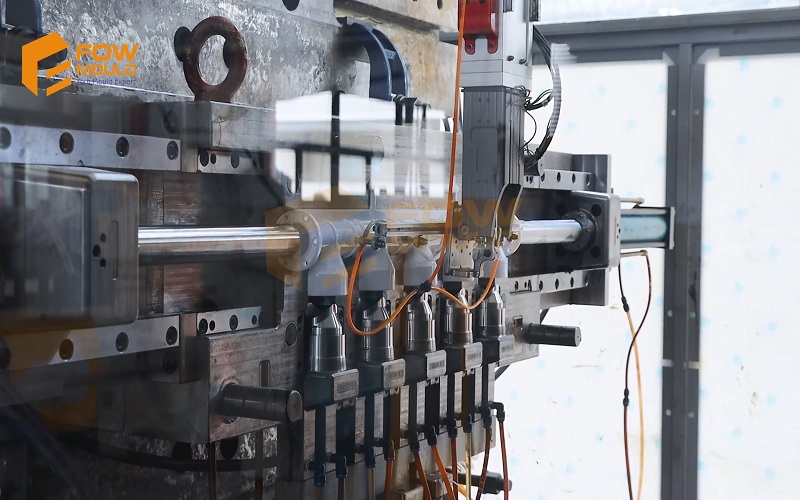
While initial mold costs are high, this investment is necessary for producing high-quality parts in large volumes.
Applications Of Injection Molded HDPE Products
HDPE injection molding is highly favored in many applications due to its ability to produce parts with high strength, corrosion resistance, lightweight nature, excellent chemical stability, and recyclability. Here are some key examples of its applications:
-
Automotive Industry: Molded HDPE is utilized in producing components such as fuel tanks, bumper fascia, and interior door panels in the automotive industry. Its impact resistance and lightweight nature make it ideal for automotive parts that require durability without adding excessive weight.
-
Medical Field: HDPE plastic is employed in producing surgical instruments, prosthetic components, and medical tubing. Its FDA-approved grades ensure safety and biocompatibility for medical applications.
-
Food Storage: Due to its chemical inertness and FDA approval, HDPE is widely used for food storage containers, cutting boards, and packaging materials, ensuring food safety and longevity.
-
Chemical Containers: HDPE’s excellent chemical resistance makes it suitable for containers that store acids, bases, and other corrosive substances.
-
Consumer Goods: Products like plastic bottles, playground equipment, and household items benefit from HDPE’s toughness and weather resistance.
-
Industrial Applications: HDPE is used in piping systems, tanks, and other industrial components that require resistance to moisture and chemicals.
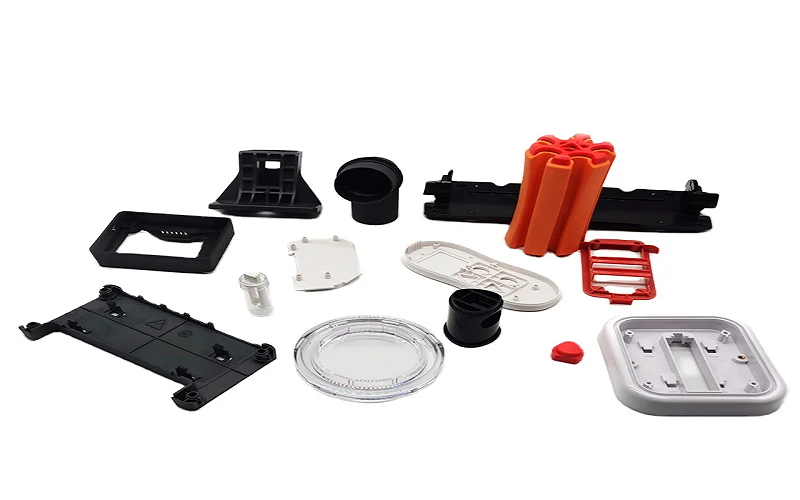
These applications highlight the versatility of HDPE injection molded products, making them a popular choice for manufacturers seeking cost-effective, durable, and safe materials for complex parts production.
Conclusion
HDPE molding is a prime example of durability, cost-effectiveness, and environmental friendliness: it delivers high-strength, chemically resistant, and impact-resistant parts at a very low cost, especially suitable for mass production of hollow, thin-walled, and durable products. It is widely used in packaging, piping, industrial containers, and many other fields.
Although the tooling investment required for HDPE injection molding is relatively high, the per-piece cost significantly decreases as production volume increases, achieving true cost efficiency.
If you are planning to start an HDPE injection molding project, please contact us. With rich manufacturing experience and advanced machinery, FOWMOULD can provide you with high-quality, efficient injection molding solutions to help your products quickly enter the market and gain a competitive advantage.