
Medical injection molding is a critical manufacturing process widely used in the field of medical device manufacturing. By injecting medical-grade plastics into precisely designed molds, this process efficiently produces complex and highly precise medical components in large volumes.
As the medical industry increasingly demands higher product quality and safety, medical injection molding not only meets stringent regulatory standards but also, due to its excellent cost efficiency and consistent product quality, has become an indispensable core technology in medical device production.
This article will delve into the technical advantages of medical injection molding, its range of applications, and the product standards within the modern medical device industry. It will systematically analyze the complete process from material selection, mold design, cleanroom production to quality validation.
Whether you are a medical device engineer, a procurement decision-maker, or a reader interested in precision manufacturing, you will gain clear and professional technical insights from this content.
Why Use Injection Molding In Medical Industry ?
Injection molding is essential for producing implantable medical devices in the healthcare industry, with 86% of leading medical device companies utilizing injection molded parts.
This process supports the mass production of plastic components that meet strict regulatory compliance and quality control measures required in medical applications.
Precision And Tight Tolerances
Tight tolerances and dimensional accuracy are crucial for medical components, often down to ±0.001 inches, ensuring consistent quality across high volume production runs.
This precision is critical for producing surgical instruments, diagnostic equipment, implantable components, and drug delivery systems that must function reliably in healthcare settings.
Material Strength And Biocompatibility
Medical molding also offers excellent chemical resistance and mechanical strength, which are essential for components exposed to sterilization processes and mechanical stress. The use of medical grade materials such as medical grade thermoplastics and liquid silicone rubber ensures biocompatibility and patient safety.
Complex Structure Molding Capability
Advanced molding processes include insert molding, overmolding, and liquid silicone rubber molding, enable the production of complex medical devices with complex geometries and seamless transitions between materials. These cutting-edge technologies help reduce material waste and improve structural integrity.
Scalability And Cost Efficiency
Furthermore, the injection molding process is highly scalable, supporting both prototype development and full scale production. This scalability makes it a cost-effective solution for producing disposable consumables as well as durable surgical tools and implantable components.
In summary, medical injection molding offers key advantages such as precise injection control, regulatory compliance, consistent quality, and the ability to produce a broad range of medical grade products.
These benefits make it an indispensable process for advancing healthcare innovations and ensuring the safety and effectiveness of medical devices used in the medical field.
Common Technologies In Medical Device Injection Molding
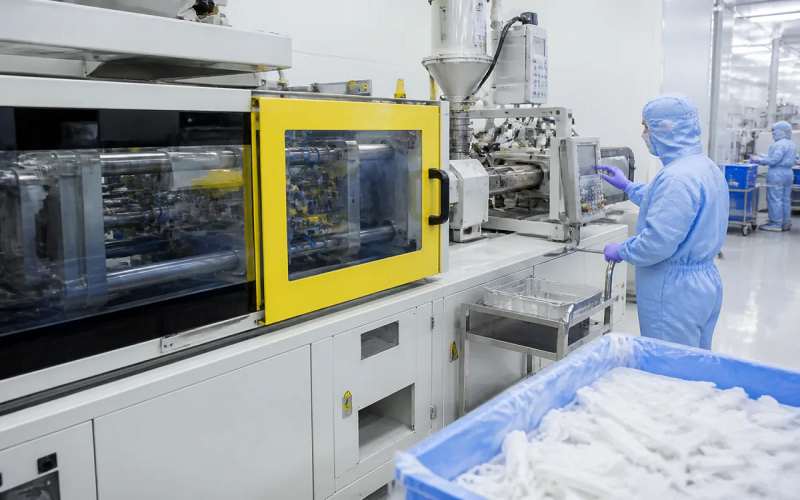
Traditional injection molding remains a foundational technique in medical device manufacturing.This process enables the production of high-precision and highly repeatable plastic parts, meeting the medical industry’s strict requirements for product quality and safety.
Through traditional injection molding, manufacturers can mass-produce complex-structured medical components such as syringe housings, surgical instrument handles, and diagnostic device enclosures.
However, as medical device functions diversify and become more complex, the integration of advanced technologies becomes especially important. The following are advanced processes commonly used to manufacture medical components:
Liquid Injection Molding (LIM)
Liquid injection molding uses liquid silicone rubber (LSR) as the molding material, which is injected into the mold cavity and cures rapidly under high pressure.
LIM is ideal for producing flexible, biocompatible medical device components such as seals, gaskets, and tubing. The fast curing time of about 30 seconds enhances production efficiency while maintaining product quality.
Micro Molding
Micro molding is a critical process for manufacturing extremely small and intricate medical components, often smaller than the resin pellet itself.
This technology allows for the creation of micro-scale molded components used in minimally invasive devices and diagnostic components, where precision and consistency are paramount.
Two-Shot Molding
Two-shot molding, or multi-shot molding, integrates two different materials or colors into a single molded component in one automated process.
This technique is commonly used to produce medical devices with soft-touch grips or complex parts that require multiple material properties, reducing assembly steps and improving functionality.
Insert Molding
Insert molding combines plastic injection molding with the integration of pre-formed inserts such as metal or ceramic pieces. The insert is placed into the mold cavity before plastic injection, resulting in a strong bond between the insert and molded component.
This process is often used to produce medical device components requiring enhanced mechanical strength or electrical conductivity.
Overmolding
Overmolding involves molding one material over another molded or pre-formed component, typically to add ergonomic features or improve sealing. It is widely used in medical devices to combine rigid and soft materials, enhancing patient comfort and device usability.
Gas-Assisted Molding
Gas-assisted molding introduces pressurized gas into the mold cavity during injection to create hollow sections within thicker parts. This reduces material usage and weight while maintaining structural integrity and surface quality.
It is beneficial for producing large, complex medical components with improved aesthetics and reduced sink marks.
Medical injection molding manufacturers typically combine these technologies to meet stringent regulatory requirements (FDA regulations) and quality standards, ensuring that the produced medical device components not only perform excellently but also comply with safety and hygiene regulations.
Through continuous improvement and technological innovation, the medical injection molding field continuously drives performance enhancements and manufacturing efficiency optimizations in medical devices, meeting the high standards of the modern healthcare industry.
Material Used In Medical Injection Molding Process
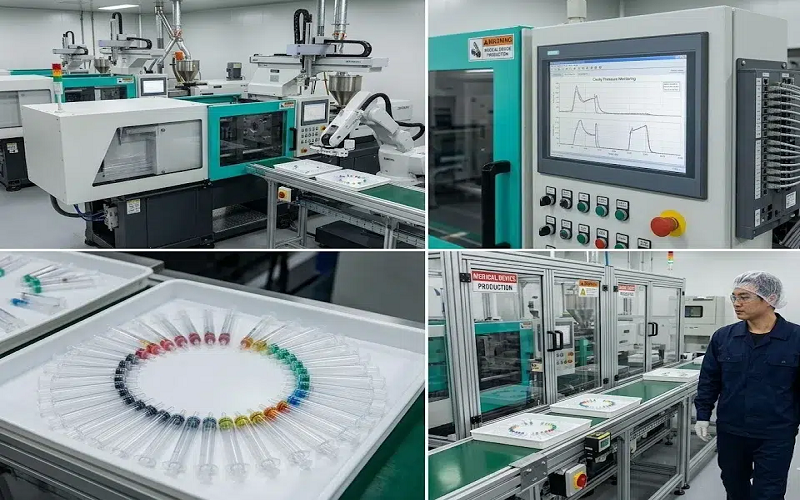
Medical injection molding relies on a variety of specialized plastic materials carefully selected to ensure safety, durability, and biocompatibility in medical applications.
These materials must meet strict regulatory standards and perform reliably under the demanding conditions of medical use, such as repeated sterilization, exposure to chemicals, and mechanical stress.
Medical Grade Thermoplastics
Thermoplastic materials are widely used in medical injection molding due to their excellent processability and ability to be sterilized without degradation. Common medical-grade thermoplastics include:
Polypropylene (PP): Known for its resistance to moisture and chemical exposure, polypropylene is ideal for components like syringes, IV components, and fluid drug storage containers. Its durability and sterilization compatibility make it a preferred choice for disposable medical devices.
Polycarbonate (PC): This transparent plastic offers high impact resistance and clarity, making it suitable for surgical instrument housings, protective equipment, and diagnostic device components. Polycarbonate maintains strength and dimensional stability even after repeated sterilization cycles.
Polyetheretherketone (PEEK): PEEK plastic is highly resistant to chemicals, heat, and wear, making it suitable for implantable devices and orthopedic components. Its biocompatibility and mechanical properties support long-term use inside the human body.
Polyethylene (PE): A cost-effective material with good chemical resistance and flexibility, polyethylene is commonly used for tubing, containers, and disposable medical products.
Silicone and Liquid Silicone Rubber (LSR)
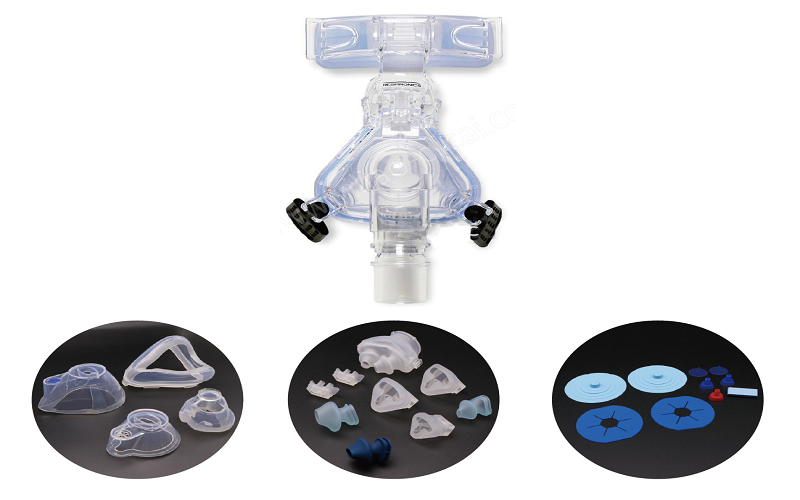
Silicone materials, especially liquid silicone rubber, are valued for their biocompatibility, flexibility, and resistance to extreme temperatures. LSR is widely used in medical applications such as catheters, seals, gaskets, and respiratory masks.
The fast curing time of LSR during liquid injection molding supports efficient production of high-quality, sterile components.
Thermoplastic Elastomers (TPEs)
TPEs combine the processability of plastics with the elasticity of rubber, offering soft-touch and flexible features in medical devices. They are commonly used for overmolding applications, providing ergonomic grips, seals, and wearable device components that require both comfort and durability.
Selection Considerations
Choosing the right material depends on the device’s function, required mechanical properties, sterilization method, and regulatory classification.
For example, class II devices such as dental implants and drug delivery systems often demand materials with superior strength and biocompatibility. Additionally, the material must ensure safety throughout the device’s lifecycle, from manufacturing to end use.
In summary, medical injection molding materials range from high-performance thermoplastics to flexible silicones, each selected to meet the unique demands of medical applications.
Proper material choice is fundamental to producing safe, reliable, and regulatory-compliant medical devices that advance healthcare innovation.
Regulatory Compliance Requirements For Medical Injection Molding
Regulatory compliance is a cornerstone of medical injection molding, ensuring that all manufactured components meet the highest standards for safety, quality, and efficacy.
Medical devices and their components are subject to rigorous oversight by regulatory bodies such as the U.S. Food and Drug Administration (FDA) and international standards organizations like the International Organization for Standardization (ISO).
Medical Device FDA Regulations
Medical devices are classified into three main risk categories by the FDA: Class I, Class II, and Class III. Class I devices pose the lowest risk and generally require general controls, such as proper labeling and manufacturing practices.
Class II devices are moderate risk and often require special controls, including performance standards and post-market surveillance. Class III devices represent the highest risk, typically supporting or sustaining human life, and require premarket approval demonstrating safety and effectiveness.
Cleanroom Standards
Medical injection molding processes must be conducted in ISO Class 7 or Class 8 cleanroom environments to ensure the highest levels of cleanliness and contamination control. This is essential to produce safe medical device components that come into contact with the human body or sterile environments.
Material Control and Compliance
Strict regulatory standards require that all plastic materials used in medical injection molding are thoroughly tested for biocompatibility and sterilization compatibility. Manufacturers must ensure traceability of material batches, maintain documentation, and validate that materials meet FDA and ISO 13485 requirements.
By adhering to these regulatory compliance requirements, medical injection molding manufacturers ensure that their products are safe, effective, and trustworthy components in the healthcare ecosystem.
Applications Of Medical Device Injection Molding
Medical injection molding produces precision plastic components for healthcare.Its ability to deliver precision, repeatability, and regulatory compliance makes it the preferred manufacturing method for many critical medical products.
Below are some of the primary applications where medical injection molding is extensively utilized:
Surgical Instruments and Tools
Injection molding is used to manufacture handles, housings, and other components of surgical instruments. These parts must meet tight tolerances and withstand repeated sterilization cycles without degrading.
The precision and durability provided by injection molding ensure that surgical tools perform reliably during delicate procedures.
Implantable Medical Devices
Many implantable devices, such as orthopedic joint components, dental implants, and cardiovascular implants, rely on injection molded parts made from biocompatible materials like PEEK.
The process enables the production of highly detailed and dimensionally stable components that meet stringent regulatory requirements for long-term implantation.
Drug Delivery Systems
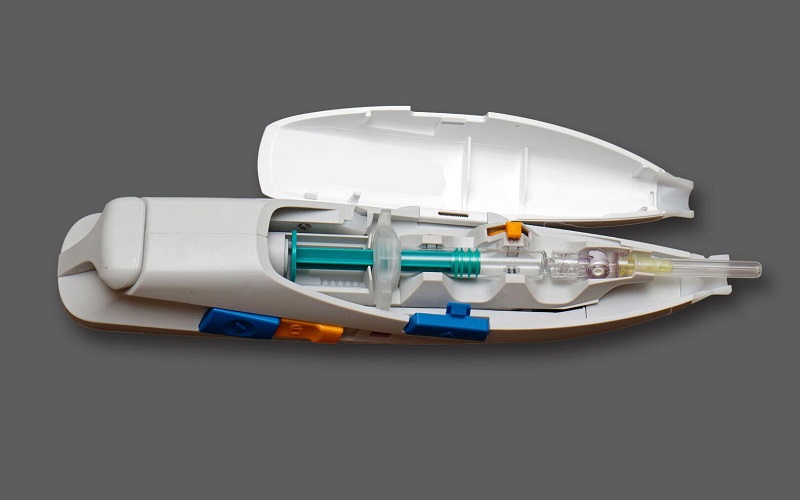
Injection molding is critical in producing components for drug delivery devices, including inhalers, insulin pens, and infusion pumps. These devices often incorporate complex geometries and multi-material designs achieved through advanced molding techniques like two-shot molding and overmolding.
Diagnostic Equipment
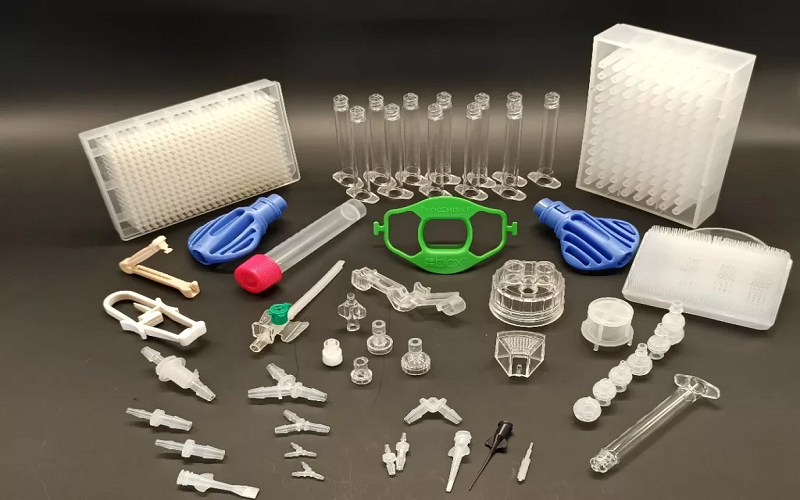
Components for diagnostic devices such as test tube racks, microplates, and instrument housings are produced via injection molding. The process allows for the integration of intricate features and ensures the parts meet the necessary cleanliness and precision required in laboratory settings.
In summary, medical injection molding supports an extensive range of applications that are critical to modern healthcare. Its ability to produce high-quality, complex, and compliant components ensures that medical devices perform safely and effectively in diverse clinical environments.
Conclusion
Medical injection molding is a vital manufacturing process that underpins the production of high-quality, precise, and reliable medical components essential for modern healthcare.
Its ability to deliver tight tolerances, material versatility, and scalability makes it indispensable for producing a wide range of medical devices—from disposable consumables to implantable devices and surgical instruments.
By adhering to strict regulatory standards and utilizing advanced molding technologies, this process ensures the safety, efficacy, and consistency required in medical applications.
Working with an experienced manufacturing partner and injection molder is essential to navigate material selection and ensure compliance with strict regulatory standards.
This collaboration helps optimize material performance, manufacturing efficiency, and ultimately the safety and effectiveness of the final medical device.