
Automotive injection molding technology, as a core process in modern automotive manufacturing, is widely used to produce various plastic parts.
With the automotive industry’s increasing demand for lightweight, high-performance, and cost-effective solutions, automotive plastic injection molding has become an essential method for manufacturing auto parts due to its high efficiency, precision, and design flexibility.
This article examines material selection, process advantages, and key applications of automotive injection molding, offering readers a clear overview of this essential manufacturing process.
What Is Automotive Injection Molding?
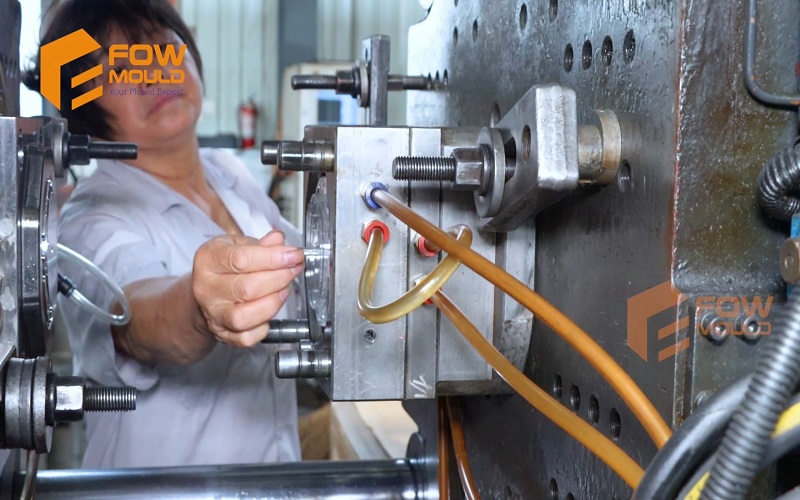
Automotive injection molding is a manufacturing process that produces various high-quality, durable, and structurally complex automotive parts by injecting molten plastic into precision molds.
Originating in the 1940s and widely adopted in the 1950s, advancements in mold making and injection molding technology have met the automotive industry’s demands for lightweight, durable, and aesthetically pleasing plastic components, helping to improve fuel efficiency and safety.
The automotive injection molding process includes feeding plastic pellets into the injection molding machine, melting them, injecting the molten plastic into the mold cavity under high pressure, cooling and solidifying, and finally ejecting the finished part.
It produces plastic parts with precise dimensions and consistent quality, suitable for high volume production. Compared to traditional manufacturing methods, injection molding offers clear advantages in production costs, material usage, and design flexibility.
This process can form complex shapes and intricate details in one step, reducing secondary operations and assembly, improving cost-effectiveness, and minimizing material waste to promote sustainable production.
For these reasons, injection molding has become the mainstream manufacturing method in the automotive industry, widely used for interior, exterior, under-the-hood, and electrical components, meeting the stringent standards of OEMs and automotive manufacturers.
Materials Used In Automotive Plastic Injection Molding
In automotive plastic injection molding, selecting the appropriate plastic materials is crucial to ensuring the performance, durability, and cost-effectiveness of parts.
Commonly used thermoplastic materials include polypropylene (PP), acrylonitrile butadiene styrene (ABS), nylon (PA), polycarbonate (PC), polymethyl methacrylate (PMMA), and thermoplastic elastomers (TPE).
Each of these materials has unique characteristics that meet the diverse needs of automotive applications.
PP: Known for its excellent moisture resistance and chemical corrosion resistance, it is commonly used for manufacturing bumpers and interior components.
ABS: ABS offers good impact strength and surface gloss, making it suitable for instrument panels, door handles, and wheel covers.
Nylon: Nylon is favored for its high wear resistance, rigidity, and dimensional stability, it is widely used in engine covers, gears, and other parts subjected to mechanical stress.Glass-filled nylon (such as PA6-GF or PA66-GF) offers an excellent strength-to-weight ratio and can effectively replace heavier metal materials in many automotive applications.
PC: Polycarbonate retains its properties across a wide temperature range. With excellent heat resistance and optical clarity, it is commonly used for headlight lenses and instrument panel covers.
PMMA: Acrylic is used in automotive lighting for its excellent optical properties and UV resistance.
TPE: Combines the elasticity of rubber with the processability of plastics, TPE commonly used for soft-touch surfaces and seals, enhancing vehicle comfort and sealing performance.
Through automotive plastic molding technology, various plastic materials enable the realization of complex designs and precise dimensional tolerances, meeting the demands for high-quality injection molded parts in modern vehicles.
Reasonable material selection not only affects the mechanical performance and durability of parts but also impacts overall vehicle performance, including heat resistance, corrosion resistance, and chemical stability.
With increasing environmental requirements, more automotive injection molded parts are now made from recyclable and bio-based plastics, driving the automotive manufacturing industry towards sustainable development.
Applications Of Automotive Injection Molding
Automotive injection molding is extensively used to manufacture a wide range of auto parts, offering high precision, durability, and cost-effectiveness. Key applications include:
Interior Components
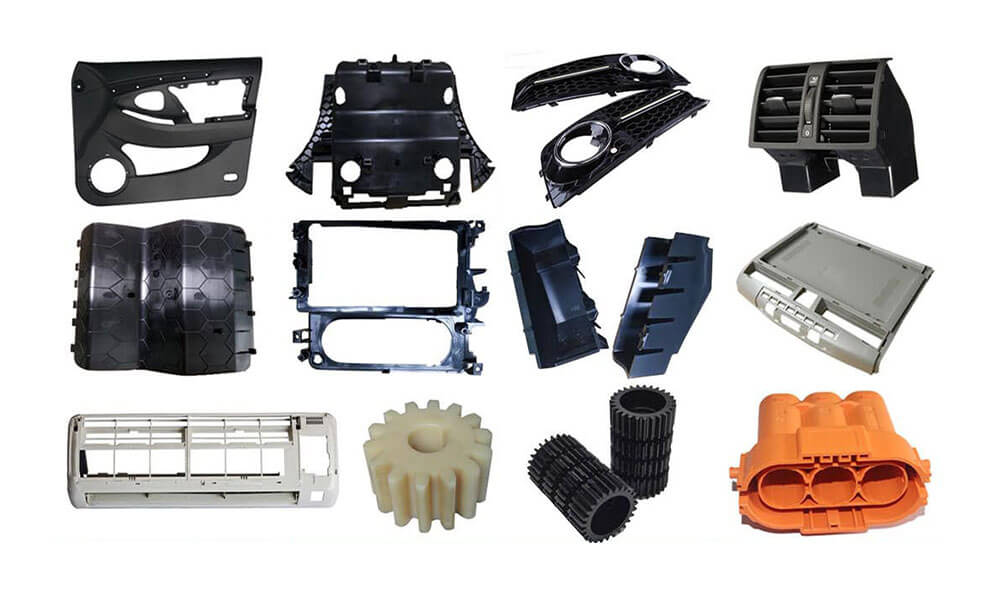
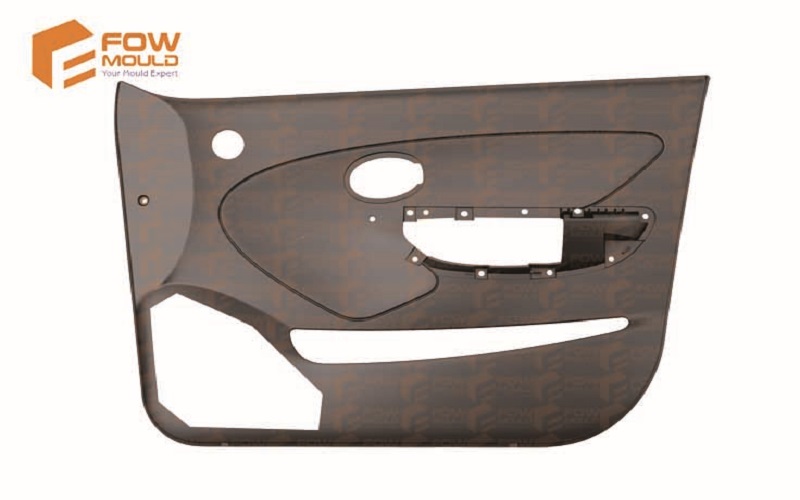
Injection molding produces dashboards, door panels, center consoles, and various trim parts. These interior components require precise tolerances and attractive surface finishes to enhance vehicle aesthetics and functionality.
Exterior Body Parts
Exterior components such as bumpers, body panels, grilles, mirror housings, wheel flares, and door panels are commonly made using injection molding. These parts must withstand environmental stresses, including UV exposure, chemical resistance, and impact.
Under-the-Hood Components
Injection molded automotive parts like engine covers, air intake manifolds, and various housings are designed to endure high temperatures, vibration, and chemical exposure while maintaining structural integrity.
Electrical and Electronic Housings
Injection molding is used to manufacture protective housings for sensors, connectors, and control units, ensuring durability and precise fitment.
Seals and Soft-Touch Surfaces
Using insert molding and overmolding techniques, injection molded rubber and thermoplastic elastomers create seals, gaskets, and soft-touch surfaces that improve comfort and reduce noise, vibration, and harshness (NVH).
Rapid Prototyping and Custom Injection Molding
Automotive OEMs and suppliers utilize rapid prototyping and custom injection molding services to develop and test new parts quickly, facilitating continuous improvement in automotive production.
Overall, automotive injection molding companies leverage this versatile process to produce high-quality molds and injection molded plastic parts that meet stringent industry standards, supporting mass production while addressing manufacturing challenges efficiently.
Advantages Of Using Injection Molding For Automotive Industry
Automotive injection molding offers numerous advantages that make it the preferred manufacturing process for producing various car parts and components.
High Production Efficiency and Scalability
Injection molding enables rapid production cycles, allowing manufacturers to produce thousands of identical parts in a short time. This high-speed production capability is essential for meeting the large volume demands of automotive manufacturers and original equipment manufacturers (OEMs).
The process is highly scalable, accommodating both small batch prototyping and large-scale mass production with consistent quality.
Cost-Effectiveness
Although the initial investment in mold design and tooling can be significant, the cost per part decreases substantially as production volume increases. Injection molding minimizes material waste since excess plastic can be recycled and reused in the process.
Additionally, the automation potential reduces labor costs and improves overall manufacturing efficiency, resulting in lower total production costs.
Design Flexibility and Complex Geometry
Injection molding supports the creation of complex shapes and intricate details that would be difficult or impossible to achieve with traditional manufacturing methods.
This design freedom allows automotive engineers to integrate multiple functions into a single part, reducing assembly time and the need for additional fasteners or adhesives. Overmolding techniques further enhance design possibilities by combining different materials in one component.
High Quality and Precision
Advanced injection molding machines and precise mold manufacturing enable the production of parts with tight tolerances, uniform wall thickness, and excellent surface finishes.
High-quality molds allow for the creation of smooth, Class A surfaces suitable for both interior and exterior parts. Consistent quality control ensures that each part meets stringent automotive industry standards for safety and performance.
Enhanced Vehicle Performance
Injection molded parts are not only lightweight but also durable and resistant to wear, heat, and chemicals. This improves the overall longevity and reliability of automotive components, including critical engine parts and exterior parts exposed to harsh conditions. The ability to produce parts with integrated features also enhances vehicle functionality and safety.
In summary, automotive injection molding is a versatile, efficient, and cost-effective production process that delivers high quality parts and supports innovation in vehicle design and manufacturing.
Its advantages make it indispensable to original equipment manufacturers and suppliers aiming to produce various components for modern vehicles.
Challenges In Automotive Injection Molding Process
While automotive injection molding offers numerous benefits, it also presents several challenges that manufacturers must address to ensure high-quality production and cost-effectiveness.
Mold Design and Manufacturing Complexity
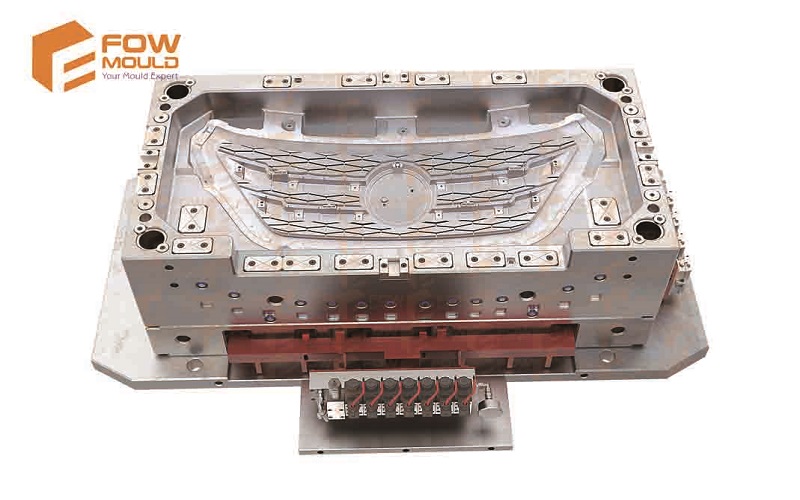
Designing molds for automotive parts can be highly intricate, especially for components with complex geometries or tight tolerances. The mold must withstand high injection pressures and repeated cycles without deforming.
Achieving uniform wall thickness and avoiding issues like sink marks, warping, or flash requires advanced mold engineering and precise manufacturing.
Process Control and Quality Assurance
Maintaining consistent process parameters such as temperature, injection pressure, and cooling time is vital to produce parts with uniform quality.
Variations can lead to defects including voids, short shots, or dimensional inaccuracies. Implementing advanced control systems and real-time monitoring helps reduce variability and improve yield.
Managing Post Molding Operations
Although injection molding reduces the need for secondary processes, some parts require post molding operations such as trimming, painting, assembly, or surface finishing. Coordinating these operations efficiently while maintaining part quality adds complexity to the production workflow.
By addressing these challenges through innovation, skilled engineering, and collaboration with experienced injection molders, the automotive industry continues to advance the capabilities and applications of injection molding technology.
Conclusion
In conclusion, automotive injection molding is a vital manufacturing process that enables the production of high-quality, durable, and complex plastic parts essential for modern vehicles.
Its advantages in efficiency, precision, cost-effectiveness, and design flexibility make it indispensable to the automotive industry.
Partnering with experienced automotive injection molding companies ensures access to advanced technologies and expertise, helping manufacturers meet stringent quality standards while driving innovation and sustainability in vehicle production.