
In the ever-evolving world of manufacturing, PET injection molding stands out as a cornerstone technology for producing high-quality, durable, and precise plastic components.
Polyethylene Terephthalate (PET), renowned for its strength, clarity, and recyclability, is a preferred material for industries ranging from packaging to automotive.
This article explores the intricacies of PET injection molding, highlighting its benefits, applications, and why it remains a vital process for businesses seeking efficiency and sustainability in production.
What Is Polyethylene Terephthalate (PET)?
Polyethylene Terephthalate (PET) is a thermoplastic polyester known for its excellent mechanical properties and chemical stability.
It is renowned for its high strength, good transparency, and outstanding chemical resistance, making it widely used across various industries including packaging, electronics, electrical appliances, and automotive.
PET plastic is not only lightweight and strong but also exhibits good wear resistance and dimensional stability, making it highly suitable for injection molding and blow molding processes.
Due to its superior performance, PET has become an ideal material for manufacturing bottles, containers, electronic components, and automotive parts.
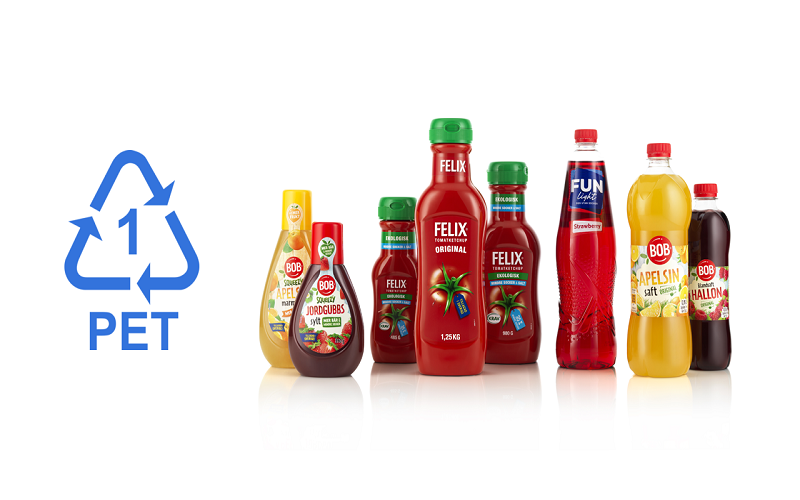
Moreover, PET possesses excellent recyclability, aligning with current trends toward environmental protection and sustainable development.
Material Properties Of PET
PET is a semi-crystalline thermoplastic polymer that offers a unique combination of properties making it highly suitable for injection molding applications.
Dimensional Stability
One of the key characteristics of PET is its excellent dimensional stability, which ensures that molded parts retain their shape and size with minimal deformation over time.
Wear Resistance
PET also exhibits outstanding wear resistance and a low coefficient of friction, which contributes to the durability and longevity of PET molded parts in mechanical and industrial applications.
Chemical Resistance
Additionally, PET has good chemical resistance, allowing it to withstand exposure to various chemicals without significant degradation, making it ideal for containers and packaging that come into contact with diverse substances.
Transparency And Clarity
PET’s transparency and clarity are also beneficial for consumer goods and packaging, as it allows for attractive, clear products that showcase their contents.
Hygroscopicity
Furthermore, PET is hygroscopic, meaning it absorbs moisture from the environment. This property necessitates careful drying before processing to maintain the quality and mechanical properties of the final product.
Recyclability
The recyclability of PET is another significant advantage. PET can be recycled into high-quality recycled PET (rPET), which can be used in a variety of applications including food packaging, contributing to sustainability efforts and reducing environmental impact.
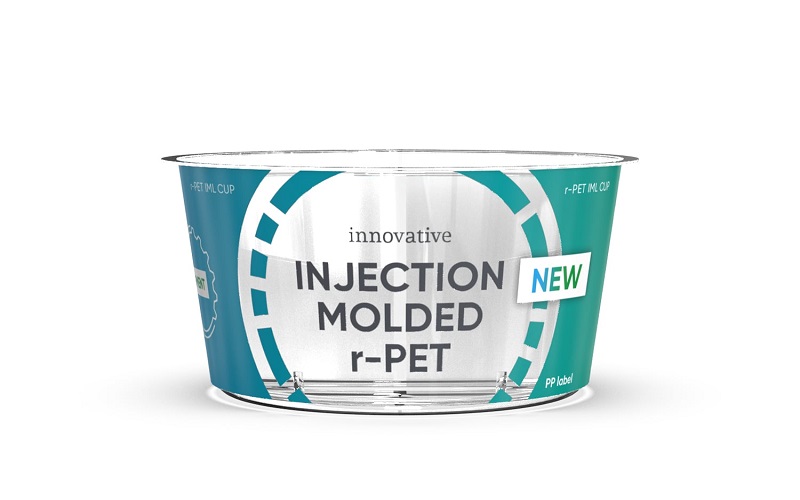
The use of rPET in injection molding is growing, supported by regulatory approvals and increasing availability of recycled material.
Overall, the combination of mechanical strength, chemical resistance, dimensional stability, and recyclability makes PET a versatile and valuable material for producing a wide range of high-quality molded parts across diverse applications.
Property | Value / Description |
|---|---|
Density | 1.38g/cm³ |
Melting Point | 250 – 260°C |
Glass Transition Temperature | 67 – 81°C |
Tensile Strength | 55 – 75MPa |
Elongation at Break | 50% – 150% |
Flexural Modulus | 2,800 – 3,500MPa |
Impact Strength (Izod) | 40 – 60J/m |
Water Absorption | 0.2 – 0.4% (24 hours) |
Coefficient of Thermal Expansion | 6 – 8×10⁻⁵ / °C |
Thermal Conductivity | 0.15 – 0.24W/m·K |
Optimizing PET Injection Molding Processes
To ensure the high quality and performance of PET injection molded parts, it is essential to optimize the injection molding process.
Mold Temperature Control
First, strict control of mold temperature is crucial. PET molds typically require rapid cooling to between 10°C and 20°C to maintain the shape and optical clarity of the parts.
Improper mold temperature control may lead to significant shrinkage and internal stress in the parts, affecting the final product’s dimensional accuracy and mechanical properties.
Drying Treatment of PET Material
Second, due to PET’s hygroscopic nature, the PET pellets usually need to be dried at temperatures between 160°C and 180°C for 4 to 6 hours to reduce the moisture content to below 0.02%, preventing brittleness and loss of clarity during melting.
Injection Temperature Control
Additionally, temperature control during the injection molding process is critical. PET has a high melting point, and the injection temperature typically exceeds 280°C, which is higher than common plastics like PP and PS.
Injection Molding Machine Configuration
Injection molding machines for PET must accommodate its special properties. High injection pressures, up to 2200 bar, are needed for thin-walled products.
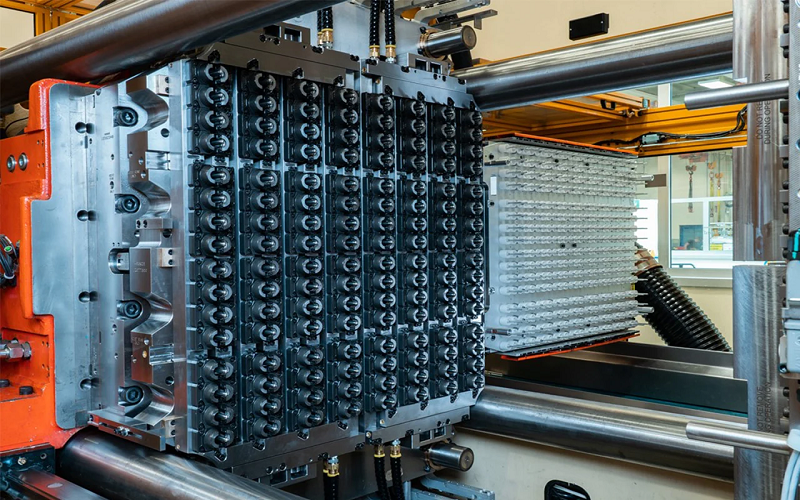
Efficient cooling systems quickly cool molds to prevent deformation and shrinkage. The clamping system keeps the mold tightly closed during injection to ensure product quality and precision.
Modern machines include safety features like emergency stop buttons and safety interlocks to protect operators. User-friendly interfaces and intuitive controls make the process easy to operate and monitor.
By optimizing these processes, the mechanical properties and appearance quality of PET injection molded parts can be effectively improved, meeting the demands of various industries such as automotive, food packaging, and electronics for high-quality plastic products.
Benefits Of PET Injection Molding
PET injection molding offers numerous significant advantages, making it the preferred plastic molding process across many industries.
Superior Material Properties
Firstly, PET material itself possesses excellent mechanical properties and chemical stability. Products molded by injection exhibit high strength, good wear resistance, and outstanding dimensional stability, ensuring that the parts maintain their shape and performance during use.
High Efficiency & Speed
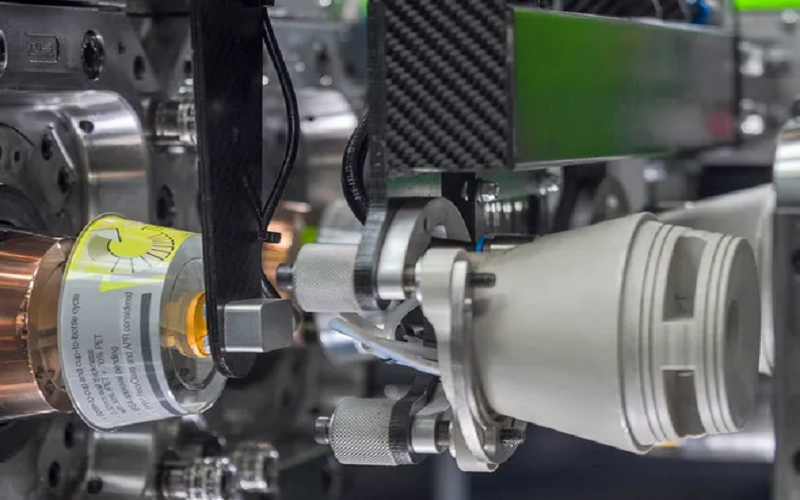
Secondly, the PET injection molding process provides high production efficiency. By optimizing injection parameters and utilizing advanced injection molding equipment, fast cycle times and high-precision molding can be achieved, ensuring smooth operation and efficient production.
Good Clarity & Aesthetics
In addition, PET material has high transparency, and injection-molded products possess excellent optical properties, making them suitable for packaging and consumer goods that require content visibility.
Excellent Barrier Resistance
PET also provides excellent barrier properties, keeping oxygen out and carbonation in, which extends shelf life.
Environmental Friendliness
From an environmental perspective, PET is recyclable, and the injection molding process can incorporate a high proportion of recycled PET (rPET), aligning with current trends in green manufacturing and sustainable development.
Design Flexibility
Finally, the PET injection molding process is flexible, offering great flexibility and capable of producing various complex structures and thin-walled products using molds designed specifically for optimal performance.
Applications Of PET Injection Molded Parts
PET injection molded parts are renowned for their high dimensional stability and excellent wear resistance, making them suitable for a wide range of applications. These parts are widely used in industries such as automotive, food packaging, electronics, and consumer goods.
For example, PET molded components are commonly found in mechanical applications like clutches, bearings, and gears due to their durability and low friction characteristics.
In the food industry, wear-resistant PET molded parts are used in guide rails, stop units, rollers, and grippers, where hygiene and reliability are critical.
PET preforms, which are injection molded, serve as the starting form for producing PET bottles through blow molding, a key application in beverage packaging.
Additionally, PET’s excellent barrier properties make it ideal for packaging applications that require protection from oxygen and moisture, thereby extending product shelf life.
The recyclability of PET also enables producers to incorporate recycled PET (rPET) into new products, supporting sustainability efforts.
With its combination of strength, chemical resistance, and clarity, PET injection molding enables the creation of high-quality, precise components that meet the diverse needs of customers across various sectors.
Conclusion
PET injection molding technology has become an ideal choice in modern manufacturing due to its excellent material properties, high production efficiency, and wide range of applications.
PET material features high strength, good wear resistance, outstanding transparency, and compatible with many kinds of formulations, making it widely used in industries such as automotive, food packaging, and electronics.
By optimizing injection molding process parameters and utilizing advanced equipment, the quality and production efficiency of PET molded parts can be significantly improved to meet the diverse needs of different customers.
As an industry-leading injection molding company, FOWMOULD leverages extensive manufacturing experience and professional expertise to provide customers with high-quality PET injection molding services, helping them create high-performance, reliable, and competitive product solutions. Please contact us if you require assistance!