
Polycarbonate (PC) injection molding is a highly efficient manufacturing process used to produce durable, transparent, and heat-resistant parts with excellent dimensional stability.
This plastic injection molding process involves injecting molten polycarbonate into a mold to form complex shapes with precision and consistency.
Polycarbonate injection molding yields parts that are exceptionally durable for both consumer and industrial applications.
In this article, we will explore the key characteristics, advantages, disadvantages, and diverse applications of polycarbonate injection molding, providing a comprehensive understanding of this versatile manufacturing technique.
What Is Polycarbonate Injection Molding?
Polycarbonate injection molding refers to a highly efficient thermoplastic processing technique that primarily involves rapidly injecting molten polycarbonate material into a mold under high temperature and high pressure. After cooling and solidification, high-strength, precision plastic parts are produced.
Due to the high viscosity characteristic of polycarbonate, rapid heating and high-speed injection processes are necessary to ensure the molten plastic completely fills the mold cavity, resulting in parts with excellent surface finish and minimal internal stress.
This process is especially suitable for mass production of complex-shaped, impact-resistant, highly transparent, or optical-grade polycarbonate parts, as it achieves high repeatability, superior optical properties, and outstanding mechanical strength.
Additionally, polycarbonate injection molding allows for tight tolerances and the production of thin walls, making it ideal for intricate designs and lightweight applications.
Overall, polycarbonate injection molding is a cost-effective and versatile process for producing durable, high-performance plastic parts at large volumes, offering significant advantages over other manufacturing methods such as blow molding or machining.
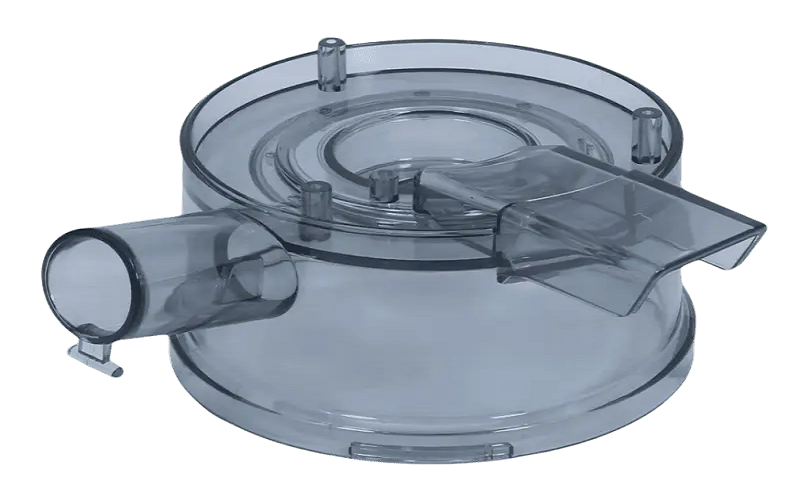
Polycarbonate Material Properties
Polycarbonate plastic is synthesized through a polymerization reaction involving Bisphenol A (BPA) and Phosgene (COCl2), resulting in a high-performance thermoplastic known for its unique combination of strength, transparency, and heat resistance.
Excellent Optical Properties
Polycarbonates belong to a group of polymers containing carbonate groups within their chemical structure.
This molecular arrangement allows them to be naturally transparent and capable of transmitting light with clarity comparable to glass, often achieving light transmittance rates of up to 89%.
Good Thermal Resistance
Polycarbonate maintains its shape and mechanical integrity at elevated temperatures, with a deflection temperature under load reaching up to 135°C (270°F).
This heat resistance enables polycarbonate parts to perform reliably in environments with prolonged exposure to elevated temperatures without significant deformation.
Mechanical Strength and Stability
Polycarbonate has an impact strength far exceeding that of ordinary plastics, with a tensile strength of approximately 55–65 MPa and a flexural strength ranging from 75–90 MPa.
It is the preferred material for manufacturing products requiring high impact resistance, such as bulletproof glass, automotive components, and electronic housings.
UV Resistance and Weatherability
Polycarbonate plastics are prone to photodegradation and yellowing when exposed to ultraviolet light over extended periods.To extend polycarbonate’s durability in outdoor applications, it can be modified with uv stabilizers and UV resistant additives.
These modifications help protect the material from degradation, discoloration, and loss of mechanical properties caused by prolonged exposure to UV light.
Overall, the combination of excellent optical clarity, heat resistance, mechanical strength, and adaptability through modification makes polycarbonate an ideal material for injection molding of complex, high-performance parts with demanding requirements.
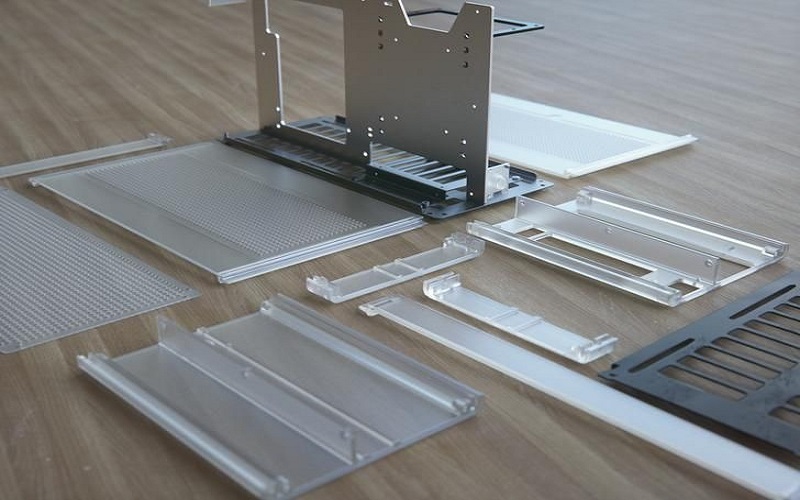
Polycarbonate Injection Molding Process
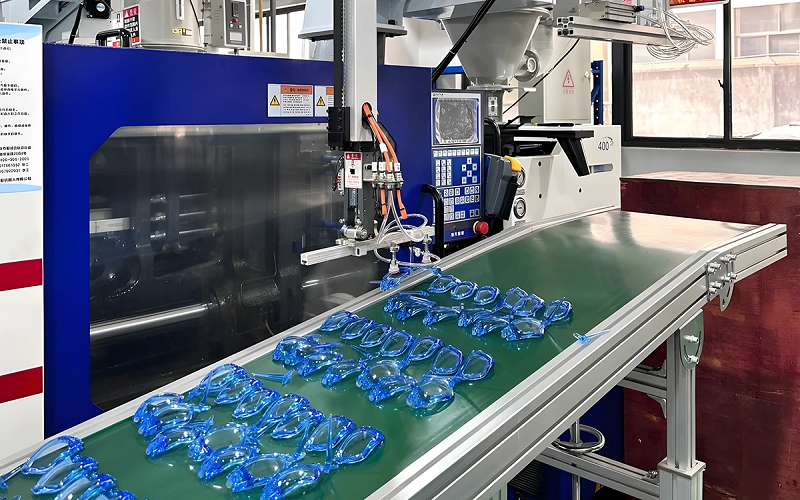
The polycarbonate injection molding process is generally the same as the injection molding process used for most other thermoplastics.
It involves feeding thermoplastic pellets into a heated barrel where they are melted and thoroughly mixed before being injected at high pressure into a mold cavity to form the desired shape.
Because polycarbonate is highly hygroscopic, it must be thoroughly dried before injection molding. Typically, it is dried at 100–120°C for 3–6 hours (recommended moisture content <0.02%) using a dehumidifying dryer or hot air dryer, and the hopper is kept heated (≥100°C) to prevent secondary moisture absorption.
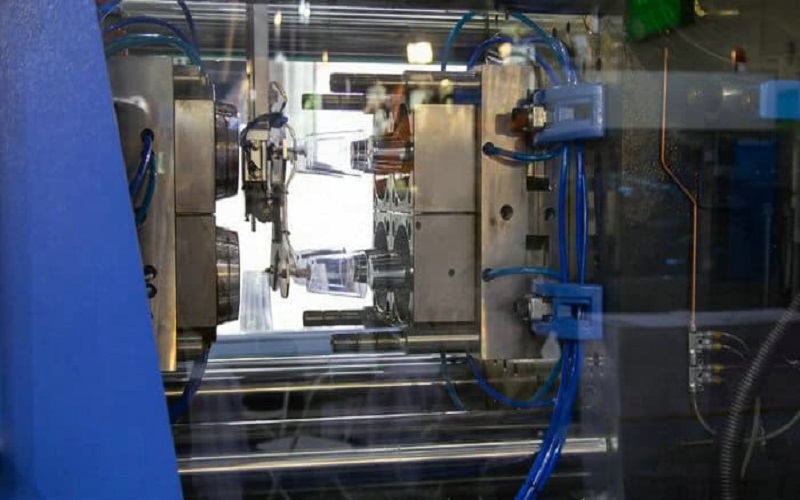
Process Conditions Of Polycarbonat Injection Molding
Successful polycarbonate injection molding depends on controlling key processing parameters including mold temperature, injection molding temperature, injection pressure, holding pressure, back pressure, screw speed, and injection speeds.
Mold Temperature
Maintaining an optimal mold temperature is critical for ensuring proper flow of molten polycarbonate and reducing internal stresses in the molded parts.
Typical mold temperatures range between 80°C and 120°C, promoting uniform cooling and minimizing surface defects such as sink marks and weld lines.
Injection Molding Temperature
The injection molding temperature must be carefully controlled to keep the polycarbonate material in a molten state with appropriate viscosity for filling the mold cavity completely.
Melt temperatures typically range from 280°C to 320°C. Excessive temperatures can degrade the material, while insufficient heat can cause incomplete filling or poor surface finish.
Injection Pressure
Injection pressure drives the molten material into the mold cavity. Adequate pressure ensures complete filling of complex geometries and thin walls. Pressures usually range from 800 to 1500 bar, depending on part design and wall thickness. Proper pressure control helps reduce internal stress and warping.
Injection Speeds
Injection speed influences the flow and cooling of molten polycarbonate inside the mold. Higher injection speeds help prevent premature solidification and improve surface finish but must be balanced to avoid defects such as jetting or burn marks.
Holding Pressure
Holding pressure compensates for material shrinkage during cooling, maintaining dimensional accuracy and reducing sink marks.
It is typically maintained for a short duration after injection before gradually decreasing to avoid residual stress buildup.
Proper management of these factors, along with the use of mold release agents and drying of raw materials to prevent moisture-related defects, ensures high-quality molded parts with excellent mechanical properties, shatter resistance, and a smooth surface finish, meeting the demanding requirements of various applications.
Parameter Category | Parameter Name | Recommended Range |
|---|---|---|
Material Preparation | Drying Temperature | 100–120°C |
| Drying Time | 3–6 hours |
Injection Machine Barrel Temperature | Rear Zone (Feed Zone) | 250–280°C |
| Middle Zone (Compression Zone) | 270–300°C |
| Front Zone (Metering Zone) | 280–320°C |
| Nozzle Temperature | 280–310°C |
| Melt Temperature | 270–320°C |
Mold Temperature | Mold Temperature | 80–120°C |
Injection Parameters | Injection Pressure | 70–150 MPa |
| Holding Pressure | 40–80% of Injection Pressure |
| Holding Time | According to Part Thickness |
| Injection Speed | Medium to High Speed |
Screw and Back Pressure | Screw Speed | 30–70 rpm |
| Back Pressure | 5–20 MPa |
Cooling and Cycle | Cooling Time | According to Part Thickness |
| Total Cycle Time | — |
Advantages Of Injection Molding Polycarbonate
The key benefits of polycarbonate injection molding include:
Quicker Cycle Time
Polycarbonate injection molding has a quicker cycle time compared to other processing techniques, which reduces the cost per part. Faster production cycles enable injection molders to produce large volumes efficiently, making it a cost-effective solution for mass production.
High Precision and Tight Tolerances
The process refers to a highly accurate molding technique capable of producing parts with tight tolerances, often within ±0.1 mm. This precision is essential for applications requiring complex shapes and consistent quality.
Excellent Surface Finish and Optical Quality
Due to the use of polished mold halves and precise process conditions, polycarbonate molded parts exhibit excellent surface finish, making them suitable for optical applications like eyeglass lenses and automotive headlight lenses.
Superior Mechanical Properties
Polycarbonate parts produced through injection molding have high impact resistance, flexural strength, and heat resistance, making them ideal for demanding consumer products, medical equipment, and automotive parts.
Efficient Use of Raw Materials
The process minimizes waste by using only the required amount of polycarbonate material, and any runners or scrap can often be recycled, contributing to low material costs and environmental benefits.
These advantages make polycarbonate injection molding an ideal process for manufacturing high-performance, durable, and aesthetically superior plastic parts.
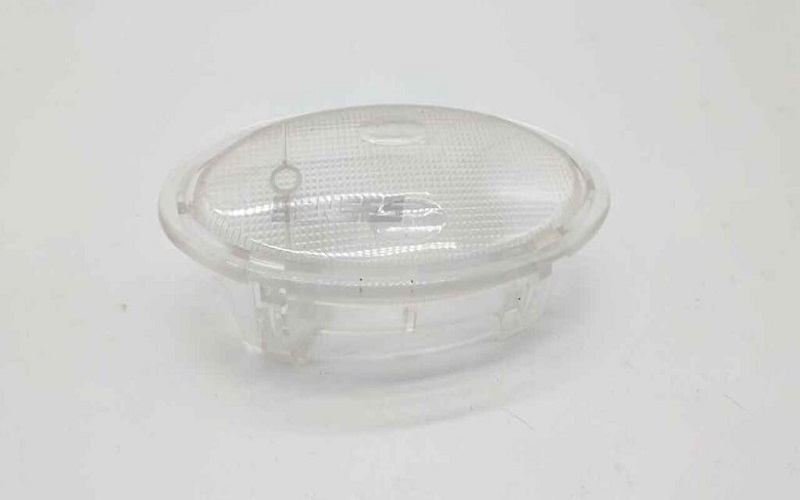
Disadvantages Of Polycarbonate Injection Molding
Although polycarbonate exhibits excellent impact strength, optical properties, and heat resistance, as an engineering plastic, it also has some inherent limitations. These drawbacks need special attention during injection molding and practical applications.
Susceptible to Stress Cracking
The rigid molecular chains of PC make it sensitive to internal residual stresses. Uneven cooling during molding, high shear pressure, sharp corner designs, or excessive assembly tightening can easily cause residual stresses at part edges, notches, or stress concentration areas, leading to environmental stress cracking (ESC) or chemical stress cracking.
Highly Sensitive to Moisture
PC material is highly hygroscopic. If not properly dried, residual moisture can cause hydrolysis during the high-temperature injection molding process, resulting in molecular chain breakage.
This leads to defects such as silver streaks, bubbles, and reduced strength in the molded parts. Therefore, strict drying (typically requiring moisture content below 0.02%) is essential.
High Cost
Polycarbonate is one of the more expensive materials for injection molding, making it less cost-effective for low-volume production.
Additionally, the initial investment for tooling and machinery can be significant due to the precise molds and high-performance injection molding machines required. This upfront cost can be a barrier for small manufacturers or projects with limited budgets.
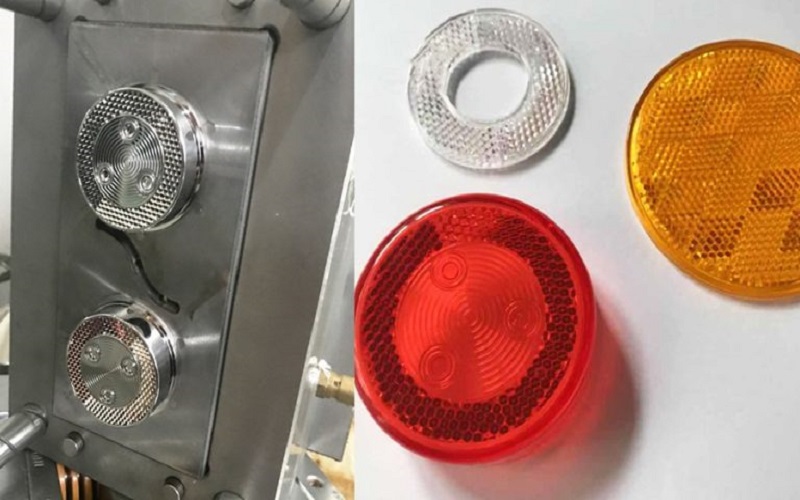
Applications Of Polycarbonate Injection Molded Part
Polycarbonate injection molded parts find extensive use across a broad range of industries due to their exceptional strength, clarity, and heat resistance.
This versatility makes polycarbonate the ideal material for manufacturing complex, high-performance components.
Automotive Parts: Used for headlight lenses and interior components due to its durability and impact resistance.
Medical Equipment: Preferred for devices requiring precision and long-lasting performance.
Electronic Housings: Ideal for protective casings that combine strength with aesthetic appeal.
Safety Helmets: Provides high impact resistance essential for protective gear.
Optical Media: Utilized in manufacturing CDs, DVDs, and other optical storage devices.
Construction Materials: Employed in products that benefit from toughness and weather resistance.
Eyeglass Lenses and Transparent Consumer Products: Chosen for excellent optical clarity and durability.
Conclusion
In summary, polycarbonate injection molding is a versatile and efficient manufacturing process capable of producing durable, transparent, and heat-resistant plastic parts with excellent mechanical and optical properties.
This process can create complex shapes with tight tolerances and thin walls, making it suitable for a wide range of applications, from automotive components and medical devices to consumer electronics and optical storage media.
Although material and mold costs are relatively high, advantages such as fast molding cycles, superior surface finish, and efficient use of raw materials make polycarbonate injection molding a cost-effective solution for high-volume production.
With proper control of processing parameters and material preparation, the polycarbonate injection molding techniques continue to be the preferred choice for manufacturers seeking high-performance, impact-resistant, and aesthetically pleasing plastic parts.、
FAQ
1. Can polycarbonate be injection molded?
Yes, polycarbonate can be injection molded. It is a popular thermoplastic material for injection molding due to its excellent mechanical properties, high impact resistance, optical clarity, and heat resistance.
2.How to inject polycarbonate?
The polycarbonate injection molding process is similar to that of other thermoplastics: molten plastic is injected under high pressure into a two-part mold, where the material cools and solidifies to form the part, which is then ejected, enabling efficient and repeatable mass production.
3.What are the problems with injection molding polycarbonate?
Common problems in polycarbonate injection molding include stress cracking, moisture absorption defects (such as silver streaks and bubbles), high viscosity causing difficulty in filling thin-walled parts, surface defects (such as flow lines, burn marks, and weld lines), warping deformation, flash caused by improper mold design, and material degradation at high temperatures.
These issues are typically addressed through strict drying, optimization of injection molding parameters, and mold design improvements.
4.What are the grades of polycarbonate for injection molding?
Common grades of polycarbonate for injection molding include general-purpose, high molecular weight, glass fiber reinforced, flame retardant, UV resistant, and modified alloy grades (such as PC/ABS alloys).
These grades incorporate various fillers and additives to meet different performance requirements and application scenarios.