
ABS and PC-ABS are two thermoplastic engineering plastics that are often easily confused and directly compared.
They look similar, share many overlapping manufacturing processes, and have partially overlapping price ranges, which leads many to think they are “almost the same.” However, after actual use, significant differences become apparent.
So, in the comparison of PC-ABS vs ABS, which one is the true “all-rounder”? The choice depends on specific application needs, environmental conditions, and performance requirements.
In the following content, we will analyze the key differences between PC-ABS and ABS in detail to help you choose the right material for your project.
What Is Acrylonitrile Butadiene Styrene (ABS)?
Acrylonitrile Butadiene Styrene (ABS) is a widely used thermoplastic polymer known for its versatility and cost-effectiveness. It is a copolymer made from three monomers: acrylonitrile, butadiene, and styrene.
Each component contributes distinct properties to the final material—acrylonitrile provides chemical resistance and hardness, butadiene offers excellent impact resistance and toughness, and styrene adds rigidity and a glossy finish.
ABS material is known for its excellent impact resistance, moderate heat resistance, and good chemical resistance.
It provides a glossy finish and is easy to mold and machine, but it has limitations in temperature resistance and dimensional stability, especially in harsh environments with high temperatures or severe temperature fluctuations, where its performance is often unsatisfactory.
ABS plastic is commonly used in various industries due to its favorable mechanical properties, moderate heat resistance, and good surface finish. It is especially popular for manufacturing consumer goods, automotive parts, appliance housings, and electronic enclosures.
Its ability to be easily molded and machined makes it suitable for injection molding and 3D printing applications, providing reliable performance for functional parts.
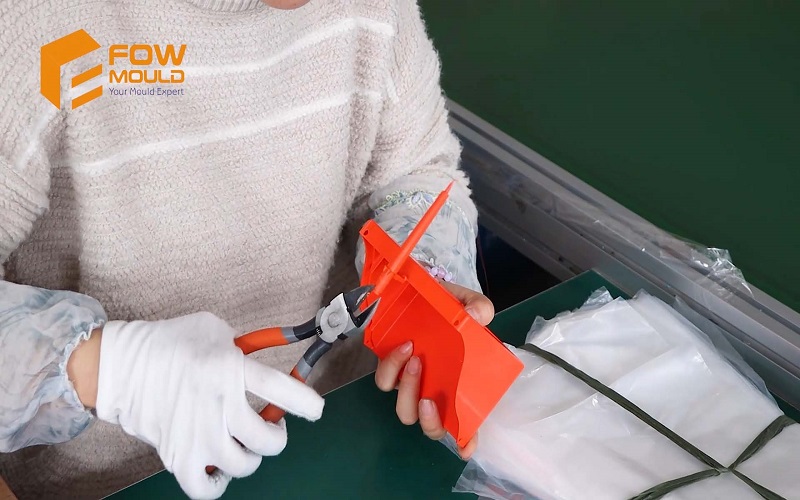
What Is PC-ABS?
PC-ABS is an engineering plastic composite material made by blending polycarbonate (PC) and acrylonitrile butadiene styrene (ABS).
PC-ABS combines the toughness and heat resistance of polycarbonate with the processability and affordability of ABS.This blend results in superior durability, enhanced thermal stability, and a higher heat deflection temperature compared to ABS alone.
This material exhibits a higher heat deflection temperature and excellent mechanical properties, performing especially well in high temperature environments and demanding applications.
PC-ABS not only has good impact strength and heat resistance but also offers superior dimensional stability and surface finish, making it suitable for manufacturing functional parts that require structural integrity.
Due to its outstanding performance, PC-ABS is widely used in automotive interiors, electronic enclosures, medical equipment, and consumer electronics that demand high heat resistance and high impact strength.
Additionally, PC-ABS is suitable for injection molding and 3D printing processes, ensuring optimal results and part reliability during manufacturing.
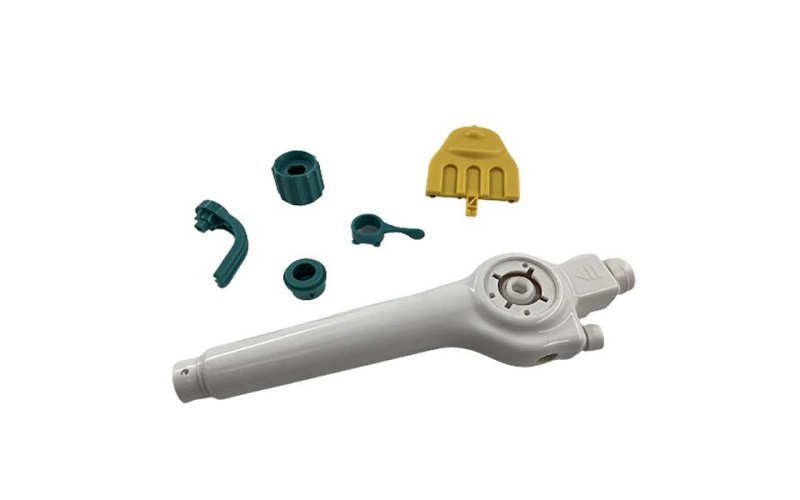
PC-ABS vs ABS : Properties Differences
Although PC-ABS and ABS have similar properties, each has distinct advantages that make them suitable for different application scenarios.
Mechanical Properties
ABS offers excellent impact resistance and good tensile strength, making it suitable for many general-purpose applications.
However, PC-ABS combines the toughness and high impact resistance of polycarbonate with the processability of ABS, resulting in superior mechanical properties such as higher flexural strength and enhanced dimensional stability.
Chemical Resistance
ABS demonstrates strong resistance to a variety of chemicals including acids, alkalis, and salts but is sensitive to ketones and aromatic hydrocarbons.
In contrast, PC-ABS benefits from the chemical stability of polycarbonate, making it highly resistant to chemical corrosion and suitable for applications exposed to harsh environments.
Thermal Resistance
Unlike ABS, PC-ABS exhibits excellent thermal stability with a higher heat deflection temperature, often exceeding 100°C.
This makes PC-ABS well-suited for applications exposed to temperature fluctuations, elevated temperatures, or prolonged exposure to high heat environments, where maintaining structural integrity is critical.
UV resistance
Both PC-ABS and ABS typically exhibit poor UV resistance; if used in outdoor applications without the addition of UV stabilizers, yellowing or embrittlement may occur.
In summary, while ABS is favored as a cost-effective material with good impact resistance and ease of processing, PC-ABS, with its unique advantages in heat resistance, mechanical properties, and durability, has become the ideal choice for various high-demand applications requiring outstanding performance under harsh conditions.
Property | ABS | PC-ABS |
|---|---|---|
Density | 1.04 g/cm³ | 1.10–1.20 g/cm³ |
Tensile Strength | 40–50 MPa | 55–70 MPa |
Flexural Strength | 60–80 MPa | 80–100 MPa |
Impact Strength | 15–25 kJ/m² | 30–50 kJ/m² |
Vicat Softening Point | 95–105°C | 110–125°C |
Heat Deflection Temperature | 80–95°C | 105–120°C |
Elongation | 10–50% | 20–80% |
Operating Temperature Range | -20°C to 80°C | -40°C to 120°C |
Comparing ABS and PC-ABS For Injection Molding And 3D Printing
When it comes to manufacturing processes like injection molding and 3D printing, both ABS and PC-ABS offer distinct advantages and challenges that influence their suitability depending on the project requirements.
Injection Molding
ABS is favored in injection molding due to its ease of processing, lower melting point, and good flow characteristics.
The lower melting point of ABS reduces energy consumption during manufacturing, contributing to its cost-effectiveness in large-scale production, making ABS injection molding a highly cost-effective alternative for mass production.
Additionally, it can produce parts with a glossy surface and good dimensional accuracy, further enhancing its appeal in the manufacturing of consumer goods, appliance housings, and electrical enclosures.
On the other hand, PC-ABS injection molding requires higher temperatures and stricter control to ensure molding quality.
It offers excellent heat resistance and mechanical properties, suitable for manufacturing high-demand parts such as automotive interiors, medical equipment, and high-performance electronic products.
Although more complex to process and higher cost, PC-ABS parts are durable, suitable for harsh environments, and have a longer service life.
3D Printing
ABS is one of the most popular materials for FDM 3D printing due to its toughness, ease of printing, strong layer adhesion, and ease of post-processing, making it ideal for creating prototypes and functional parts.
However, ABS is prone to warping and typically requires a heated bed and a stable printing environment to minimize defects.
PC-ABS combines the strength and heat resistance of polycarbonate (PC) with the good printing characteristics of ABS, enabling the production of parts with higher mechanical performance and thermal stability.
Although PC-ABS demands more precise temperature control during printing and sometimes requires specialized facilities, the printed parts exhibit better dimensional stability and durability, making it especially suitable for high-demand prototypes and end-use functional components.
In summary, ABS remains a cost-effective and versatile general-purpose material for 3D printing, while PC-ABS offers clear advantages in applications requiring higher strength, heat resistance, and structural integrity.
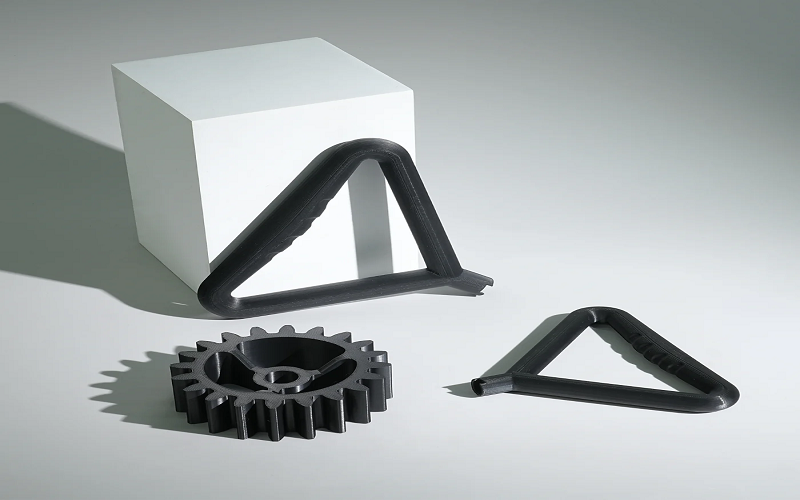
Applications Of PC-ABS And ABS Material
These two materials are widely used across multiple industries, but their specific properties make them suitable for different application areas.
Applications of ABS
ABS is widely used in consumer electronics, automotive parts, appliance housings, and toy manufacturing due to its excellent impact strength, good chemical resistance, and lower cost.
Its ease of processing and molding makes it a common material for injection molding and 3D printing, suitable for producing functional parts with smooth surfaces and complex structures.
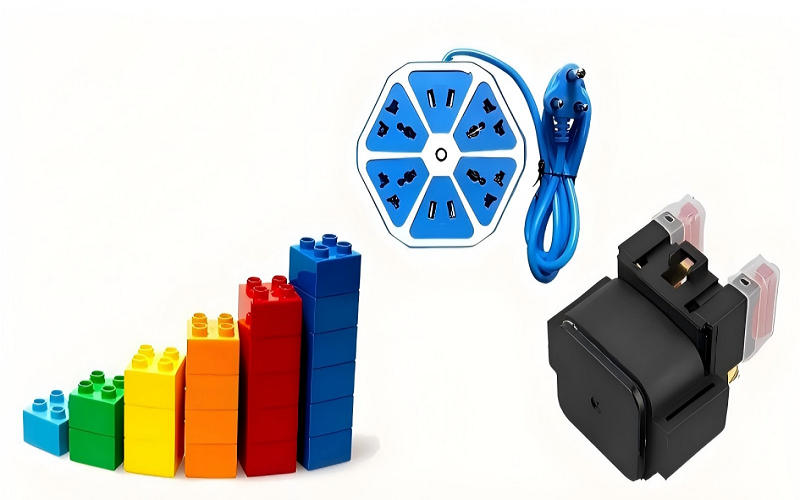
Applications of PC-ABS
PC-ABS combines the high strength and heat resistance of polycarbonate with the ease of processing of ABS, making it suitable for applications requiring higher performance.
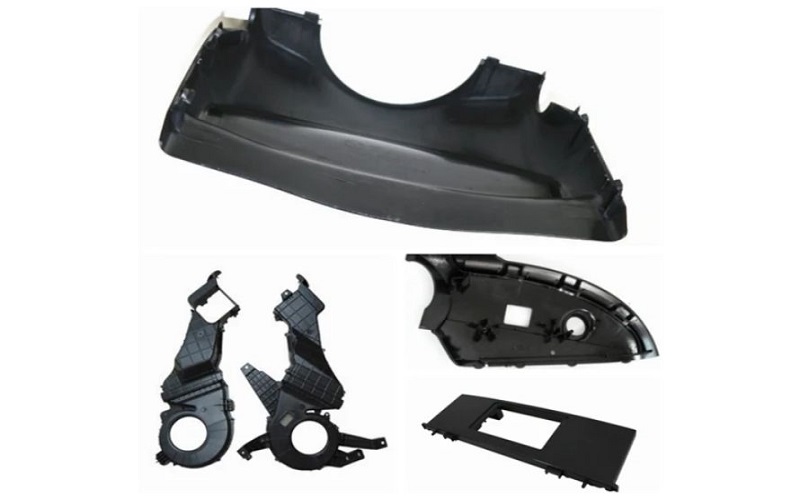
It is commonly used in automotive interior components, medical device housings, high-performance electronic products, and functional parts that demand heat resistance and high impact strength.
Furthermore, PC-ABS shows excellent thermal stability and structural integrity in injection molding and 3D printing, making it ideal for outdoor use and applications in harsh environments.
Other Related Materials
For certain outdoor and high weather-resistance applications, Acrylonitrile Styrene Acrylate (ASA) is also an important option.
ASA offers excellent UV resistance and weatherability, commonly used in outdoor lighting fixtures, headlight lenses, and riot shields, meeting the demands of long-term outdoor use.
In summary, choosing between ABS, PC-ABS, or other related materials depends on specific performance requirements, cost considerations, and application environments, helping you make an informed decision.
Conclusion
ABS and PC-ABS, as two common engineering plastics, each possess unique performance advantages. ABS is widely used in consumer electronics, automotive parts, and toy manufacturing due to its cost-effectiveness, ease of processing, and good impact strength.
In contrast, PC-ABS combines the high strength and heat resistance of polycarbonate with the good processability of ABS, making it suitable for high-end applications requiring greater heat resistance and mechanical performance, such as automotive interiors, medical devices, and high-performance electronic products.
It is necessary to balance performance requirements and cost to select the best material solution for your specific needs: if high mechanical strength and flame retardancy are required, PC-ABS is the best material choice; if processing convenience and cost are priorities, ABS is the best material option.