
Insert molding is a versatile manufacturing process that combines plastic components with metal or other inserts during the injection molding cycle.
This technique offers significant benefits such as improved strength, reduced assembly time, and enhanced product functionality.
In this insert molding design guide, we will provide an in depth understanding of the key principles and design considerations to help product designers and engineers ensure the efficient combination of plastic parts and threaded metal inserts.
Introduction Of Insert Molding
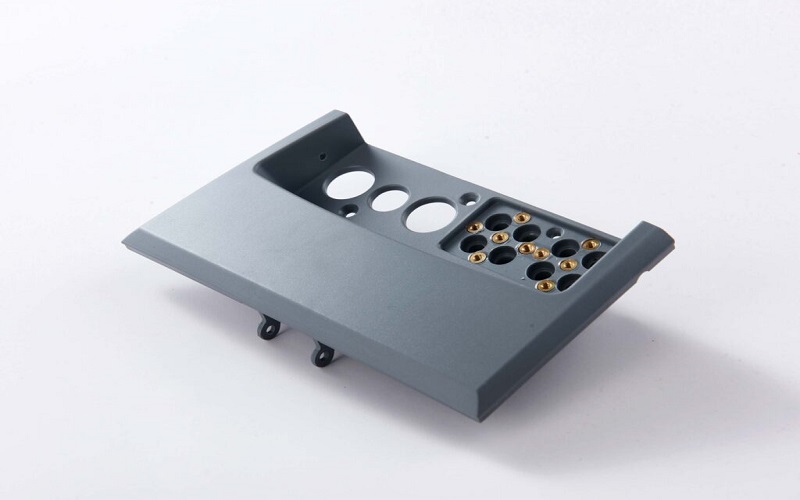
Insert molding is an injection molding process where pre-formed components, typically metal parts, are placed into the mold cavity, and molten plastic is injected around them.
This creates a single, integrated molded plastic part that combines multiple materials, enhancing strength and functionality.
This technique enables the production of complex multi-material components in a single plastic molding step, eliminating the need for secondary assembly processes such as welding or riveting.
Insert molding finds widespread applications in industries like automotive, medical devices, consumer electronics, and industrial equipment, delivering strong, durable, and compact components.
The process supports a variety of insert materials, including stainless steel inserts, brass threaded inserts, and high-performance plastic inserts, allowing designers flexibility to choose materials that meet specific application requirements.
Insert molding is a cost effective manufacturing process that integrates plastic injection techniques to create durable, multi-material components with reduced assembly time and improved product performance.
Insert Molding Process Overview
The main steps of the insert molding process include the following:
Prepare the Inserts: Select and clean the pre-made inserts, which are usually metal or plastic components. Sometimes surface treatments are applied to enhance bonding with the plastic.
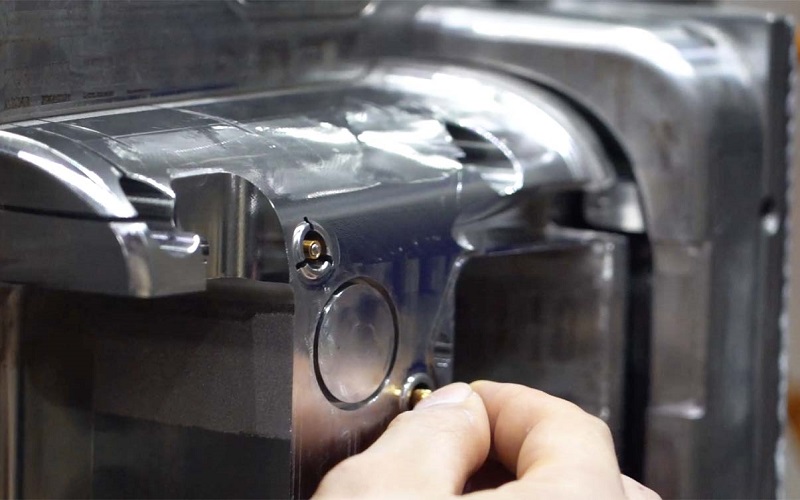
Place the Inserts: Accurately position the inserts into the mold cavity, ensuring they are fixed firmly to prevent shifting during injection. For low production volumes, manual placement is common, while robotic automation is used for high volumes.
Inject Plastic: Inject molten plastic or injected material into the mold, allowing it to flow around and encapsulate the inserts, forming an integrated part.
Cool and Solidify: Maintain appropriate temperature and pressure so the plastic solidifies and bonds firmly with the inserts.
Eject the Part: After cooling, open the mold and use ejector pins or similar devices to remove the molded part, completing the insert molding process.
These steps ensure a tight bond between the inserts and plastic components, enhancing the strength and functionality of the product.
Comparison of Insert Molding With Other Processes
Both insert molding and overmolding are types of injection molding used to create structurally similar parts.
Unlike overmolding, which often employs a two shot molding or two shot process to layer different materials sequentially, insert molding uses specialized equipment to mold directly around the inserts in a single step, ensuring a strong mechanical connection and avoiding chemical corrosion issues.
Compared to methods like heat staking or ultrasonic welding, insert molding offers better control and superior encapsulation.
Understanding these distinctions is crucial in the insert molding design guide, as it informs key design decisions such as material selection, mold design, and insert placement.
By leveraging the advantages of insert molding, designers can optimize the manufacturing process to produce durable, high-quality parts that integrate multiple materials seamlessly.
Material Options For Insert Injection Molding
The choice of materials for insert molding is influenced by the functional and environmental requirements of the final product.Here’s what you need to know:
Insert Materials
Most inserts are metals like stainless steel, brass, or aluminum alloys. These metals are strong, resist corrosion, and handle heat and mechanical stress well.
Plastic inserts in insert molding can include high-performance engineered plastics like PEEK and glass-filled composites.
Plastic Materials
Thermoplastics such as acrylonitrile butadiene styrene (ABS), nylon(PA), and polycarbonate(PC) are commonly used plastics for insert molding. They flow well during molding, provide good strength, and help maintain uniform wall thickness and smooth surfaces.
Elastomers
Elastomers are used in insert molding for their excellent elasticity and recyclability, making them ideal for parts that need to be soft or wear-resistant.
Elastomers like thermoplastic polyurethane (TPU) and thermoplastic elastomers (TPE) offer flexibility and recyclability, making them great choices for such applications.
Matching Materials
It’s important to select plastics that have similar thermal expansion properties to the inserts to avoid cracking or stress from temperature changes.
Surface Treatments
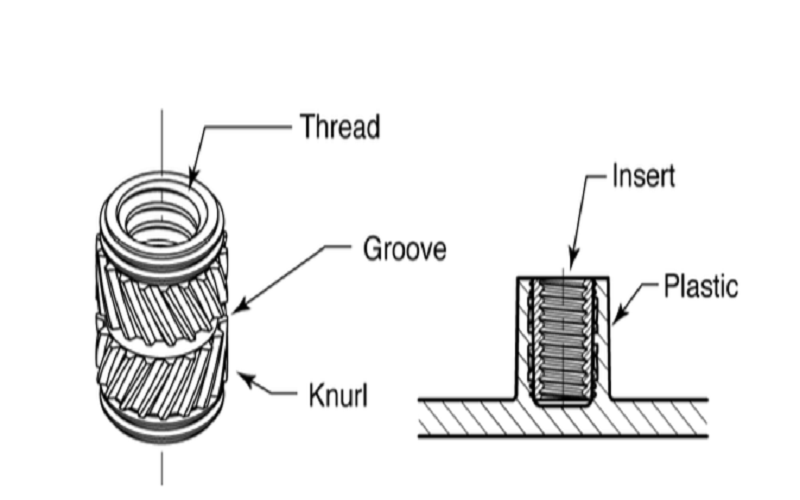
Treating the insert surfaces by knurling, grooving, coating, or sandblasting improves how well the plastic locks onto the insert, making the part stronger and more durable.
Additionally, attention to the surface finish of both the insert and the mold can enhance adhesion and the overall quality of the insert molded parts.
Environmental Considerations
Think about the product’s working environment—chemical exposure, temperature, and mechanical load—to pick materials that will last and maintain their shape.
By integrating the strengths of different materials, you can achieve superior functionality, durability, and cost-effectiveness for your project.
Insert Molding Material Selection Table | ||
|---|---|---|
Material Type | Common Materials | Typical Applications |
Metal Inserts | Stainless steel, Brass, Aluminum alloys | Threaded inserts, electrical contacts, structural reinforcement |
Plastic Inserts | PEEK, Glass-filled composites, PPS | High-performance components, chemical exposure environments |
Thermoplastics | ABS, Nylon (PA), Polycarbonate (PC) | General plastic components, consumer products, housings |
Elastomers | TPU, TPE | Soft-touch grips, wear-resistant parts, flexible seals |
Thermosets | Epoxy, Phenolic resins | Specialized applications, often limited in insert molding |
Key Insert Molding Design Principles
When designing insert molded parts, several key principles must be followed to ensure the quality and performance of the final product:
1. Maintain Uniform Thickness
Uniform wall thickness helps prevent shrinkage, warping, or stress concentration during the molding process, reducing the risk of sink marks and cracks. The design should avoid uneven thickness, especially around the inserts, ensuring an even distribution of the plastic material.
2. Design Appropriate Draft Angles
To facilitate smooth ejection of the part from the mold, appropriate draft angles should be applied to surfaces perpendicular to the ejection direction.
A draft angle between 1° and 3° is generally recommended, with the exact value adjusted according to part size and surface texture requirements.
3. Avoid Sharp Corners
Sharp corners tend to be stress concentration points, which can cause cracks or fractures during use. Rounded corners should be used, with a radius generally not less than half the wall thickness, to improve mechanical strength and molding quality.
4. Proper Positioning and Fixation of Inserts
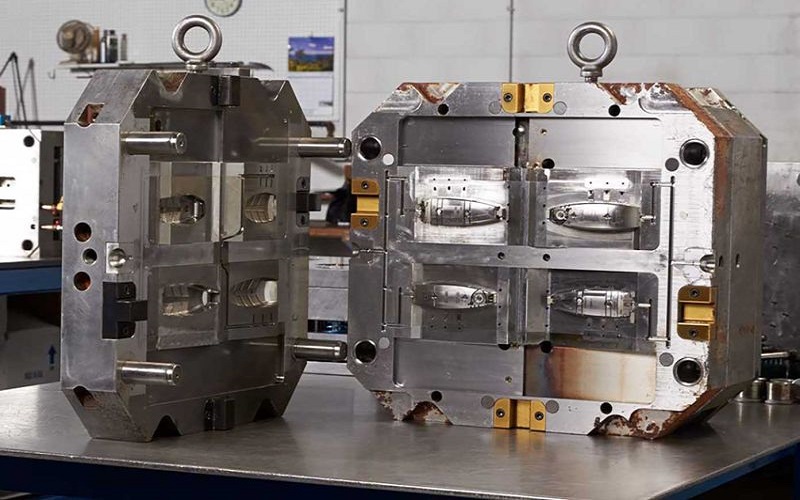
Inserts must be firmly positioned in the mold to prevent movement or displacement during injection molding. Mold designs typically use locating pins, grooves, or clamps to secure the inserts and ensure uniform plastic encapsulation.
5. Mechanical Locking Design
Since there is usually no chemical bonding between plastic and metal inserts, a mechanical interlock should be designed. Features such as knurls, chamfers, grooves, or through-holes on the outer diameter of the insert help prevent rotation or pull-out under load.
6. Consideration of Thermal Expansion Coefficient Matching
Differences in thermal expansion coefficients between plastic and metal can cause stress after cooling, affecting part durability. Designers should select materials with similar thermal expansion properties or provide stress relief in the structural design.
By following these design guidelines, the production efficiency and product quality of insert molded parts can be effectively improved, production costs reduced, and diverse application requirements met.
Common Defects & Prevention Tips In Insert Molding Process
Despite the maturity of the insert molding process, some common defects may still occur. Understanding these defects and their causes helps to take effective measures during design and manufacturing stages to improve product quality.
1. Plastic Shrinkage and Sink Marks
Plastic shrinks during cooling, especially around the inserts. If the plastic thickness is uneven, sink marks are likely to form.
To prevent this defect, maintain a uniform wall thickness design, avoid local thick sections, and properly design the size and position of the inserts to ensure sufficient plastic filling.
2. Insert Displacement
Inserts may shift due to the impact of high-pressure molten plastic during injection, causing dimensional deviations or functional failures.
Using locating pins, grooves, or clamps to fix the inserts securely in the mold is key to preventing displacement.
3. Plastic Cracking
Differences in thermal expansion coefficients between plastic and metal inserts can generate internal stresses after cooling, leading to plastic cracking.
Selecting materials with similar thermal expansion properties or adding stress relief structures in the design can effectively reduce cracking risk.
4. Demolding Difficulties and Surface Defects
Inappropriate draft angles or mold design may cause difficulties in demolding, resulting in scratches or deformation. Designing reasonable draft angles (usually between 1° and 3°) and avoiding sharp corners help facilitate smooth demolding and improve surface quality.
5. Poor Bonding Between Inserts and Plastic
Since plastic and metal usually do not form chemical bonds, bonding strength mainly depends on mechanical locking design.
Enhancing surface texture treatments on inserts, such as knurling, grooves, or through-holes, can improve mechanical interlocking and increase bonding strength.
By preventing and controlling the above common defects, insert molding companies can significantly improve the quality and reliability of insert molded parts, reduce production costs, and ensure the final products meet application requirements.
When To Choose Insert Molding?
Using insert molding is the ideal choice when you need to combine multiple materials into a durable component with enhanced mechanical properties. It is especially suitable for applications requiring a strong bond between metal inserts and plastic parts.
When the finished piece demands high precision, reduced assembly time, and improved product reliability, the insert molding process is the preferred solution.
Insert molding is particularly advantageous during the product development process when integrating various materials, especially when the inserts are typically metal and the overmolded material is rigid plastic or thermoplastic elastomers.
Additionally, insert molding is beneficial when the design requires efficient heat transfer, electrical conductivity, or embedding electronic components such as circuit boards within plastic parts.
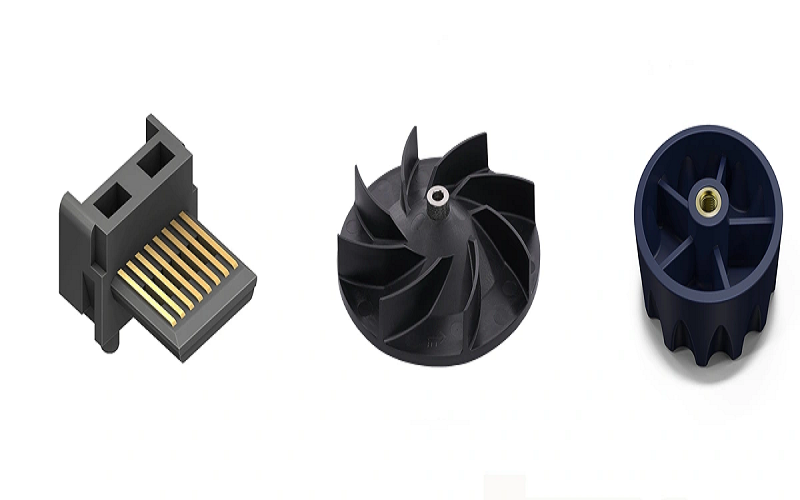
Moreover, insert molding is suitable for consumer products that use plastic handles or grips made from thermoplastic polyurethane or similar materials, combining functionality with aesthetics.
This technique ensures uniform plastic thickness and smooth transitions, helping to avoid sink marks and sharp corners, thereby protecting the integrity of the parts.
In summary, when your design centers on “metal/functional inserts + plastic housings” and aims for strength, precision, reliability, and assembly simplification, choosing insert injection molding is the most straightforward and efficient approach.
Conclusion
The insert molding design guide emphasizes the importance of maintaining uniform wall thickness, applying appropriate draft angles, and avoiding sharp corners during the design process.
Additionally, correctly positioning and securing metal or other inserts, as well as designing mechanical locking features to ensure a strong bond between the plastic and the inserts, are key to achieving high-quality molded parts.
Selecting compatible materials and applying suitable surface treatments help reduce cracking and deformation caused by differences in thermal expansion, enhancing product durability and functionality.
By following these design principles, product designers and engineers can effectively improve production efficiency, reduce costs, and meet diverse application requirements.
As a leading injection molding company in China, FOWMOULD leverages extensive experience and a professional technical team to provide customers with high-quality insert molding solutions.
Choosing FOWMOULD as your manufacturing partner ensures you receive a tailored, comprehensive solution that guarantees your next project is completed smoothly and efficiently, helping your products achieve outstanding performance and market competitiveness.