
Hot runner injection molding technology, as a significant innovation in the field of plastic manufacturing, has greatly improved production efficiency and product quality.
By keeping the plastic polymer in a molten state and injecting it directly into the mold cavities, hot runner systems effectively reduce material waste and production cycles, making them suitable for high-precision, multi-cavity mold batch production.
This article will delve into the working principles, system types, key components, and extensive applications of hot runner injection molding across various industries, helping readers gain a comprehensive understanding of the advantages and challenges of this advanced injection molding technology.
What Is Hot Runner Injection Molding?
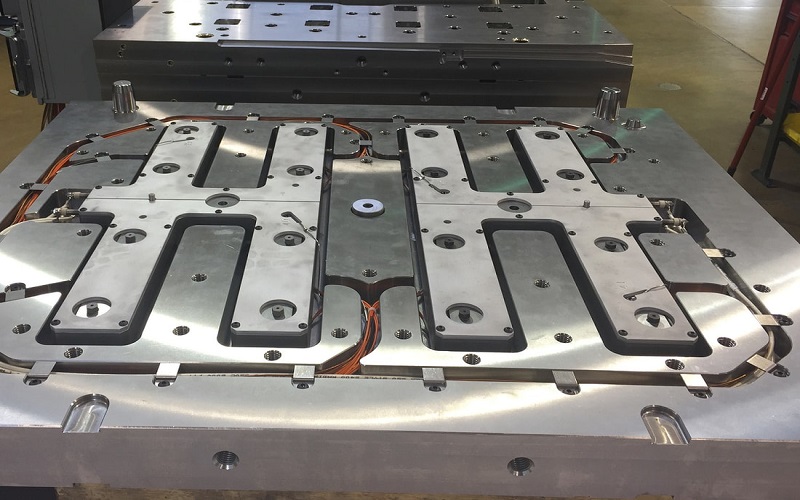
A hot runner is an injection molding system that employs a heated manifold as its core component. Hot runner injection molding technology integrates a heating system within the plastic injection molds to maintain the plastic melt in a consistently molten state throughout the runner.
Unlike traditional cold runner systems, which require the plastic to cool and solidify in the runner before ejection, hot runner systems maintain stable temperature control throughout the entire injection molding process.
This eliminates the need for cold sprues and cold runners, thereby reducing plastic waste and improving molding efficiency.
This technology ensures optimal flowability and viscosity of the plastic throughout the injection process through precise temperature control, enabling efficient and high-quality part production.
Key Components Of Hot Runner Systems
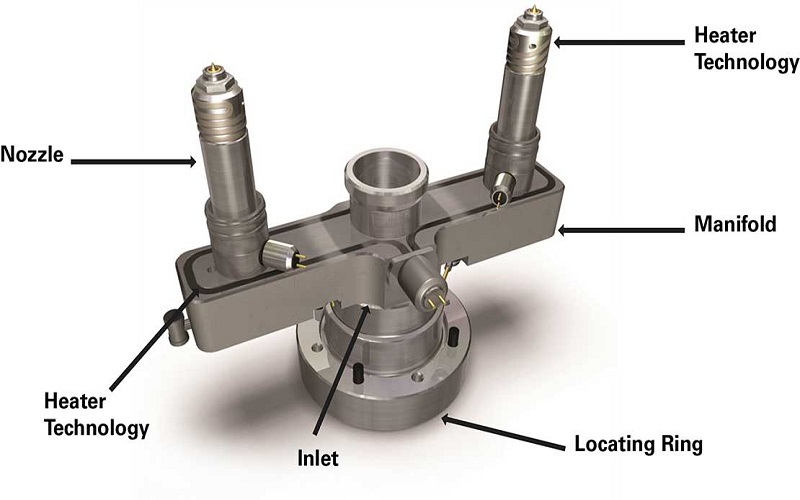
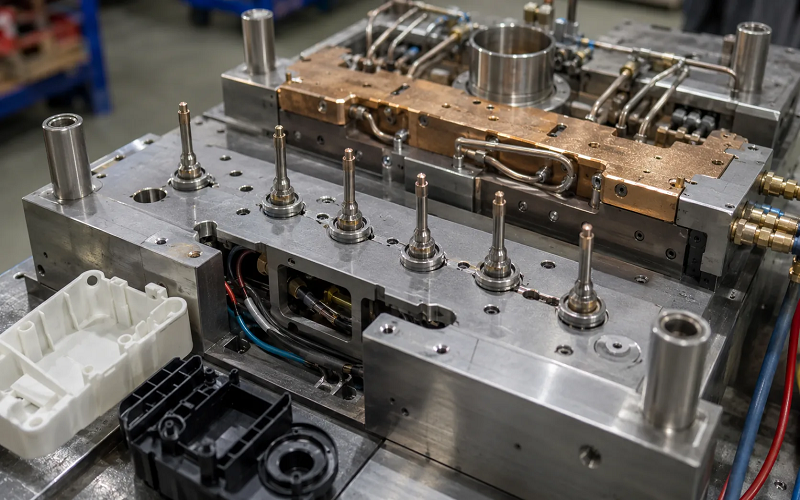
The hot runner system consists of several key components, including an internally heated manifold system, hot nozzles, and temperature controllers.
These components work together to ensure the molten thermoplastic flows smoothly and evenly into the mold cavities, producing high-quality plastic products with minimal defects.
The precise temperature control also allows for the molding of thermally sensitive polymers that require consistent temperature to avoid product deformation.
Hot Nozzles
Hot nozzles are critical components of a hot runner system, and nozzle types include open-gate and valve-gate nozzles. The choice of nozzle type directly impacts the selection and design of the hot runner system.
Open nozzles are straightforward in design and are used for less complex applications, while valve gates nozzles offer precise control over the injection points, making them suitable for more demanding applications.
Manifolds
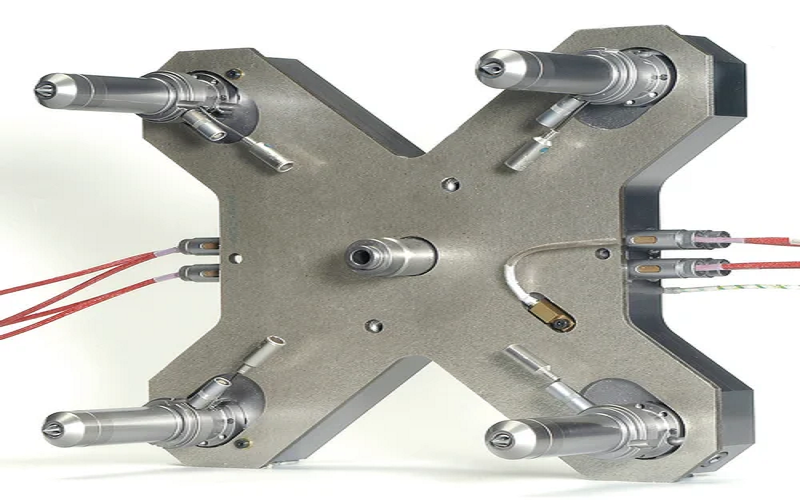
Manifolds are used in multi-cavity molds or when multiple injection points are required in manifold systems, serving as an essential entry point for the distribution of materials.
The heated manifold ensures that the plastic waste remains molten material as it travels through the system, reducing waste and improving efficiency.
The hot manifold system distributes the molten plastic evenly to each cavity, maintaining a consistent melt temperature and processing temperature to ensure uniform plastic flows.
This precise thermal management minimizes cooling time and prevents defects such as sink marks or warpage in the molded part.
Temperature controllers
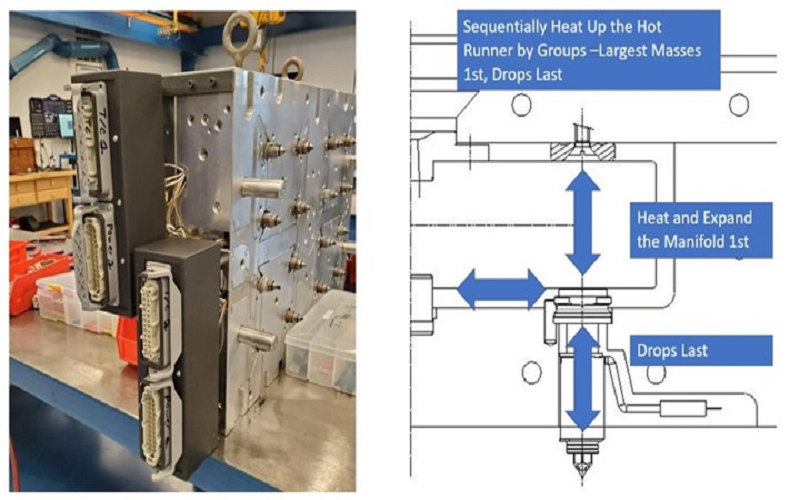
Temperature controllers are essential for maintaining precise temperature control within the hot runner system. They consist of the main unit, cables, connectors, and various plugs.
These controllers ensure that the plastic remains at the optimal processing temperature, preventing issues like material degradation or inconsistent flow, which can affect the quality of the final product.
Each of hot runner components plays a vital role in ensuring the smooth operation of the hot runner system. Heaters and thermocouples maintain the necessary temperatures, while seals and connectors ensure that the system remains leak-proof and efficient.
How Hot Runner Systems Work In Injection Molding?
Hot runner systems are an advanced technology that integrates heating components directly into the injection mold.
The core component is the hot manifold, which continuously heats the plastic so that it remains in a molten state from the injection molding machine into the mold, preventing it from cooling and solidifying too early.
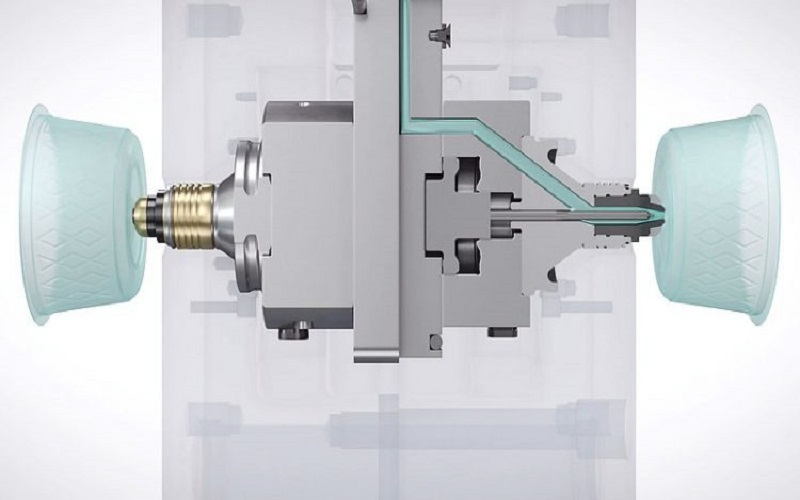
The working process is straightforward: The injection molding machine first melts the plastic pellets into liquid, then delivers the molten plastic into the hot runner system through the nozzle. The manifold then evenly distributes the plastic to multiple nozzles, each aligned with a mold cavity.
Valve-gate nozzles use a pin or valve mechanism to open and close the gate, providing better control. This allows for precise timing and reduces visible gate marks on the finished product. In contrast, open-gate nozzles allow continuous flow of plastic and are typically used for simpler parts.
Temperature controllers play a crucial role by regulating the temperature of the heating components to ensure uniform melt temperature throughout the system. This precise thermal management greatly reduces the risk of material degradation, which is especially important when processing thermosensitive plastics.
The mold itself is designed with specific geometries to accommodate the hot runner system, including CNC machining to create the necessary channels and cavities for the nozzle tips and manifold. The locating ring aligns the mold with the injection molding machine nozzle to ensure accurate plastic flow.
By keeping the plastic in a molten state within the hot manifold and nozzle tips, hot runner injection molding eliminates the need for cold runners and reduces energy consumption. This results in faster cycle times, lower material waste, and higher part quality.
In summary, these internally heated systems to deliver molten plastic directly into the mold cavities with precise temperature and flow control. This enhances the injection molding process and makes it the ideal choice for high-volume production of complex and high-performance plastic parts.
Advantages Of Hot Runner Injection Molding
Hot runner injection molding offers several significant advantages over traditional cold runner systems, making it easy for readers to understand their significance in the manufacturing process. Below are the key benefits:
Faster Cycle Times
Since there’s no need to cool and remove runners, cycle times are shorter. This increases production efficiency, allowing for higher output in less time, ideal for large-scale manufacturing.
Improved Part Quality
Precise temperature and flow control (especially with valve gate systems) ensures consistent filling, reducing defects like sink marks, warpage, or flow lines. Hot runners also produce parts with better surface finish and dimensional accuracy.
Enhanced Design Flexibility
Hot runner systems can have insulated or heated designs, which provide flexibility in maintaining the optimal temperature for different molding applications.
Reduced Material Waste
Hot runner systems keep the plastic molten in the runners, eliminating the need to eject and discard solidified runners. This significantly reduces material waste, especially beneficial for expensive resins or high-volume production.
Limitations Of Hot Runner Injection Molding
Despite their many advantages, hot runner injection molding have some limitations that users need to be aware of.
Hot runner systems require a higher initial investment than cold runner molds due to their complex design and heating components like manifolds, nozzles, and temperature controllers. This cost can be a challenge for low-volume or prototype projects.
They also need more maintenance and technical expertise. Heating elements, thermocouples, and seals must be regularly checked to avoid failures that cause downtime. This makes maintenance more complicated than with simpler cold runner systems.
Additionally, hot runner molds may leave a small mark where the molten plastic enters the cavity, which can be an issue for parts needing a perfect surface finish.
Understanding these limitations alongside the hot runner advantages allows manufacturers to make informed decisions based on their specific production needs, balancing initial investment, maintenance cost, and production volume to optimize overall efficiency.
Application Of Hot Runner Injection Molding
Hot runner injection molding is widely used in various industries due to its efficiency and ability to produce high-quality plastic parts.
In the automotive industry, hot runner systems help make precise and durable components like dashboard panels and connectors, ensuring accuracy and good surface finish.
In the medical field, this technology produces detailed and sterile parts such as syringe components and surgical tools, with precise temperature control reducing defects and contamination.
Consumer goods manufacturers use hot runners to efficiently produce items like appliance parts and packaging caps, benefiting from faster cycles and less waste.
Hot runner systems are especially useful for multiple cavities molds, allowing multiple parts to be made at once, which boosts productivity.
They also work well with heat-sensitive materials by maintaining uniform temperatures and using hot tip nozzles to reduce gate marks, improving part appearance.
Hot Runner vs Cold Runner Molds
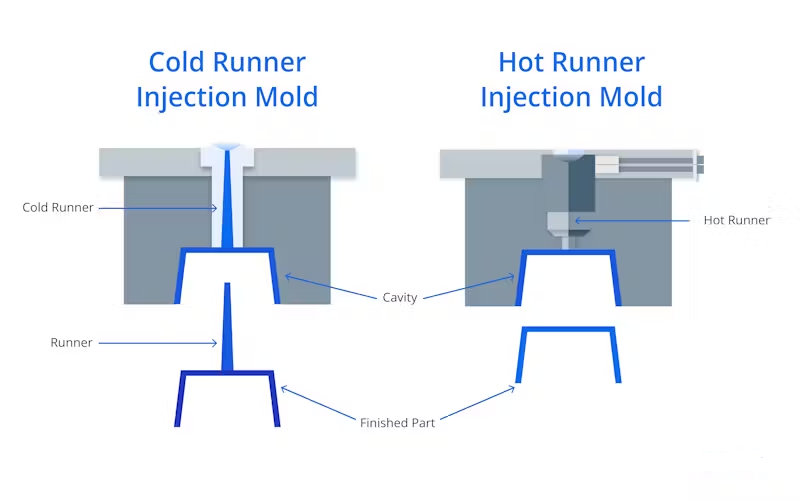
Hot runner molds and cold runner molds represent two distinct approaches in the injection molding process, each with unique characteristics and suitable applications. The debate between hot runner and cold runner systems typically centers around mold design,efficiency, cost, and production requirements.
Hot runner molds use heated components to keep the plastic molten within the runner channels, eliminating traditional cold runners and avoiding the need to trim and recycle excess plastic.
This significantly reduces material waste. Hot runner molds can consistently produce over 730,000 parts per shift, making them ideal for high-volume production.
In contrast, cold runner molds use unheated channels to guide molten plastic into the mold cavities. The plastic solidifies in the runner and is ejected along with the finished part, usually requiring additional trimming or recycling.
Some cold runner molds feature insulated runners, which facilitate mold plate removal when molding multi-color products.
Choosing between hot runner and cold runner molds mainly depends on production scale and budget constraints.
Hot runners are suited for large-scale production and applications demanding high precision and material utilization, while cold runners offer an economical and practical solution for low volume production or diverse material use cases.
Key Differences Between Hot Runner & Cold Runner Molds | ||
Aspect | Hot Runner | Cold Runner |
Runner State | Plastic remains molten in heated runners | Plastic solidifies in unheated runners, forming sprues and runners. |
Material Waste | Minimal waste, as runners are reused in each cycle | Higher waste, as solidified runners are ejected and often discarded |
Cycle Time | Faster cycles due to no runner cooling/removal | Slower cycles, as runners cool with the part and require ejection |
Cost | Higher initial cost (complex system, heating components) | Lower initial cost (simpler design, no heating system) |
Maintenance | Requires regular maintenance of heating elements and temperature controls | Less maintenance, but runner cleaning may be needed |
Part Quality | Consistent quality, better surface finish (especially with valve gates) | Potential for defects like sink marks or flow lines if not optimized |
Mold Complexity | More complex due to manifold, nozzles, and temperature control systems | Simpler design with basic runner channels |
Summary
Hot runner injection molding is a transformative technology in the plastics industry, offering numerous advantages such as reduced cycle times, improved part quality, and extensive customization options.
By maintaining plastic in a molten state throughout the injection process, hot runner systems eliminate the need for cold runners, resulting in more efficient and cost-effective production.
However, there are also limitations to consider, including higher initial costs, precision manufacturing requirements, and complex maintenance procedures.
Understanding these factors helps in making informed decisions when selecting and implementing hot runner systems. By following the design procedures and considering the specific requirements of the application, manufacturers can optimize their use of hot runner technology to achieve superior results.