
In the world of plastics, PET and PETG stand out as two versatile materials widely used across various industries, from packaging to 3D printing.
Although their names are similar, these materials offer unique properties that influence their performance, applications, and processing methods.
Understanding the key differences in mechanical properties and applications between PET vs PETG is essential for selecting the most appropriate material for your specific needs, whether it’s for durable packaging, medical devices, or functional prototypes.
This article explores the characteristics, applications, and advantages of PET and PETG to help you make an informed decision.
What Is PET?
Polyethylene terephthalate (PET) is a polyester material polymerized from terephthalic acid and ethylene glycol.
PET is a semi crystalline polymers known for its rigidity and high tensile strength, making it suitable for applications requiring structural integrity.
This semi crystalline PET structure means that its polymer chains are arranged in ordered, crystalline regions interspersed with amorphous, non-crystalline regions.
This crystalline nature contributes to PET’s excellent mechanical resistance and dimensional stability, which are critical for maintaining shape and strength under stress.
PET also exhibits good chemical resistance and thermal properties, allowing it to perform well in environments with exposure to various chemicals and moderate heat.
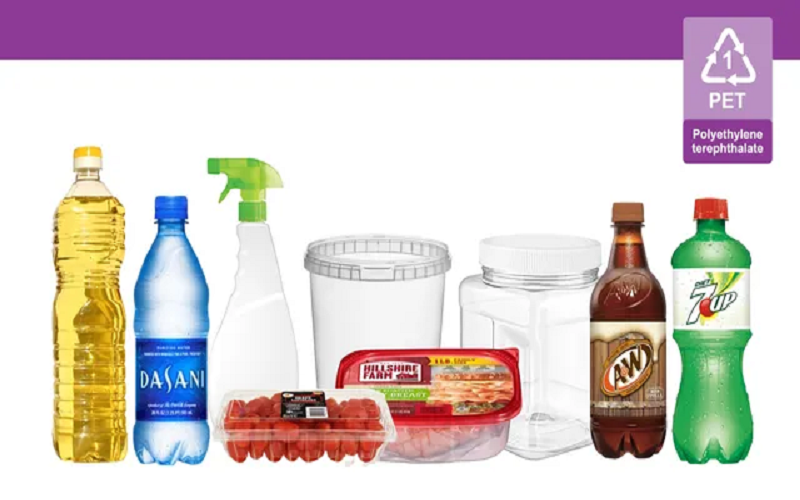
Due to its excellent barrier properties against gases like oxygen and carbon dioxide, PET plastic is widely used in packaging applications such as food containers and water bottles, where preserving freshness is essential.
The typical PET structure provides a balance of durability and clarity, making it a versatile filament material in manufacturing and 3D printing contexts where precise temperature control and dimensional accuracy are required.
What Is PETG?
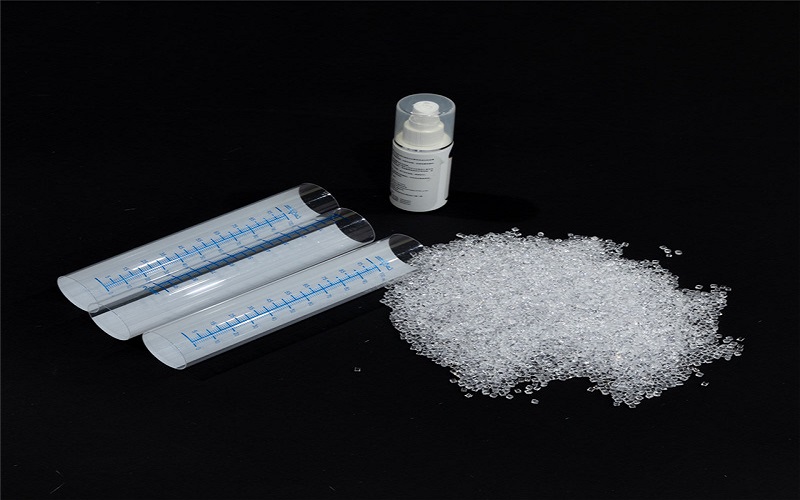
Polyethylene terephthalate glycol (PETG) is a thermoplastic polyester that results from modifying PET by incorporating glycol monomers, specifically cyclohexanedimethanol (CHDM) glycol units, into its polymer chain.
This glycol modification transforms PET’s semi-crystalline structure into an amorphous material, which significantly impacts its mechanical and thermal properties.
PETG represents a key advancement over traditional PET, offering enhanced flexibility, impact resistance, and improved print quality. The glycol additive prevents crystallization during cooling, making PETG easier to thermoform and process, with less warping and improved surface finish in 3D printing applications.
This amorphous PETG maintains higher ambient temperatures during processing, allowing for better dimensional stability and consistent results.
One of the key advantages of PETG is its high chemical resistance, which surpasses that of PET, making it suitable for applications involving exposure to acids, bases, and various solvents.
This chemical modification also enhances PETG’s compatibility with sterilization methods such as gamma radiation and ethylene oxide, expanding its use in medical and food contact applications where hygiene and safety are paramount.
These properties make PETG ideal for producing durable and functional prototypes, protective equipment, and packaging materials that require toughness and transparency.
PET vs PETG : Material Properties
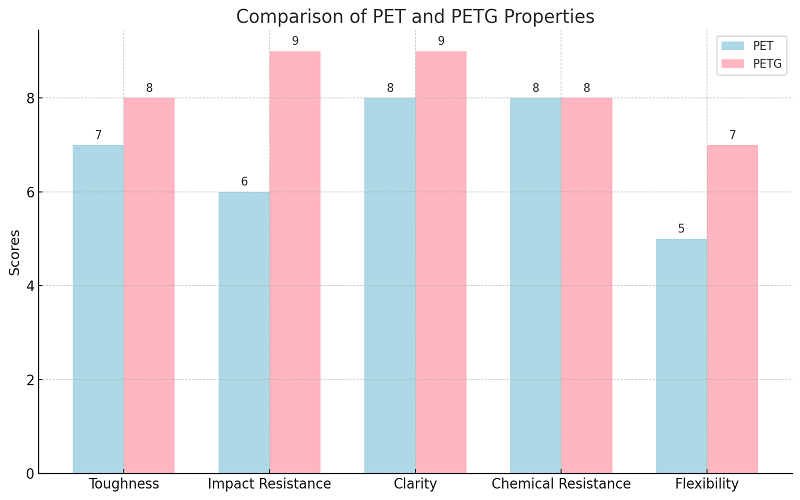
When comparing PET and PETG, both materials share similar mechanical performance and chemical properties, which often leads to confusion about their differences.
While they exhibit comparable strength and resistance to various chemicals, subtle distinctions in their molecular structure influence their behavior under stress and exposure to different environments.
Performance Parameter | PET | PETG |
|---|---|---|
Density(g/cm³) | 1.37 – 1.38 | 1.27 – 1.29 |
Tensile Strength(MPa) | 96.5 – 124.1 | 50 – 77.2 |
Impact Strength (J/ M) | 13.34 – 34.68 | 90.8 |
Heat Deflection Temperature (HDT) (°C) | 70 – 80 | 65 – 75 |
Molding Shrinkage Rate(%) | 0.2-0.5 | 0.3 – 0.7 |
Chemical Structures
PET is a semi-crystalline thermoplastic known for its rigidity and high tensile strength, making it suitable for structural applications. It is widely used in food packaging, beverage bottles, and injection molding, offering excellent mechanical performance and chemical resistance.
PETG is a glycol-modified amorphous copolymer with chains arranged randomly, providing better flexibility and impact resistance, easier processing, and high transparency. It is suitable for applications requiring high visual appeal and chemical resistance, such as medical applications and food packaging.
Mechanical Properties
As a semi-crystalline polymer, PET has high rigidity and tensile strength, making it suitable for structural components subjected to significant mechanical loads. However, it is more brittle and prone to fracture under impact.
PETG, due to its modified structure, exhibits better toughness and impact resistance, allowing it to withstand greater strain before deformation. It is ideal for applications requiring impact resistance and flexibility.
Additionally, PETG can be reinforced with common plastic additives like carbon fiber to form PET filaments, further enhancing mechanical performance and heat resistance to meet high-performance demands.
Thermal Properties
PET, as a semi-crystalline polymer, has a higher heat deflection temperature and heat resistance, maintaining mechanical performance at elevated temperatures, suitable for high-temperature environments.
PETG, being an amorphous polymer, has a relatively lower heat deflection temperature but offers lower processing temperatures and good thermal stability, facilitating thermoforming and 3D printing.
Chemical Resistance
PET has good chemical resistance, able to withstand various acids, bases, and solvents, making it suitable for food packaging and medical devices. Its chemical stability also makes it suitable for injection molding processes, ensuring the product does not easily degrade or deform during use.
In contrast, PETG, due to the addition of glycol, has stronger chemical resistance and can withstand common acidic and alkaline solutions as well as sterilization treatments such as gamma radiation and ethylene oxide. It is widely used in medical and food packaging fields that require high hygiene standards.
Abrasion Resistance
Both PET and PETG exhibit good abrasion resistance, which makes them suitable for applications where surface wear is a concern. PET’s semi crystalline structure contributes to its hardness and durability, allowing it to maintain surface integrity under repeated friction or mechanical contact.
PETG, while slightly softer due to its amorphous nature, still offers excellent abrasion resistance combined with greater flexibility.
Overall, the main difference between PET and PETG lies in their crystalline structures and resulting physical properties. PET’s semi crystalline nature offers rigidity and higher thermal resistance, while PETG’s amorphous structure delivers enhanced flexibility, impact resistance, and ease of processing.
PET vs PETG : How To Choose Filament Materials For 3D Printing?
When deciding between PET and PETG filaments for 3D printing, several factors come into play.
PET filament offers high rigidity and excellent dimensional stability, making it suitable for parts that require structural strength and precision.
However, it can be more challenging to print due to its semi-crystalline nature, which demands precise temperature control to avoid warping and crystallization.
On the other hand, PETG filaments are widely used in 3D printing due to their excellent layer adhesion, low shrinkage, and impact-resistant characteristics. This means PETG typically requires lower printing temperatures and less stringent environmental controls.
PETG filaments exhibit good layer adhesion and minimal warping, which is advantageous for larger or more complex prints.
Additionally, PETG’s enhanced chemical resistance and compatibility with various sterilization methods make it a preferred choice for medical and food-related applications.
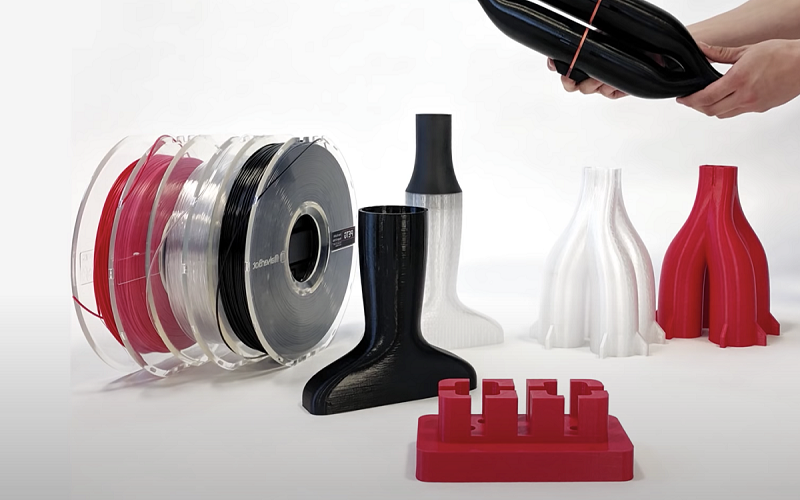
By considering the same properties, processing parameters, and application needs, you can select the optimal filament material that balances performance, cost, and sustainability for your 3D printing projects.
The following PETG parameters can serve as a reference:
Parameter | PETG Recommended Range |
|---|---|
Hot End Temperature | 230°C – 260°C |
Print Bed Temperature | 80°C – 90°C |
Print Speed | Moderate (40 – 60 mm/s) |
Cooling Fan Speed | 0% – 50% (adjust as needed) |
Retraction Speed | Slow retraction recommended |
Layer Height | 0.1 mm – 0.3 mm |
Applications Of PET And PETG
PET and PETG find extensive use across various industries due to their unique material properties.
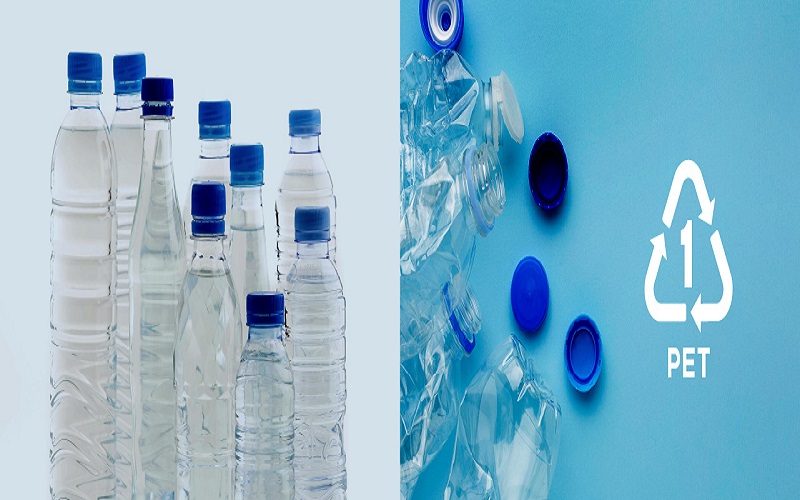
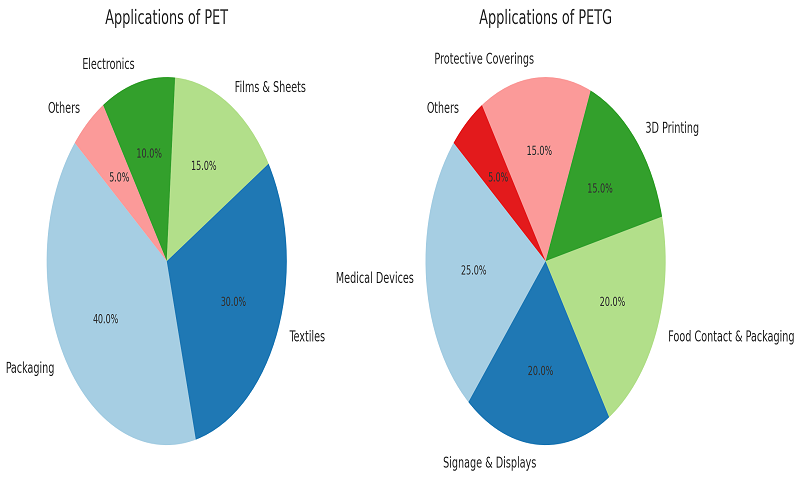
PET is primarily used in packaging, especially for manufacturing PET bottles, food jars, and transparent food trays. Its high clarity and excellent barrier properties make it an ideal material for preserving food and beverages by effectively blocking oxygen and moisture.
PET injection molding is a common manufacturing process used to create these precise and durable packaging components efficiently.
Additionally, PET is widely used in the production of polyester fibers, which are applied in clothing, upholstery, and carpets, leveraging its high strength and durability.
In contrast, PETG, with its enhanced flexibility and impact resistance, is the preferred material for applications requiring toughness and durability.
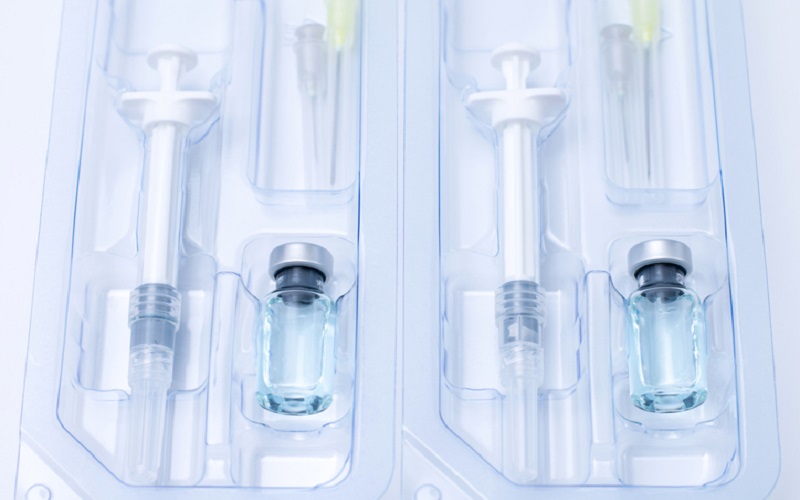
PETG is commonly used in medical device packaging, face shields, and equipment components, thanks to its good compatibility with sterilization methods such as gamma radiation and ethylene oxide.
Moreover, its very low warpage and excellent layer adhesion make PETG an excellent choice for 3D printing large functional parts. PETG filament is favored by additive manufacturing enthusiasts for its ease of printing combined with high strength, improved flexibility, and impact resistance.
Furthermore, PET composite filaments reinforced with carbon fiber or other additives extend the application range of PET and PETG by improving mechanical strength and thermal properties. These composites are particularly valuable in demanding engineering and industrial contexts.
The Key Differences Between PET And PETG
The main differences between PET and PETG are as follows:
Chemical Structure
PET is a semi-crystalline polymer containing crystalline and amorphous regions, which gives it rigidity, high tensile strength, and good dimensional stability.
PETG, as the totally amorphous counterpart formed by incorporating glycol monomers such as cyclohexanedimethanol (CHDM) into the PET chain, has a disrupted crystalline structure, making it more flexible and impact resistant.
Transparency
PET is known for its high transparency, making it suitable for applications requiring product visibility. Although PETG remains transparent, its clarity is slightly lower than that of PET.
Mechanical Performance
The structure of PET makes it relatively brittle, suitable for applications requiring structural strength. PETG offers greater ductility and toughness, allowing significant deformation under stress without breaking, making it ideal for applications needing impact resistance and flexibility.
Cost
PET generally has a cost advantage due to abundant raw materials and lower production costs, making it a low cost option suitable for large-scale packaging.
PETG is slightly more expensive but offers superior mechanical properties and easier processing, providing higher value.
Recyclability
PET is fully compatible with standard recycling systems, which benefits environmental protection. Although PETG is recyclable, its recycling process is more complex than PET’s and requires consideration of appropriate recycling routes.
In summary, both PET and PETG have their own advantages and disadvantages, suitable for different application scenarios.
PET, with its high rigidity, excellent transparency, and cost-effectiveness, is ideal for packaging and structural uses; whereas PETG, due to the addition of glycol, offers better flexibility, impact resistance, and easier processing, making it suitable for medical packaging, 3D printing, and applications requiring durability.
Choosing the right material based on specific performance requirements and processing conditions will achieve the best results.