
Insert Injection Molding is an advanced manufacturing process that integrates metal or other durable materials as inserts into plastic components during the plastic injection molding process, significantly enhancing the product’s strength and functionality.
This process not only enables efficient combination of multiple materials but also reduces subsequent assembly steps, lowering production costs and time.
With the growing demand for high-performance, lightweight products in industries such as automotive, medical devices, and consumer electronics, insert molding technology is becoming an increasingly important choice in manufacturing.
This article will provide an in-depth exploration of the insert molding process, design considerations, and its wide range of applications to help readers gain a comprehensive understanding of the advantages and challenges of this modern manufacturing technology.
What Is Insert Injection Molding?
Insert injection molding is a specialized manufacturing process that combines metal or other durable inserts with plastic parts in a single molding cycle.
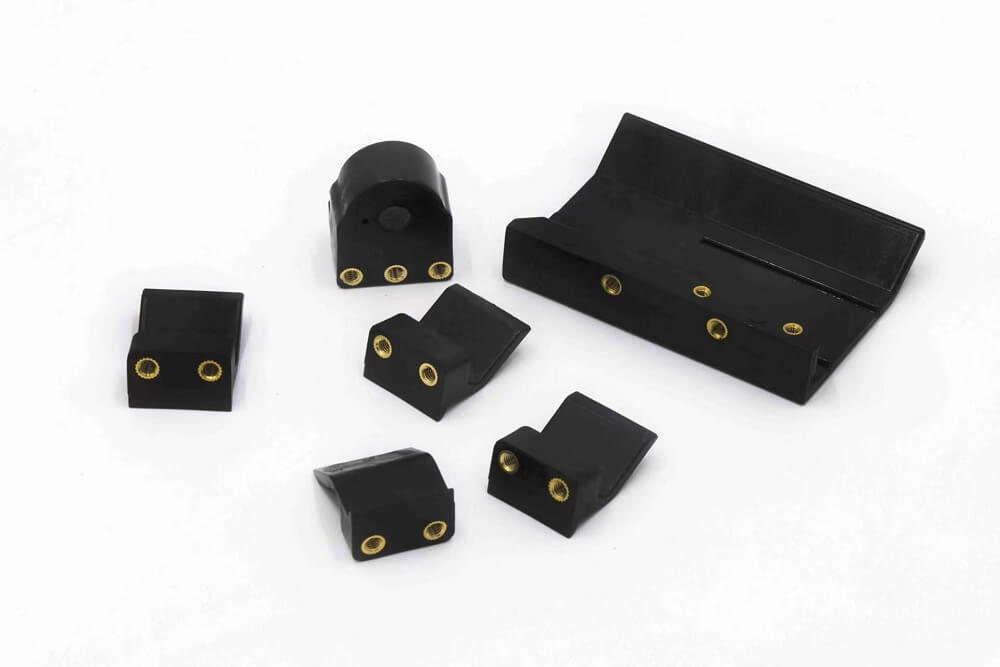
Insert injection molding typically involves placing preformed inserts, which can include threaded inserts, electronic components, or other components, into the mold cavity.
Molten plastic is then injected around these inserts under high pressure, bonding the materials together in a single part. This one cycle process ensures excellent adhesion and part durability, eliminating the need for secondary assembly steps and fasteners.
This technique allows for the creation of hybrid components that leverage the strength and functionality of metal inserts alongside the versatility and cost-effectiveness of plastic materials.
By embedding inserts directly into the plastic during the injection molding process, injection molding manufacturers can produce parts that are stronger, more durable, and often lighter than those made from a single material.
Unlike traditional assembly methods that require two step process to join metal and plastic components, insert injection molding integrates these materials in one seamless operation.
This not only reduces production time and labor costs but also enhances the mechanical properties and corrosion resistance of the final product.
Overall, insert injection molding offers manufacturers significant cost savings, lower production time, and improved product performance, making it a preferred choice for producing complex, multi-material components with enhanced mechanical properties and design flexibility.
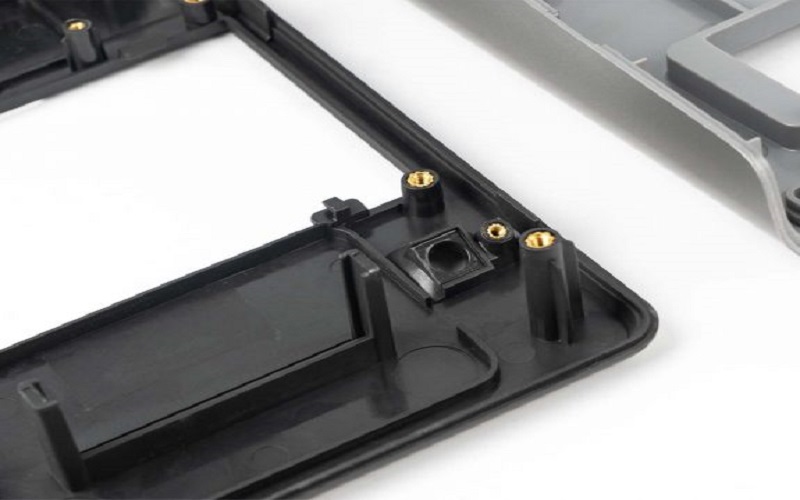
Steps of The Insert Molding Process
The insert molding process involves several key steps to ensure the production of high-quality, durable parts. Here is an overview of the typical workflow:
Custom Tooling Preparation: The first step is to custom-build a mold tool designed to securely hold the insert in place. This tooling must accommodate the specific dimensions and features of the insert, including any undercut features or threaded inserts.
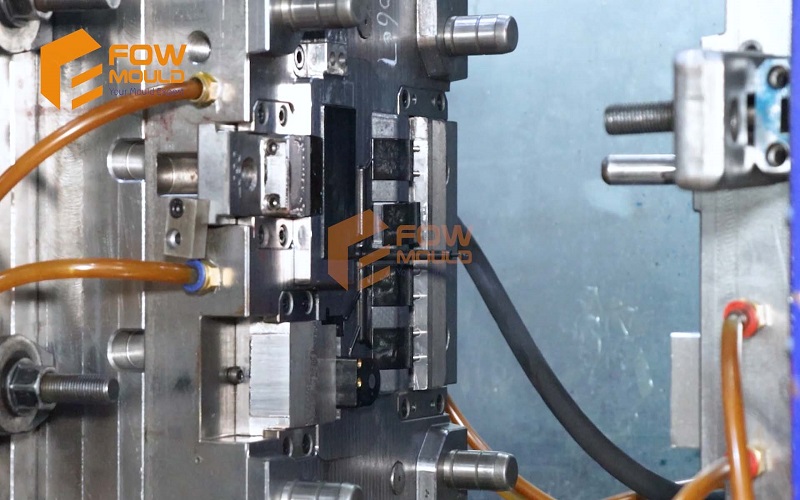
Insert Placement: Inserts, which can be metal parts, electronic components, or other materials, are precisely positioned into the mold cavity. This can be done manually for low volume prototypes or automated using robotic systems for high-volume production, ensuring consistent placement and orientation.
Injection of Molten Plastic: Molten plastic, often a thermoplastic material, is injected under high pressure into the mold cavity. The plastic flows around the insert, filling the mold completely and bonding with the insert surface to create a strong mechanical and chemical connection.
Cooling and Solidification: After injection, the plastic is allowed to cool and solidify around the insert. Cooling time varies depending on the material properties, part geometry, and wall thickness. Proper cooling is essential to minimize shrinkage and prevent deformation.
Mold Opening and Part Ejection: Once cooled, the mold opens, and the finished part is ejected. Mold designs often include retention features to prevent insert shifting during this phase.
Post-Processing: The molded part may undergo additional finishing processes such as trimming, deburring, surface treatments, or coatings to achieve the desired surface finish and performance characteristics.
By following these steps, insert injection molding produces high-quality, durable parts that combine the benefits of multiple materials in a single manufacturing process.
Design Considerations for Insert Injection Molding Process
To successfully produce high-quality insert-molded components, several critical technical factors must be carefully considered to ensure the performance and reliability of the final product.
Select Insert Material
First, the choice of insert material is paramount. Metal inserts, such as stainless steel, brass, or steel, are commonly used due to their excellent mechanical strength and heat resistance.
Inserts are typically designed with threaded surfaces or other textures to enhance bonding with the plastic, preventing detachment.
Insert Location and Orientation
The position and orientation of the insert within the mold cavity significantly affect the mechanical performance and longevity of the molded part. Proper placement ensures even distribution of stresses and prevents potential failure points caused by misalignment or uneven bonding.
Mold Design and Tooling
The mold must be precisely engineered to securely hold the insert in place during the injection molding process. Features such as undercuts, grooves, or locator pins are often incorporated to prevent insert movement under high pressure and temperature.
Additionally, the mold design should protect sensitive inserts from damage caused by excessive heat or pressure during molding.
Material Compatibility
Selecting compatible materials for both the insert and the injected plastic is crucial to achieving strong adhesion and chemical resistance.
Thermoplastics like acrylonitrile butadiene styrene (ABS), nylon, or thermoplastic polyurethane (TPU) are commonly used for their durability and ability to bond well with metal inserts.
Injection Parameters
Controlling injection molding parameters—such as temperature, pressure, and injection speed—is essential to ensure proper flow of molten plastic around the insert without causing displacement or damage. Optimizing these parameters also minimizes defects like voids, warping, or incomplete filling.
By carefully addressing these design considerations, product designers and injection molding manufacturers can overcome production challenges, reduce labor costs, and produce durable, high-quality insert molded parts suitable for a wide range of applications.
Advantages of Using Insert Molding
Insert molding offers many benefits that make it a preferred manufacturing process across various industries:
Lower Costs
By integrating multiple components into a single part during the molding process, insert molding reduces the need for secondary assembly, cutting down on labor and material expenses.
Compact and Precise Designs
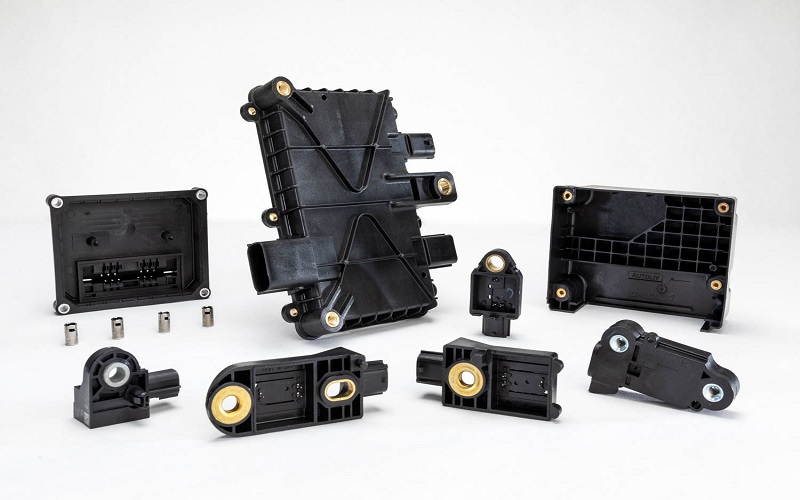
Plastic molding with inserts enables highly compact designs, seamlessly integrating functional elements like connectors, sensors, or threaded inserts into small, precise parts. This is especially valuable in electronics and medical devices where space and accuracy are critical.
Enhanced Mechanical Properties
The strong bond formed between the insert and the plastic improves the overall strength, durability, and corrosion resistance of the component, making it suitable for demanding applications.
Reduced Assembly Time
By eliminating the need for additional fastening or joining steps, insert molding significantly decreases production time and streamlines the manufacturing workflow.
Overall, insert molding is a cost-effective and versatile manufacturing process that delivers strong, reliable, and complex parts in a single cycle, meeting the evolving demands of modern product development.
Disadvantages Of Insert Molding
Despite its many advantages, insert molding has some limitations:
Complex Design Challenges
Compared to conventional assembly methods, insert molding demands careful consideration of factors like the insert’s angle and alignment, resulting in more intricate mold designs and higher requirements for both the process and equipment.
Need for Precise Process Control
If the insert is not positioned accurately or if parameters such as pressure, temperature, and timing are not properly controlled, the quality and effectiveness of the final product can be compromised.
Applications Of Insert Molded Parts
Plastic insert molding allows for a seamless combination of materials to produce quality, durable and innovative products. Its versatility and benefits make it a popular choice for a wide range of industries.
Electronics Industry
One of the most common application areas for plastic insert molding technology is the electronics industry. Parts such as terminals, connectors and pins, for example, are often embedded in plastic housings.
This provides insulation, structural support and protection from environmental factors while maintaining electrical conductivity.
Automotive Components
The automotive industry employs insert molding to produce lightweight automotive part,such as sensors, switches and electronic controls to improve fuel economy and reducing assembly costs.
Medical Devices
In the medical industry sector, insert molding technology is used to produce a variety of medical devices, including surgical instruments with ergonomic plastic handles and components for wearable medical devices.
The insert molding process is widely used in this industry for its ability to sterilize integrated products and ensure patient safety.
Consumer Products
In everyday life, insert molding is used to integrate metal components into plastic designs for the production of items such as toothbrushes, kitchen utensils, and power tools. The objective is to enhance the product’s functionality, durability, and overall user experience.
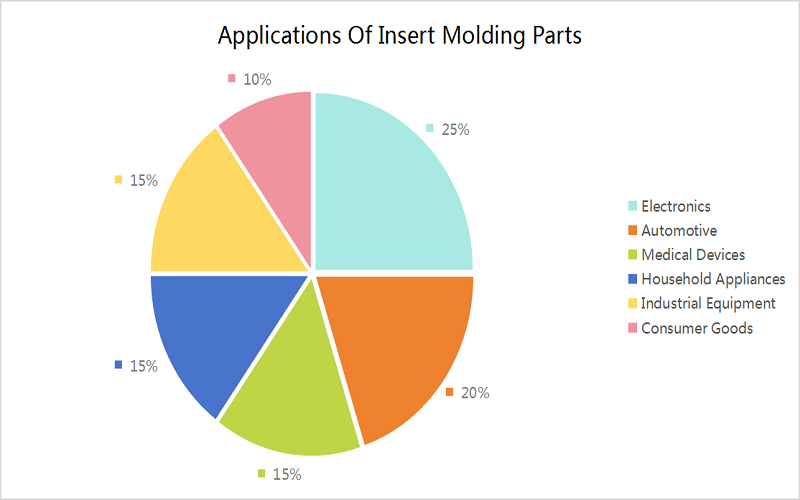
The pie chart below shows the distribution of injection molding inserts in different application areas.
Insert Molding vs Overmolding
Insert molding and overmolding are both advanced injection molding techniques used to combine multiple materials into a single part, but they differ in process and application.
Insert molding involves placing a preformed insert into the mold cavity before injecting molten plastic around it in a single step. This creates a strong, integrated part that eliminates secondary assembly.
Overmolding, on the other hand, is typically a two-step process where a plastic layer is molded directly over a previously molded substrate or component.
This two shot process allows for combining different materials, such as a rigid plastic base with a soft silicone rubber layer, providing enhanced grip or protection. Overmolded parts often feature multiple colors or materials and are ideal for ergonomic designs.
Both processes offer unique advantages: insert molding excels in creating durable parts with embedded components, while overmolding provides design flexibility with multiple layers and materials.
Understanding the distinctions between insert molding and overmolding helps product designers and manufacturers optimize the product development process, reduce lead times, and achieve cost-effective, high-quality results.
Conclusion
Insert injection molding is an efficient and versatile manufacturing process that combines metal or other durable inserts with plastic parts in a single molding cycle.
This technique offers numerous advantages, including enhanced mechanical properties, reduced assembly time, and significant cost savings by eliminating secondary processing steps.
Although the process requires careful design and precise control of molding parameters, its benefits in improving product performance and streamlining production make it a preferred choice in modern product development.
Understanding the differences between insert injection molding and overmolding helps manufacturers and designers select the most suitable process for their applications, ensuring optimized production and excellent final products.
If you’re seeking an insert molding manufacturer for your next project, contact FOW Mould. With over 40 years of expertise and molding capabilities, FOW Mould offers comprehensive insert injection molding services tailored to meet your specific needs.