
In modern industry, plastic materials are key drivers of product innovation, lightweight design, durability, and cost control. Choosing the right plastic directly affects product performance, lifespan, production efficiency, and market competitiveness.
Polycarbonate (PC) and Nylon (polyamide) are two widely used engineering plastics. Polycarbonate is known for exceptional impact strength and transparency, while Nylon excels in abrasion resistance, self-lubrication, and mechanical strength.
Although both are high-performance materials, selecting between them often means balancing transparency and impact resistance against wear resistance and lubrication.
This article compares Polycarbonate vs Nylon to help professionals make informed, cost-effective material choices for specific projects, focusing on the critical aspect of material selection.
What Is Polycarbonate?
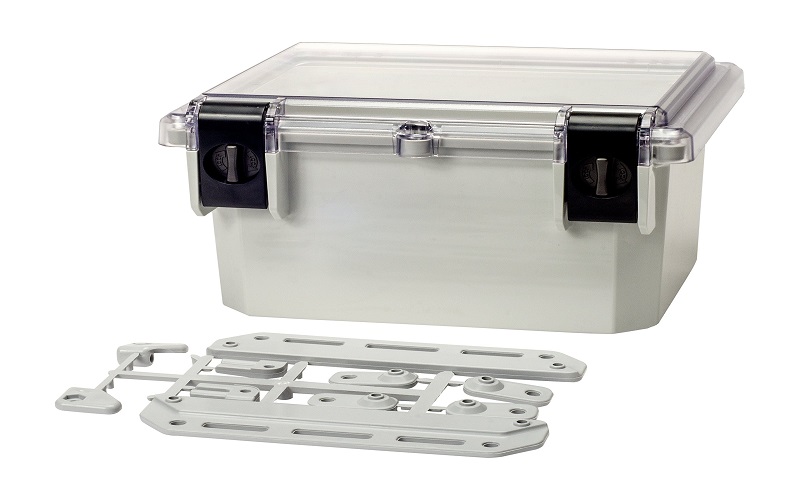
Polycarbonate is a versatile material known for its exceptional impact resistance, heat tolerance, and excellent optical clarity.
It is a common amorphous thermoplastic that is naturally transparent, allowing light to pass through, making it an ideal choice for applications requiring both strength and visual clarity.
This high-strength material is widely used in manufacturing protective shields, safety goggles, bulletproof glass, and protective covers.
Its excellent chemical resistance and temperature resistance enable it to maintain good performance even under harsh chemicals and extreme temperatures, making it suitable for demanding industrial projects and electronic components.
Compared to other engineering plastics, polycarbonate plastic combines toughness and lightweight characteristics, which can significantly reduce costs and increase design flexibility.
However, it may be more expensive than nylon and can be prone to scratching and moisture absorption in certain situations.
What Is Nylon?
Nylon is a high-performance engineering plastic known for its excellent mechanical strength, abrasion resistance, self-lubrication, and good toughness.
As a semi-crystalline thermoplastic engineering plastic, Nylon has different melting points (around 220°C for Nylon 6 and 260°C for Nylon 66).
Its crystalline structure gives Nylon higher strength, heat resistance, and wear resistance, but also results in higher moisture absorption, which affects its dimensional stability. Therefore, special attention to moisture control is required during design and processing.
Nylon is widely used in fields such as textile fibers and precision mechanical parts. Its low coefficient of friction and self-lubricating properties make it particularly suitable for structural parts that require reduced wear and extended service life, such as automotive components, gears, and bearings.

Polycarbonate vs Nylon :Properties Differences
Both Nylon and polycarbonate belong to the category of thermoplastic engineering plastics, but they have significant differences in performance focus.
Polycarbonate is an amorphous thermoplastic known for its high transparency and exceptional impact resistance, while nylon is a semi-crystalline engineering polyamide characterized by high strength, wear resistance, and self-lubrication.
Properties Of Polycarbonate
Polycarbonate remains a strong material favored in industries requiring a combination of toughness, heat tolerance, and optical clarity.
It offers excellent impact resistance, making it ideal for protective shields and safety gear. Its dimensional stability ensures consistent quality in manufacturing processes, even under high temperatures.
Additionally, polycarbonate exhibits good chemical resistance, providing better protection against harsh chemicals compared to many other materials. However, it can be prone to scratching and moisture absorption, which manufacturers need to consider in specific applications.
These unique properties make polycarbonate a versatile choice for various industrial applications, balancing strength and clarity with durability and heat resistance.
Properties Of Nylon
Nylon is a versatile and flexible material known for its excellent abrasion resistance and low friction properties, making it an ideal choice for applications involving moving parts and wear resistance.
Its durability allows it to withstand harsh chemicals and high temperatures, meeting the specific requirements of demanding industrial projects.
Thanks to its self-lubricating nature, nylon reduces the need for additional lubrication in mechanical components, enhancing cost effectiveness and extending service life.
Despite its many advantages, nylon’s moisture absorption can affect dimensional stability, so environmental considerations are important during processing and application.
Overall, nylon’s unique characteristics and cost savings make it a strong contender in plastic manufacturing where flexibility, durability, and performance are critical.
This table below shows data on the properties comparison between these two materials:
Properties | Polycarbonate | Nylon |
Density(g/cm3) | 1.18-1.22 | 1.13-1.15 |
Melting Point(℃) | 220-230 | 220 (Nylon 6), 260 (Nylon 66) |
Tensile Strength(MPa) | 50 | 50-80 |
Flexural Modulus(MP) | 2400 | 1700-3700 |
Water Absorption(%) | 0.15-0.24 | 0.1-10 |
Shrinkage(%) | 0.5-0.7 | 1-2 |
Impact Strength (J/m) | 600~900 | 100-160 |
Heat Deflection Temp (℃) | 135 | 65 (Nylon 6), 75 (Nylon 66) |
Nylon vs Polycarbonate : Processing and Cost Comparison
In the plastic manufacturing process, processing methods and overall costs are key factors in the practical selection between Polycarbonate and Nylon. Both belong to thermoplastic engineering plastics and primarily use common processes such as injection molding, extrusion, and blow molding.
However, due to differences in molecular structure, crystallinity, thermal properties, and moisture absorption, there are significant distinctions in processing ease, production efficiency, and economic viability.
Injection Molding
Nylon, due to its crystalline structure and relatively low melting point, exhibits good flowability and molding stability during injection molding.
This allows nylon injection molded products to be produced with high efficiency and relatively low equipment requirements, reducing production costs. Additionally, nylon causes less wear on molds, extending mold lifespan.
In contrast, polycarbonate requires higher processing temperatures and more stringent thermal stability.Polycarbonate injection molding demands more precise temperature control and more complex equipment setups. These factors generally make polycarbonate processing costs higher than those of nylon.
However, polycarbonate injection-molded products offer superior optical properties and higher impact strength, making them suitable for applications with higher performance requirements.

Extrusion and Other Processes
In extrusion processes, nylon demonstrates good processing performance, suitable for manufacturing products such as films, pipes, and fibers. Its wear resistance and chemical stability make nylon extruded products widely used in industrial and consumer goods.
Although polycarbonate can also be extruded, its high melting point and thermal sensitivity lead to greater equipment wear and energy consumption during extrusion, limiting its application in certain products.
Cost Comparison
From a material cost perspective, nylon is generally more cost-effective than polycarbonate, especially in large-scale production. Nylon raw materials are less expensive, and mature processing technologies help reduce overall manufacturing costs.
Although polycarbonate is priced higher, its excellent physical properties and durability provide greater value in products requiring high strength and transparency.
Considering processing difficulty, production efficiency, and material performance comprehensively, manufacturers should choose nylon or polycarbonate as the “right material” for plastic manufacturing based on specific product needs and budgets to achieve optimal “cost effectiveness” and product performance.
Polycarbonate vs Nylon : Applications Comparison
Although both Polycarbonate and Nylon belong to high-performance engineering plastics, they each have distinct areas of strength in practical applications, forming a pattern of “each with its expertise, more complementary than competitive.”
Below is a comparison of the main applications of these two materials:
Applications of Polycarbonate
Optical Applications: Due to its high transparency and excellent light transmission, PC is commonly used for eyeglasses, optical discs, and transparent protective equipment.
Automotive Parts: PC’s impact resistance and thermal stability make it ideal for car headlights, bumpers, and dashboard components.
Electronic Housings: Its good electrical insulation and durability make it the preferred material for housings of smartphones, laptops, and televisions.
Medical Devices: PC is widely used in the medical field for its strength, clarity, and sterilizability, including in laboratory equipment and medical storage containers.
Safety Equipment: The toughness of PC makes it suitable for bulletproof glass, riot shields, and other protective gear.

Applications of Nylon
Textile Fibers: Nylon’s elasticity and wear resistance make it ideal for producing socks, ropes, and thread.
Automotive Parts: Nylon’s good thermal and chemical stability allows it to be used for manufacturing under-hood components like radiator fans and timing belts.
Mechanical Components: Its strength and lubricity make it suitable for gears, bearings, and other wear-resistant mechanical parts.
Sporting Goods: Due to Nylon’s toughness and lightweight, it is used in climbing equipment, fishing lines, and racket strings.
Consumer Goods: Its flexibility and durability make it common in kitchen utensils, toothbrush bristles, and other everyday items.
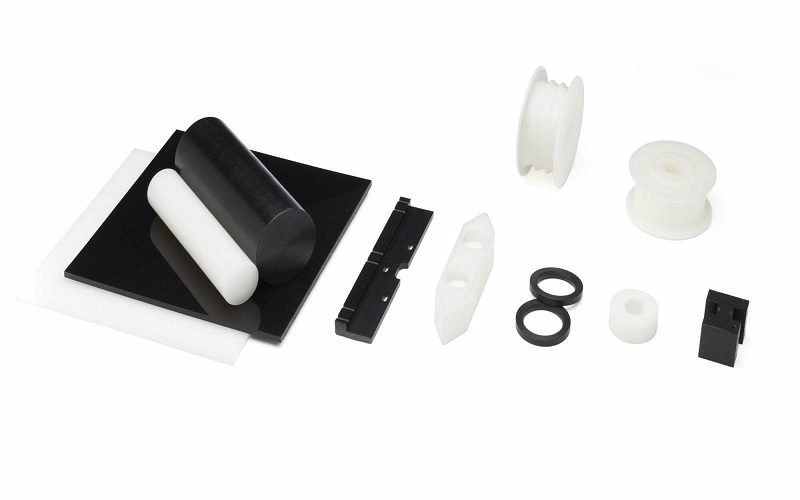
These diverse applications demonstrate the effectiveness and versatility of PC and Nylon in meeting specific performance requirements and functionalities in different sectors.
Polycarbonate vs Nylon: Environmental Considerations and Sustainability
When selecting materials for plastic manufacturing, understanding the environmental impact is crucial. Polycarbonate offers excellent resistance to harsh chemicals and maintains its durability over time, which contributes to longer product life and less frequent replacement.
This durability makes polycarbonate an impact resistant choice that supports sustainable manufacturing practices by reducing waste.
On the other hand, nylon, while also durable and versatile, has a higher environmental footprint due to its production process and challenges in recycling.
Manufacturers aiming to minimize environmental impact often choose polycarbonate for its recyclability and robust performance in demanding applications.
Balancing excellent resistance, impact resistance, and environmental considerations is key to making an informed decision in plastic manufacturing, ensuring both product quality and sustainability goals are met.
Conclusion
In conclusion, both polycarbonate and nylon have their own unique benefits that make them valuable choices in plastic manufacturing.
Polycarbonate stands out for its exceptional impact resistance, optical clarity, and heat tolerance, making it ideal for applications requiring strength and transparency such as protective shields, safety goggles, and electronic components.
Nylon, on the other hand, offers superior abrasion resistance, self-lubrication, and flexibility, which are essential for moving parts, gears, and automotive components.
Choosing between polycarbonate vs nylon ultimately depends on the specific requirements of your project, including factors like durability, cost effectiveness, chemical resistance, and environmental considerations.
While polycarbonate remains a strong material with excellent dimensional stability and recyclability, nylon provides cost savings and ease of processing, especially for complex shapes and high-volume production.