
Polycarbonate (PC) is a high-performance thermoplastic commonly used in injection molding. It is known as the “king of transparent plastics” due to its excellent transparency, impact resistance, high heat resistance, and good electrical insulation properties.
It has light transmission close to glass and much greater impact strength than other materials, ranking it among the top engineering plastics.
This article provides a comprehensive overview of polycarbonate plastic, covering its properties, manufacturing processes, and common uses.
What Is Polycarbonate (PC)?
Polycarbonates are a group of thermoplastic polymers characterized by the presence of carbonate groups within their chemical structures.
Polycarbonate plastic is primarily produced through the condensation polymerization of bisphenol A with carbonyl chloride or alternatively via transesterification with diphenyl carbonate.
This amorphous thermoplastic material is renowned for its exceptional optical clarity, owing to its low crystallinity, which allows for high light transmission.
Additionally, polycarbonate exhibits excellent temperature resistance, impact resistance, and dimensional stability, making it a preferred choice in various industrial applications.
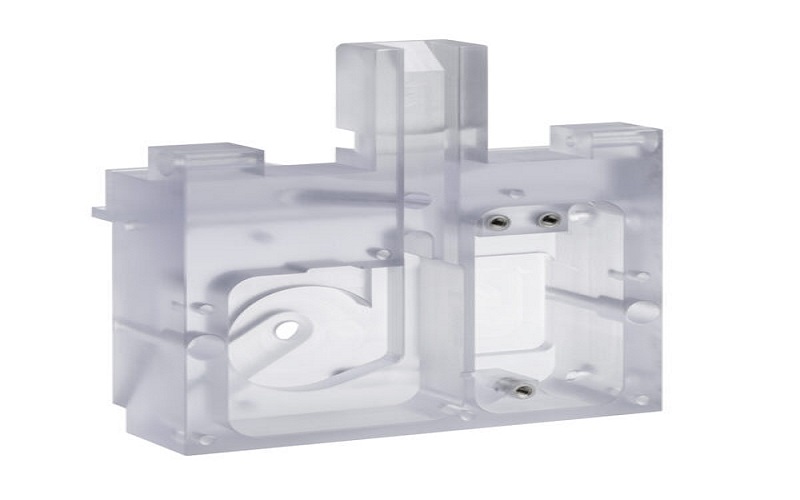
What Is Polycarbonate Plastic Made Of?
Polycarbonate plastic is primarily made through the condensation polymerization of bisphenol A (BPA) with carbonyl chloride.
This interfacial process involves reacting bisphenol A dissolved in sodium hydroxide with phosgene (carbonyl chloride) under controlled conditions.
Alternatively, polycarbonate can be synthesized via a transesterification reaction between bisphenol A and diphenyl carbonate.
Both methods produce long chains of polycarbonate polymers containing carbonate groups, which give the material its unique combination of strength, transparency, and heat resistance.
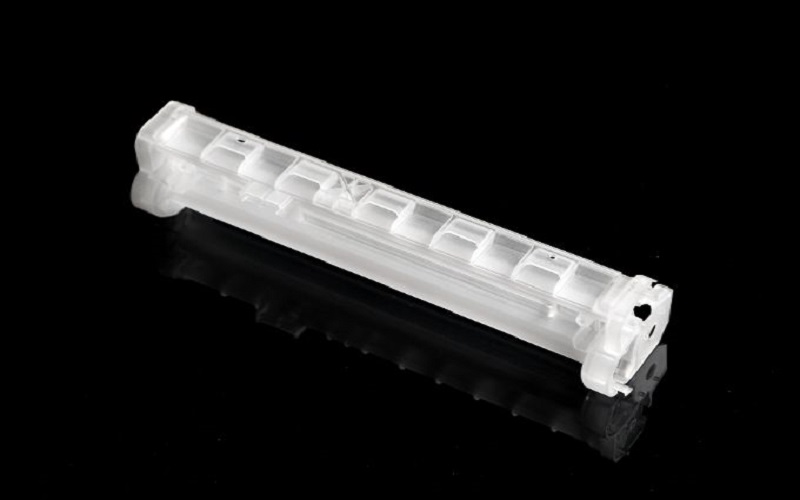
Key Properties Of Polycarbonate Material
Polycarbonate plastic is a high-performance amorphous thermoplastic renowned for its exceptional combination of transparency, toughness, and durability. It offers a balanced set of physical, chemical, and mechanical properties that make it suitable for a wide range of demanding applications.
Physical Properties
Optical Clarity : Polycarbonate exhibits high transparency with light transmission rates exceeding 90%, making it an excellent material to replace glass.
Light Weight : It has a relatively low density of about 1.2 g/cm³, contributing to its lightweight nature.
Thermal Stability : The material has a glass transition temperature around 147 °C (297 °F), which defines its upper use temperature range.Polycarbonate can withstand high temperatures without significant deformation and maintains high dimensional stability across a broad temperature range.
Electrical Insulation Properties : Polycarbonate plastic has excellent electrical insulation properties. It has a dielectric constant of 2.9 to 3.0 at 1 MHz, very high volume and surface resistivity, and a dielectric strength of 15 to 20 kV/mm, making it an effective insulator.
Weather Resistance and UV Sensitivity : However, it is susceptible to yellowing upon prolonged exposure to uv light unless treated with UV stabilizers.
Chemical Properties
Chemically, polycarbonate has good chemical resistance to many diluted acids, aliphatic hydrocarbons, oils, and greases, but it can be attacked by halogenated solvents, aromatic hydrocarbons, and diluted bases.
Its chemical nature includes carbonate groups that provide rigidity but also make it susceptible to hydrolysis at elevated temperatures, potentially releasing bisphenol A (BPA). The material’s chemical resistance can be enhanced with additives and special coating such as special UV protective layers.
Mechanical Properties
Polycarbonate is known for its high impact resistance and toughness, with the ability to undergo large plastic deformations without cracking or breaking.
It has excellent creep resistance and maintains good mechanical properties even at low temperatures.
The material exhibits a flexural modulus typically between 2.1 to 2.6 GPa and a tensile strength around 60–70 MPa.
Despite its toughness, polycarbonate has relatively low scratch resistance, which is often improved by applying hard coatings.
Property | Typical Value |
|---|---|
Density | 1.2g/cm³ |
Glass Transition Temperature | 147°C |
Melting Point | 225°C |
Light Transmission | >90% |
Tensile Strength | 60–70MPa |
Flexural Modulus | 2.1–2.6GPa |
Impact Strength (Notched Izod) | 12–17ft-lb/in |
Water Absorption | 0.15% |
Methods Of Processing Polycarbonate Plastic
Polycarbonate plastic can be processed by all standard thermoplastic methods, including injection molding, extrusion, and blow molding.
Injection Molding
Polycarbonate injection molding is a common method for producing plastic polycarbonate parts. This process involves heating the polycarbonate to a molten state, typically maintaining a melt temperature between 280°C and 320°C, and then injecting it into molds under high pressure to form the desired shape.
The injection molding process is suitable for manufacturing complex-shaped, high-precision, and high-strength polycarbonate components and is widely used in electronic components, the automotive industry, medical industry, and consumer products.
Additionally, injection molding parameters are adjusted according to different polycarbonate grades to meet specific performance requirements and application needs.
Extrusion
In this process, polycarbonate pellets are melted and forced through a shaped die to produce continuous profiles such as sheets, rods, and tubes.
Extruded polycarbonate sheets are commonly used in the construction industry as a suitable alternative to glass due to their high impact resistance, excellent light transmission, and weather resistance.
The extrusion process allows for the production of polycarbonate sheets with varying wall thicknesses to meet different structural and optical requirements.
To achieve industrial grade optical clarity, extruded surfaces often require mechanical or chemical polishing.
Blow Molding
Blow molding is used to manufacture hollow polycarbonate parts such as beverage containers, baby bottles, and refillable water bottles.
This process involves melting the polycarbonate and inflating it into a mold cavity using compressed air, forming lightweight yet impact resistant containers suitable for food contact applications.
Overall, the choice of processing method depends on the desired product shape, mechanical requirements, and production volume, making polycarbonate plastic a highly adaptable material in manufacturing.
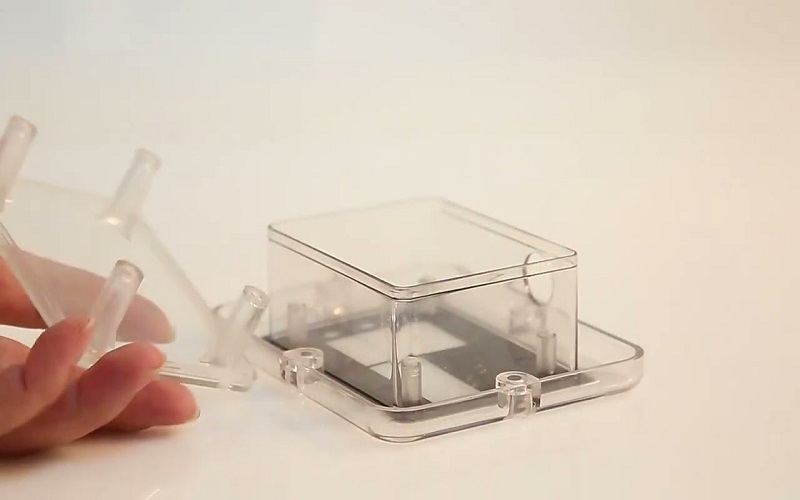
Applications of Polycarbonate Plastic Parts
Polycarbonate is widely used across various industries due to its unique combination of properties, including high impact resistance, optical clarity, and thermal stability.
Automotive Applications
In the automotive industry, it is commonly found in headlamp lenses, taillight covers, and interior components, where its lightweight nature helps improve fuel efficiency without compromising durability.
Medical Industry
In the medical industry, polycarbonate is favored for manufacturing surgical instruments, blood filters, and baby feeding bottles because of its ability to withstand repeated sterilization processes and maintain dimensional stability.
Safety And Protective Equipment
Its excellent transparency and toughness also make it ideal for safety goggles, protective gear, bullet proof glass and safety helmets, providing reliable protection in hazardous environments.
Construction Industry
Furthermore, polycarbonate sheets serve as a suitable alternative to glass in construction, used for roofing, skylights, and bullet-resistant windows, offering virtually unbreakable strength combined with high light transmission.
Food And Beverage Containers
Its use in food containers and beverage bottles highlights its safety and heat resistance, making it a versatile material for both consumer and industrial applications.
Overall, polycarbonate plastic parts continue to replace traditional materials like glass and metal in many sectors, thanks to their high toughness, chemical resistance, and adaptability in manufacturing processes.
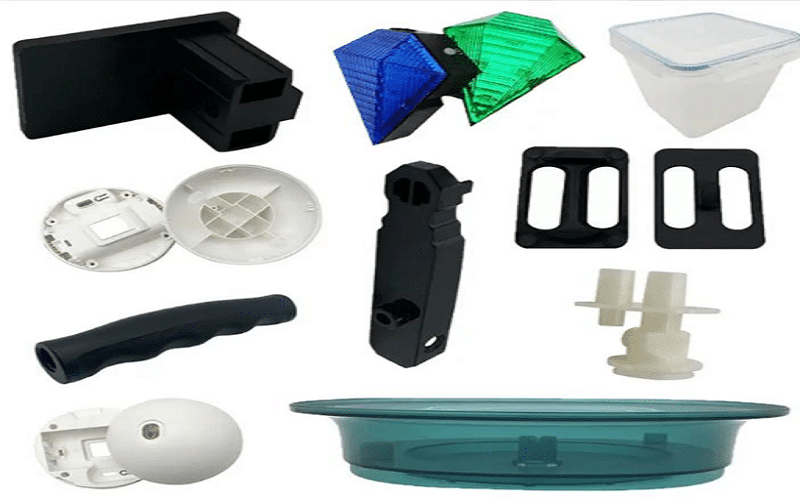
Environmental and Safety Concerns of Polycarbonate Plastic
Polycarbonate has raised safety concerns due to the presence of bisphenol A (BPA) monomers, especially in food and medical applications.
Many people ask: is polycarbonate safe? Although food-grade and medical-grade polycarbonate materials undergo rigorous testing and certification to meet relevant standards, BPA may leach under high temperature or strong alkaline conditions, posing potential health risks.
Studies show that under conditions of temperatures exceeding 70°C and high humidity, polycarbonate undergoes hydrolysis, releasing bisphenol A (BPA). BPA is currently listed as a potential environmental hazardous chemical in many countries.
BPA from polycarbonate can leach at environmental temperatures and normal landfill pH conditions, with leaching amounts increasing as polycarbonate products age.
Due to the anaerobic environment in landfills, BPA is difficult to degrade, resulting in its persistence in the environment and eventual entry into water bodies, causing water pollution.
Moreover, during thermal degradation at high temperatures, polycarbonate produces various harmful substances, including phenol derivatives and BPA. These substances are classified as volatile organic compounds (VOCs), posing threats to the atmospheric environment and ecosystems.
Therefore, when using polycarbonate plastic products, it is recommended to avoid high-temperature heating and contact with strong alkaline substances, and to choose certified BPA-free or low-BPA formulation products.
Meanwhile, the industry is actively developing alternative materials and improved formulations to enhance the safety performance of polycarbonate and protect consumer health.
Conclusion
Overall, polycarbonate’s unique combination of properties—light weight, high heat resistance, impact resistance, and good electrical insulation properties—makes it an indispensable material across multiple sectors, from consumer products to high-performance industrial applications.
Its exceptional optical clarity and dimensional stability allow it to serve as a suitable alternative to glass in many applications, including automotive headlamp lenses, construction glazing, and electronic displays.
While polycarbonate offers excellent chemical resistance and thermal stability, attention must be paid to its susceptibility to UV radiation and potential environmental concerns related to bisphenol A (BPA) leaching.
Advances in manufacturing processes, such as injection molding and extrusion, along with the development of specialized polycarbonate grades and protective coatings, continue to expand its versatility.
As industries seek lightweight, durable, and impact-resistant materials, polycarbonate plastic remains a vital engineering plastic with broad and growing applications in the automotive industry, medical field, construction sector, and consumer goods.