
Low-density polyethylene (LDPE) is a widely used thermoplastic in injection molding processes. Due to its excellent flexibility, good chemical resistance, and cost-effectiveness, LDPE plays an important role in various industries such as packaging, medical, electronics, and agriculture.
This article will introduce the basic principles of LDPE injection molding, molding conditions, performance characteristics, and its applications across different fields to help readers gain a comprehensive understanding of this important material and its processing technology.
Overview Of LDPE Injection Molding
Low-density polyethylene (LDPE) injection molding is a common plastic molding processing technique widely used to manufacture various plastic products.
The LDPE injection molding process mainly involves heating and melting LDPE pellets, then injecting them under high pressure into an open mold cavity, where the material cools and solidifies to form the desired plastic parts.
This process is suitable for producing parts with complex shapes and varying wall thicknesses, offering high production efficiency and short molding cycles.
Its branched chain structure endows the material with good flexibility and impact resistance. However, compared to high-density polyethylene (HDPE), LDPE has lower tensile strength and is more suitable for products that require good toughness but not high rigidity.
In summary, LDPE injection molding produces lightweight and durable components, making it suitable for applications where close dimensional precision is less important than flexible toughness and chemical resilience.
It is widely used in food packaging films, medical packaging, food containers, and various industrial applications.
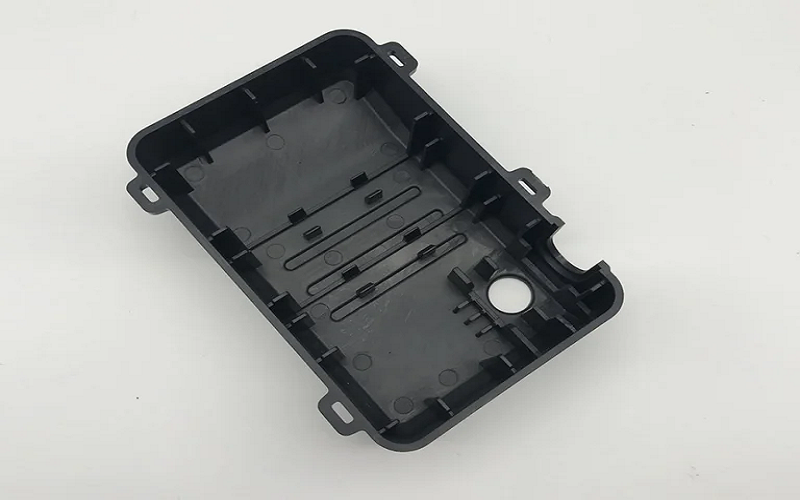
Chemical and Physical Properties of LDPE Plastic
Low-density polyethylene (LDPE) is a thermoplastic polymer characterized by a branched chain structure, which gives it low crystallinity and high flexibility.
Chemical Structure of LDPE
The chemical formula of LDPE is (-CH2-CH2-)n, with a molecular chain containing numerous branched and long chains, resulting in a low density typically between 0.91 and 0.93 g/cm³.
Low Density
Due to its branched chains, LDPE exhibits excellent impact resistance and high elongation at break, although its tensile strength is slightly lower than that of high-density polyethylene (HDPE).
Good Chemical Resistance
LDPE has good chemical resistance, able to withstand corrosion from many solvents and chemicals. It also shows excellent moisture resistance and low water absorption, which are key benefits in food packaging and medical applications.
Processability
With a melting point generally between 105 and 115 degrees Celsius and a wide range of melt flow index (MFI), LDPE is suitable for various injection molding processing parameters.
It is easy to process, and during injection molding, a relatively fast injection speed and moderate injection pressure are recommended to ensure uniform mold filling and stable molding quality.
In summary, LDPE’s unique branched chain structure endows the material with excellent flexibility, impact toughness, and chemical stability, making it an ideal material widely used in injection molded products.
Property | Value/Range |
|---|---|
Density | 0.91–0.93g/cm³ |
Crystallinity | 40–50% |
Melt Flow Index (MFI) | 0.3–1000g/10 min |
Melting Point | 105–115°C |
Tensile Strength | 10–20MPa |
Elongation at Break | 200–600% |
Yield Strength | 10–20MPa |
Shrinkage rate | 1.5~4% |
LDPE Injection Molding Processing Conditions
LDPE has a relatively high coefficient of thermal expansion, resulting in comparatively poor dimensional stability. Therefore, it is necessary to properly control the cooling rate and mold temperature during molding to reduce shrinkage and deformation.
In LDPE injection molding, a higher mold temperature helps enhance the material’s crystallinity, improving mechanical properties and surface quality, but it may also extend the cooling time.
Below are some key parameters and conditions to consider in the LDPE injection molding process:
Melt Temperature
Low-density polyethylene has a relatively low melting point, hence the melt temperature typically ranges between 180°C to 240°C. The specific temperature still depends on the grade of LDPE being used and the characteristics of the part being molded.
Mold Temperature
Lower mold temperature set between 20°C to 60°C is considered suitable. Higher mold temperatures lead to larger spherulite sizes in injection-molded LDPE.
Injection Pressure
Due to its lighter weight, smaller molecular weight, and a higher number of branched structures in its molecular configuration, LDPE is typically processed in injection molding at pressures ranging from 500 to 1,500 bar, with holding pressures reaching up to 750 bar for optimal part formation.
Injection Speed
For low-density polyethylene, it’s generally recommended to employ a medium to high injection speed to fill the mold rapidly. In actual production, the appropriate speed should be determined based on mold design and the grade of LDPE used.
LDPE Injection Molding Parameters Table | |
|---|---|
Parameter Name | Recommended Range |
Melt Temperature | 180°C – 240°C |
Mold Temperature | 20°C – 60°C |
Injection Pressure | 500 – 1500 bar |
Holding Pressure | Up to 750 bar |
Injection Speed | Medium to High |
Cooling Channel Diameter | ≥8 mm |
Shrinkage Rate | 1.5% – 4% |
Density | 0.91 – 0.93 g/cm³ |
Melting Point | 105°C – 115°C |
Note: This parameter table can be used as a reference for LDPE injection molding process. Specific parameters need to be optimized and adjusted according to material grade, mold design and product requirements.
Advantages And Disadvantages Of LDPE Injection Molding
Although products made from LDPE injection molding are common in everyday life, it’s essential to weigh the pros and cons of LDPE injection molding to determine its suitability for specific application requirements.
Advantages Of LDPE Injection Molding
Flexibility
LDPE is renowned for its soft texture and strong ductility, allowing it to stretch freely without easily breaking. It’s suitable for making plastic products of various sizes, shapes, and thicknesses.
Machinability
Comparedto other thermoplastics, low-density polyethylene has a relatively low melting point, facilitating its processing, especially in complex designs.
Low Cost
With a low melting point and a wide melt flow index range , LDPE is easy to process at relatively low temperatures and pressures . This reduces energy costs and enhances manufacturing efficiency, making it a cost-effective choice.
LDPE injection molding can also be used to create a thin layer or coating for specialized applications, offering enhanced performance and material efficiency.
Disadvantages Of LDPE Injection Molding
Temperature Sensitivity
LDPE has a relatively low melting point, so during the LDPE injection molding process, too high or too low a temperature may cause the product to distort or warp if it is exposed to heat for an extended period of time.
Gas Barrier Properties
LDPE performs poorly in terms of gas barrier properties, with high permeability to carbon dioxide and other gases, and is not well suited for applications requiring hermetic seals, such as some food packaging.
Poor UV Resistance
LDPE is a low-cost polymer that is highly flammable and offers poor resistance to ultraviolet light, making it unsuitable for outdoor applications.
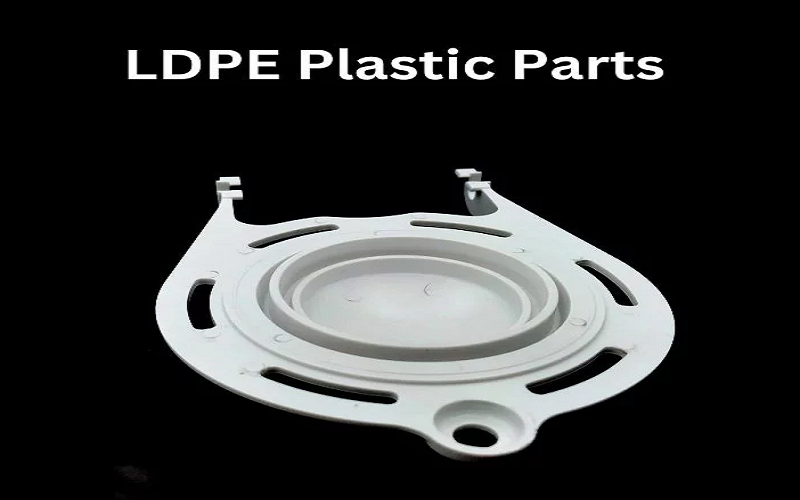
Applications of LDPE Injection Molded Parts
LDPE injection molding plays a significant role in a surprising range of consumer, medical and industrial sectors due to its low cost and spectrum of useful properties.
Packaging
LDPE has excellent chemical resistance to acids, bases, and vegetable oils, making it suitable for packaging applications. For instance, LDPE injection molded items such as food bags, bread bags, and large containers are widely utilized in daily life.
Medical
In the medical industry, where medical devices require excellent sealing, the flexibility of LDPE injection molding makes it commonly used for medical tubing, compressible dropper bottles and certain flexible caps.
Electrical Insulation
Due to the wear-resistant, oil-resistant, and compression-resistant characteristics of LDPE material, it is widely used in the protection field of electrical wires and cables.
LDPE Safety is enhanced when injection molded protective tubes are used for wires and cables, as they help prevent wear and compression damage, thereby extending the lifespan and ensuring the reliable performance of electrical wiring.
Agriculture
The molecular chain of low-density polyethylene has a strong affinity with water molecules, ensuring that the products molded from it have superior waterproof, moisture-proof, and impact-resistant properties.
Thus, it’s commonly used in agriculture to produce irrigation tubes, ground films, and greenhouse coverings.
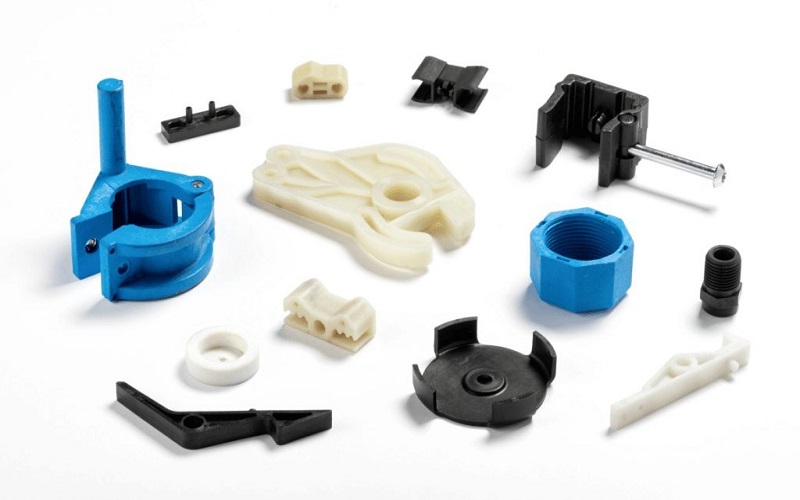
Material Selection for Specific LDPE Applications
Choosing the right LDPE grade for a specific application is essential to achieving the desired balance of physical properties, processability, and cost.
For example, HDPE is often selected for packaging and consumer goods that require increased stiffness and chemical resistance, while linear low density polyethylene (LLDPE) is preferred for film and flexible packaging applications due to its superior toughness and puncture resistance.
When selecting a LLDPE grade for injection molding or blow molding, it’s important to consider the molecular weight distribution, melt index, and environmental stress cracking resistance.
A broader molecular weight distribution can enhance processability and impact strength, while a higher melt index allows for easier flow during molding, which is beneficial for thin-walled or complex parts.
Environmental stress cracking resistance is critical for products exposed to chemicals or mechanical stress, such as containers and cable coatings.
Other factors, such as cost, availability, and specific processing requirements, should also be evaluated to ensure the chosen LDPE grade meets both performance and production needs.
By carefully matching the material properties to the application, injection molding manufacturers can maximize the benefits of LDPE in their products.
LDPE Injection Molding vs HDPE Injection Molding
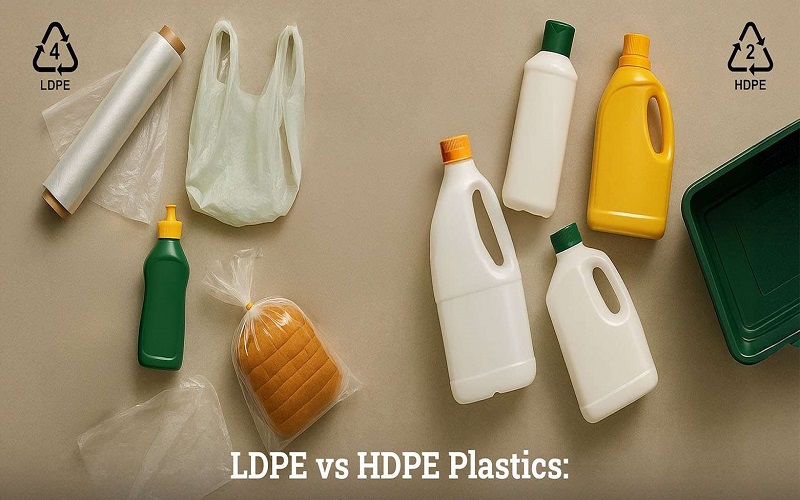
LDPE and HDPE are two common forms of polyethylene that play important roles in the injection molding industry. In the following text, we will explore the similarities and differences between these two processes.
HDPE injection molding shares many similarities with LDPE molding. Both can be processed through injection molding, have good chemical stability, are recyclable materials, and are suitable for food-grade applications.
However, in terms of material structure, LDPE has a highly branched molecular structure, making it softer and having a lower melt flow. In contrast, HDPE is harder due to its dense molecular structure.
Additionally, LDPE injection molding has weaker tensile strength compared to HDPE injection molding. However, it can produce products with higher transparency.
Lastly, in terms of application, LDPE injection molding is commonly used in the flexible packaging industry, while HDPE injection molding is suitable for rigid containers and parts with wear resistance requirements.
Conclusion
In summary, LDPE injection molding remains a highly versatile and efficient process, offering manufacturers a combination of high production volumes, low costs, and excellent physical properties.
Achieving optimal results depends on selecting the right LDPE grade and carefully controlling process parameters such as mold temperature and injection pressure. These factors directly influence the quality, performance, and consistency of the final product.
As industries continue to demand high-performance, environmentally friendly materials, LDPE injection molding will remain a vital solution for producing a broad range of products—from everyday packaging to specialized medical and automotive components.
By staying at the forefront of innovation and process optimization, manufacturers can continue to leverage the unique advantages of LDPE for years to come.