
High-density polyethylene (HDPE) is one of the most widely used plastics in everyday life, found in everything from milk jugs and beverage containers to household and industrial products.
Its popularity stems from its durability, chemical resistance, and versatility. However, many consumers wonder: is HDPE safe, especially when it comes to food storage and contact?
In this article, we will explore the safety aspects of HDPE plastic, including its use as a food grade plastic, its chemical properties, regulatory approvals, and potential health concerns.
Whether you’re curious about HDPE plastic safe for food, its environmental impact, or how it compares to other materials, this comprehensive guide will provide you with the facts you need to make informed decisions.
Properties of HDPE Plastic
HDPE plastic is a versatile material known for its excellent chemical resistance, impact resistance, and heat resistance. The following are some key properties of HDPE:
Impact Resistance
It has a high density and crystallinity, making it resistant to brittleness when subjected to external impacts.
This makes it more impact resistant than low-density polyethylene (LDPE), making it especially suitable for applications that require withstanding mechanical stress.
Chemical Resistance
HDPE is chemical resistant, able to withstand corrosion from various acids, bases, and solvents, which makes it perform excellently in a wide range of industrial and everyday applications.
Thermal Properties
The melting point of HDPE is approximately 130–135°C, with short-term heat resistance reaching 100–120°C. It has good heat resistance and can withstand relatively high temperatures without deforming.
Non-Absorbent
The surface of HDPE does not absorb water, giving it non-absorbent properties. This not only enhances its durability but also prevents the growth of mold and bacteria, making it widely used in food packaging and storage.
Weather Resistance
Furthermore, HDPE has excellent light and weather resistance; even when exposed to to direct sunlight and outdoor environments for extended periods, it does not easily age or deteriorate.
Recyclability
Furthermore, HDPE is recyclable, contributing to environmental sustainability by reducing plastic waste and supporting the recycling process.
Overall, HDPE’s combination of durability, chemical resistance, and non-toxicity for food contact makes it exceptionally well-suited for a vast array of food applications involving direct human contact and consumption.
Property | Typical Value |
|---|---|
Density | 0.93 to 0.97 g/cm³ |
Crystallinity | 80%–95% |
Melting Point | 130–135°C |
Tensile Strength | 20–37 MPa |
Elongation at break | ≥350% |
Flexural Modulus | 700–1400 MPa |
Is HDPE Food Safe? Food Safety Standards For HDPE Plastic
HDPE is explicitly approved by the U.S. Food and Drug Administration (FDA) as a food-safe plastic material, especially virgin (non-recycled) HDPE.
It is free of BPA and does not release phthalates or other known harmful chemicals into food or drinking water under normal use conditions, allows it to be FDA compliant for food storage.
Due to its lightweight and sturdy characteristics, hdpe bottles is widely used in the manufacture of food and beverage containers such as milk bottles, juice bottles, and other plastic containers.
These food safe containers play a significant role in the packaging industry, ensuring product quality and food safety.
However, it is important to note that although HDPE itself is generally considered safe, its manufacturing process may involve volatile organic compounds (VOCs), and recycled HDPE products must undergo strict purity testing to be recognized as food-grade for food contact applications.
Certain fluorinated HDPE containers may leach per- and polyfluoroalkyl substances (PFAS), known as “forever chemicals,” which pose potential health risks. Therefore, consumers should choose HDPE products clearly labeled as food safe.
During use, avoid exposing HDPE containers to high temperatures or microwave heating to prevent the leaching of harmful substances. Additionally, it is not recommended to reuse HDPE containers that previously held non-food substances to avoid potential contamination risks.
In summary, through proper manufacturing and usage standards, HDPE products can ensure safety for human consumption and meet consumers’ dual demands for health and environmental protection.
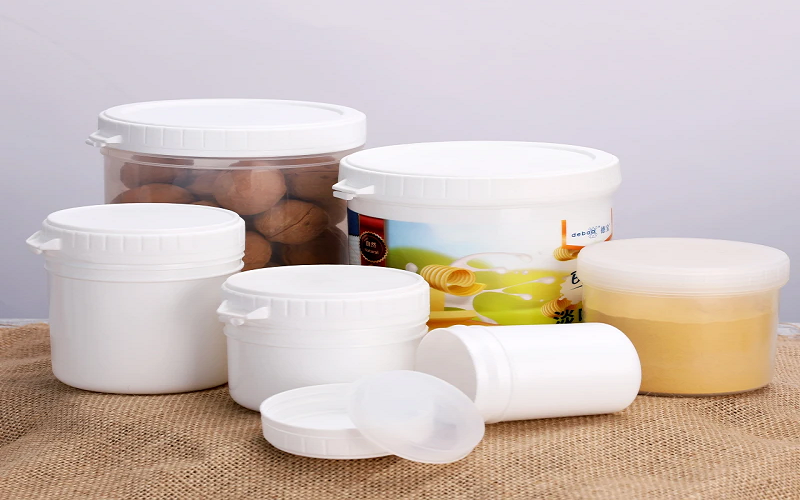
When Is HDPE Considered Food-Grade Plastic?
Food-grade HDPE must meet regulatory requirements and cannot contain harmful additives or dyes. This involves rigorous testing to ensure the material is free from contaminants and safe for direct food contact.
The FDA reviews recycled HDPE products on a case-by-case basis due to potential contamination during the recycling process, which can introduce impurities from previous non-food uses or environmental exposure.
To be classified as food-grade plastic, HDPE must not contain harmful additives, dyes, or residues that could leach into food.
Only virgin HDPE or recycled HDPE that complies with FDA regulations and passes all safety certifications is approved for food packaging and storage.
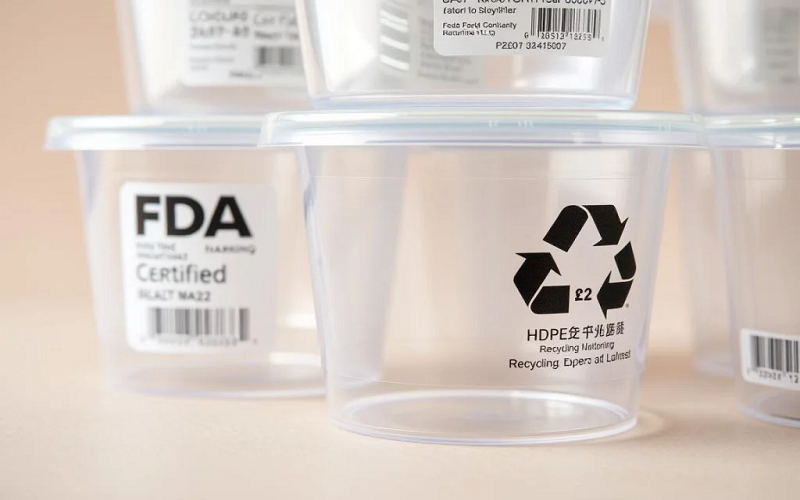
Consumers should look for HDPE products marked with the recycling code “2” and labeled as food safe or FDA compliant to ensure they are using materials appropriate for food storage and handling.
Common Applications Of HDPE Plastic
HDPE, as a high-density polyethylene material, is an indispensable versatile material in the packaging industry and various industrial fields due to its impact resistance, chemical resistance, high temperature tolerance, and excellent weather resistance.
Food Packaging: HDPE is widely used in food and beverage packaging, such as milk bottles, juice bottles, and other food containers, because of its outstanding chemical stability and non-absorbent properties.
Personal Care Product Packaging: It is used for packaging items like shampoo bottles, conditioner bottles, and cleaning agent containers, thanks to its good tolerance to various cleaning agents and chemicals, ensuring product safety and stability.
Industrial Applications: HDPE pipes are widely used in drinking water transportation and chemical delivery due to their corrosion resistance and pressure tolerance. Its weather resistance and UV protection also make it an ideal material for outdoor equipment and toys.
In summary, HDPE is an excellent choice with high versatility, combining safety, durability, and environmental friendliness, meeting the demands of food packaging and various industrial applications.
Comparison Of The Safety Of HDPE With Other Plastics
When comparing HDPE to other common plastics, it is important to consider their safety profiles, especially regarding food contact applications. HDPE stands out as a highly safe and versatile material widely used in food packaging due to its excellent chemical resistance and stability.
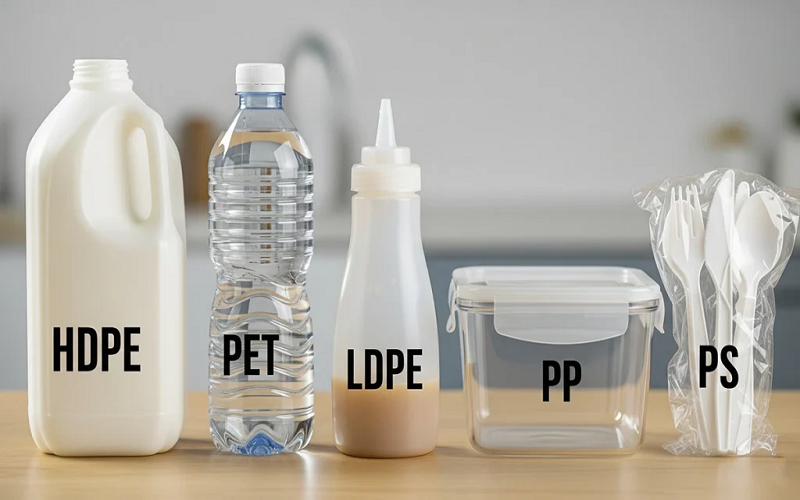
Below is a quick comparison based on recycling codes to help distinguish HDPE from other plastics:
Recycling Code | Plastic Type | Abbreviation | Typical Uses | Food Contact Safety (General Evaluation) |
|---|---|---|---|---|
#1 | Polyethylene Terephthalate | PET | Mineral water bottles, soda bottles | High (mainly single-use) |
#2 | High-Density Polyethylene | HDPE | Milk bottles, detergent bottles, pipes | Very high (one of the most recommended food grades) |
#3 | Polyvinyl Chloride | PVC | Pipes, cables, flooring | Low (contains chlorine and easily releases substances) |
#4 | Low-Density Polyethylene | LDPE | Cling film, squeeze bottles, plastic bags | High |
#5 | Polypropylene | PP | Microwave containers, yogurt cups, straws | Very high (preferred for high temperature resistance) |
HDPE is generally considered safer than PVC due to the latter’s chlorine content and tendency to release harmful substances.
Compared to PET, HDPE offers better chemical resistance and is more suitable for repeated food storage, as PET is often recommended for single-use only.
LDPE, while flexible and also food safe, lacks the rigidity and strength of HDPE, making HDPE preferable for durable containers.
Polypropylene (PP) shares a high safety rating and is favored for applications requiring higher heat resistance, such as microwaveable containers.
In addition to safety, HDPE’s strength, impact resistance, and resistance to mold and bacteria make it an excellent choice for food storage and packaging. Its recyclability and widespread acceptance in recycling programs also contribute to environmental sustainability.
While each plastic type has its advantages and ideal uses, HDPE remains a top choice for food-safe plastic containers due to its balance of safety, durability, and versatility.
Conclusion
Regarding the question of whether HDPE is safe, the answer is undoubtedly yes for HDPE products that are properly manufactured and correctly used.
When used appropriately, HDPE is one of the safest and most environmentally friendly food-grade plastics available today.
It not only possesses excellent chemical resistance and impact strength but also effectively prevents harmful substances from leaching into food, ensuring the quality and safety of the food.
At the same time, HDPE’s recyclability and durability make it an ideal material choice for promoting sustainable development.
If you are looking to start an HDPE injection molding project, you can contact FOWMOULD. We will provide you with design improvements, mold manufacturing, and injection molding services to ensure your product meets food-grade standards and satisfies your various needs.