
Flow Mark In Injection Molding: What Is It And How To Avoid
- Home
- > Blog
Share :
Share :
Injection molding is a widely used manufacturing process for producing high-quality plastic parts efficiently. However, during injection molding process, certain surface defects such as flow marks can occur, affecting the appearance and quality of the final product.
Understanding what flow marks are, their causes, and how to prevent them is essential for achieving smooth, defect-free molded parts.
This article will guide you through the basics of flow mark in injection molding and provide practical tips to minimize their occurrence.
What Is Flow Mark In Injection Molding?
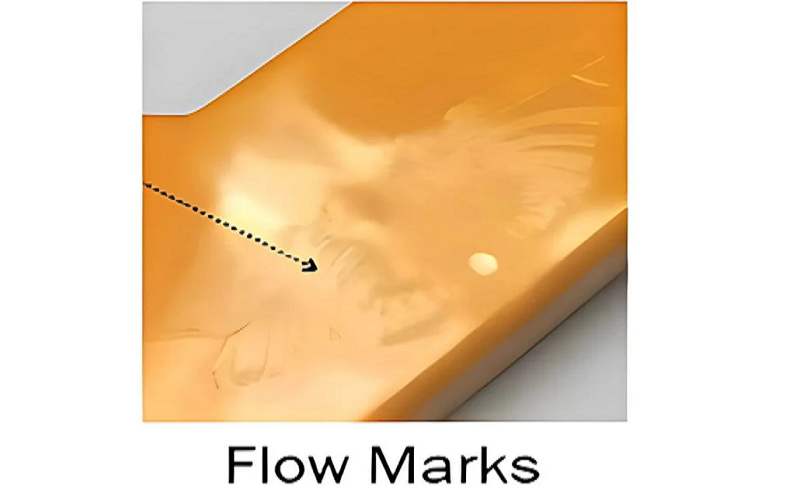
Flow marks, also known as flow lines, are a common injection molding defects, appearing as wavy, streaky, or circular patterns on a molded part’s surface. These patterns typically follow the flow direction of the molten material and are especially noticeable near the plastic injection nozzle.
Although flow marks usually do not affect the structural integrity of the molded part, they significantly reduce the surface quality and aesthetic appeal of the product, impacting consumer acceptance.
The formation of flow marks is mainly caused by non uniform cooling of the plastic material due to variations in temperature, pressure, and flow rate during the molten plastic’s movement inside the mold cavity.
This inconsistency leads to uneven flow patterns and cooling marks, which ultimately leave visible lines or patterns on the surface of the injection molded part.
A deep understanding of the flow characteristics of molten plastic is essential for controlling and preventing the formation of flow marks.
The Causes Of Flow Mark In Injection Molding
Flow mark in injection molding are primarily caused by uneven material flow and inconsistent cooling rates within the mold cavity. Several factors contribute to this phenomenon, including machine parameters, mold design, and material properties.
Material Factors
Melt and Material Temperature: Insufficient melt or material temperature increases molten plastic viscosity, impeding smooth flow and causing rapid solidification that leads to flow marks.
Melt Flow Index (MFI): Materials with a low melt flow index have poor material flow, making them more prone to flow marks.
Stored Heat and Cold Mold Effects: The stored heat in molten plastic maintains fluidity, but a cold mold extracts heat rapidly, causing uneven cooling and flow marks.
Knit Lines and Wave Flow Marks: These defects can coincide with flow marks, weakening the part structurally and visually.
Mold Factors
Low Mold Temperature: Causes premature solidification of the plastic surface, resulting in poor flow and uneven cooling that creates flow marks.
Mold Gate and Runner Design: Incorrect mold gate design include size, location, or runner dimensions restrict material flow, increase filling time, and cause heat loss leading to flow marks.
Variable Wall Thickness: Non-uniform wall thickness causes variations in cooling rates and flow resistance.
- Poor Mold Design and Mold Material: Sharp corners, abrupt transitions, and suboptimal mold materials disrupt laminar flow, causing turbulence and flow marks.
Mold Lubricant and Cooling System: Insufficient lubrication increases friction, impeding flow, while an inefficient cooling system causes uneven temperature distribution and defects.
Flow Length and Nozzle Diameter: Long flow lengths and small nozzle diameters increase cooling before filling completion and shear stress, contributing to flow marks.
Injection Molding Parameters
Injection Speed and Injection Pressure: Low injection speed allows premature cooling and uneven flow; excessive injection pressure can cause defects like jetting. Balancing these parameters is essential.
Improper Flow Rate: Inconsistent flow disrupts uniform movement of molten plastic, causing uneven cooling and flow marks.
In conclusion, flow marks result from a combination of factors affecting material flow and cooling during injection molding. Addressing these causes through careful control of machine parameters, mold design, and material selection is essential to producing high-quality, aesthetically pleasing molded parts.
How To Prevent Flow Mark In Injection Molding?
To effectively minimize flow marks during the injection molding process, the following aspects should be addressed:
Optimize Injection Parameters
Injection Speed and Injection Pressure : Injection speed and injection pressure should be appropriately increased to ensure that the molten plastic fills the mold quickly and evenly, reducing flow marks caused by uneven cooling.
Barrel and Nozzle Temperature : At the same time, maintain proper barrel temperature and nozzle temperature to avoid premature cooling or rapid temperature drop of the plastic before entering the mold.
Back and Holding Pressure : Increasing the back and holding pressure of the injection molding machine can help push the fluid throughout the runners and mold, enhancing compaction and improving surface quality.
Improve Mold Design
Wall Thickness : Uniform wall thickness in mold design enhances smooth flow and reduces the likelihood of flow marks.
Gate:Reasonable gate location and gate size should be designed to ensure smooth plastic flow into all parts of the mold, improving flow uniformity.
Venting System : The mold should be equipped with a good venting system to prevent trapped air from obstructing flow.
Cold Slug : A cold slug is the small bit of solid plastic that cools inside the nozzle tip during cooling phases.
Select Suitable Plastic Materials
Choose plastic resins with a higher melt flow index (MFI) to reduce the risk of uneven cooling. Maintain an appropriate melt temperature to prevent premature solidification before the mold is filled. Keep the injection speed consistent to avoid slowing and cooling of the molten plastic.
Through the comprehensive application of these measures, the occurrence of flow marks can be effectively reduced, improving the appearance quality and market competitiveness of injection molded parts.Consulting with injection molding experts can further enhance process optimization and defect prevention.
Types Of Injection Molding Flow Mark
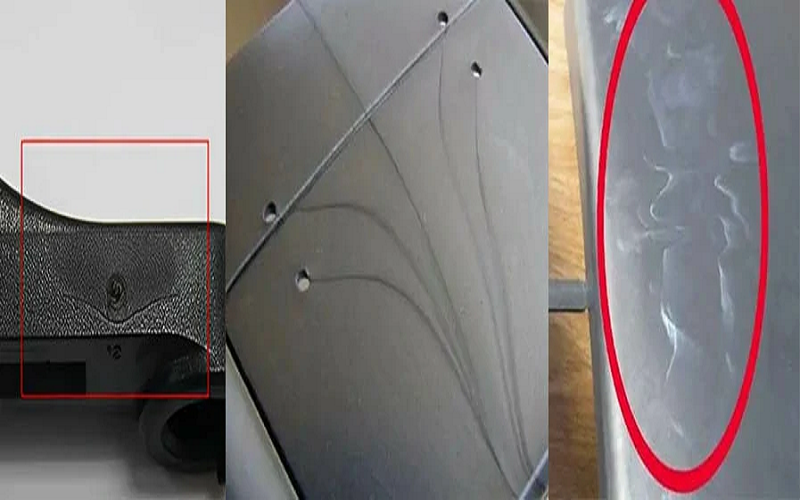
Flow marks can be categorized into the following types:
Wave Flow Marks
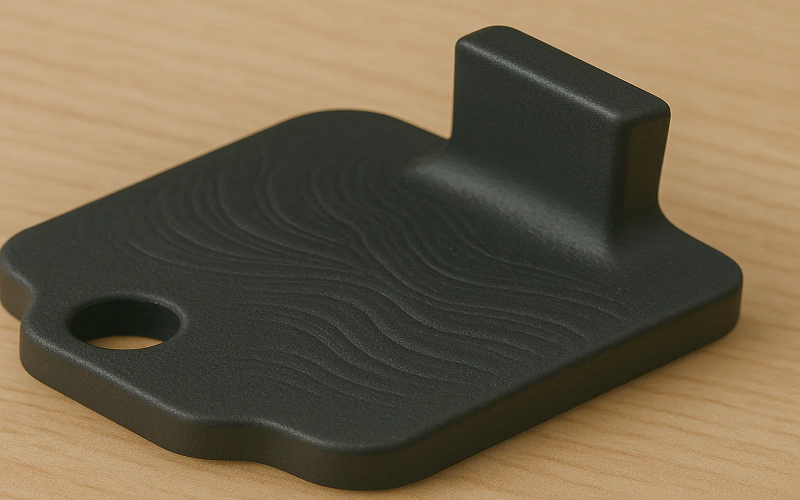
Wave flow marks appear as wavy streaks along the flow direction of the molten plastic. They are usually caused by the plastic cooling too quickly on the mold surface, leading to the surface layer solidifying while the inner layer is still flowing, resulting in uneven flow and cooling patterns.
This type of flow mark is commonly found on large, flat, or smooth surfaces such as electronic housings and automotive interior panels.
Jetting Flow Marks
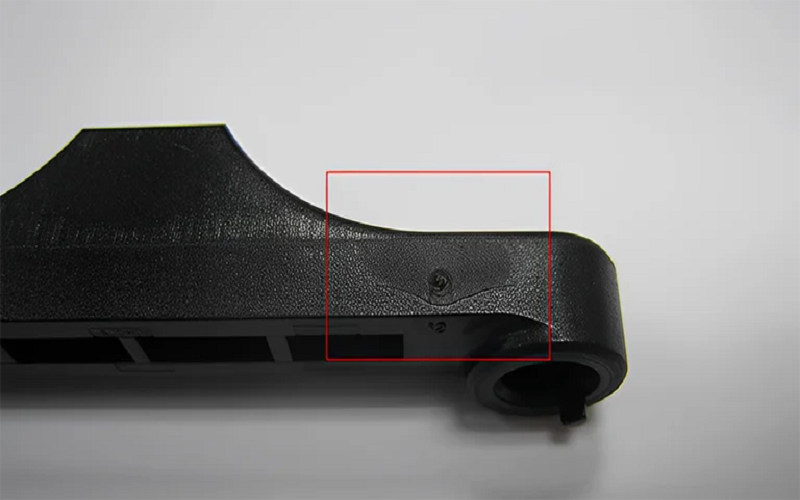
Jetting flow marks manifest as snake-like streaks, usually starting near the injection gate. They occur when molten plastic is injected into the mold at excessively high speeds, causing turbulence and preventing the plastic from spreading evenly.
This defect is often seen in parts with narrow gates followed by wide cavities, such as connectors and automotive bumpers.
Radiation Flow Marks
Radiation flow marks appear as ring-shaped or concentric circular patterns radiating outward from the injection gate. They are mainly caused by uneven cooling rates of different layers of plastic within the mold.
Cloud-Like Flow Marks
Cloud-like flow marks appear as blurry, mottled streaks or patches, often associated with material contamination or temperature fluctuations.
To address cloud-like flow marks caused by volatile gases, it is recommended to lower the mold and barrel temperatures, improve mold venting, reduce melt temperature and filling speed, appropriately enlarge the gate cross-section, and replace or reduce the amount of lubricant.
Periodic Bands
Periodic bands are alternating stripes perpendicular to the flow direction, often caused by flow instability or fluctuations in injection parameters.
Understanding the different types of flow marks helps in targeted adjustment of process parameters and mold design, effectively reducing defects and improving the surface quality of injection molded parts.
Conclusion
In summary, flow marks are injection molding defects caused by uneven flow and cooling of molten plastic within the mold cavity, and addressing these factors through careful control of the injection process, mold design, and material properties is key to minimizing their occurrence..
By combining these strategies—optimizing machine parameters, refining mold design, selecting suitable materials, and enhancing operator expertise—manufacturers can effectively fix flow lines and produce high-quality injection molded parts with superior surface finish and structural integrity.
Moreover, understanding the interplay between low speed injection, low temperature, and pressure settings is essential for troubleshooting persistent flow mark issues.