
Two-shot injection molding is a multi-material injection molding process, greatly enhances product functionality and aesthetics by enabling the injection of multiple materials or colors within the same mold.
Compared to traditional injection molding processes, two-shot molding can produce parts with more precise tolerances and significantly reduced scrap rates. It not only reduces the complexity of post-molding assembly but also effectively lowers production costs and improves production efficiency.
This article will provide an in-depth exploration of the two-shot injection molding process, its advantages, and its wide range of applications across various industries, helping readers fully understand the unique value and future potential of this manufacturing method.
What Is Two-Shot Injection Molding?
Two-shot injection molding, also known as dual shot or multi-shot molding , combines two different materials or colors into a single molded part within the same molding cycle through separate injection stages.
This manufacturing process involves two distinct injection phases: first, injecting the first plastic resin to form a substrate, then transferring it to a second mold cavity where the second material is injected.
The process uses a standard injection molding machine equipped with independent injection units, allowing precise control of injection speeds and pressures for each material. This setup facilitates chemical bonding between different material combinations, ensuring strong adhesion and high-quality multi-material parts.
Two-shot injection molding not only enhances the functionality and aesthetics of parts but also effectively reduces material waste and improves production efficiency.
It is an ideal choice for producing high-quality, multi-material components within the same tool and production cycle, especially in fields such as medical devices, automotive parts, and consumer electronics.
How Dose Two Shot Injection Molding Works?
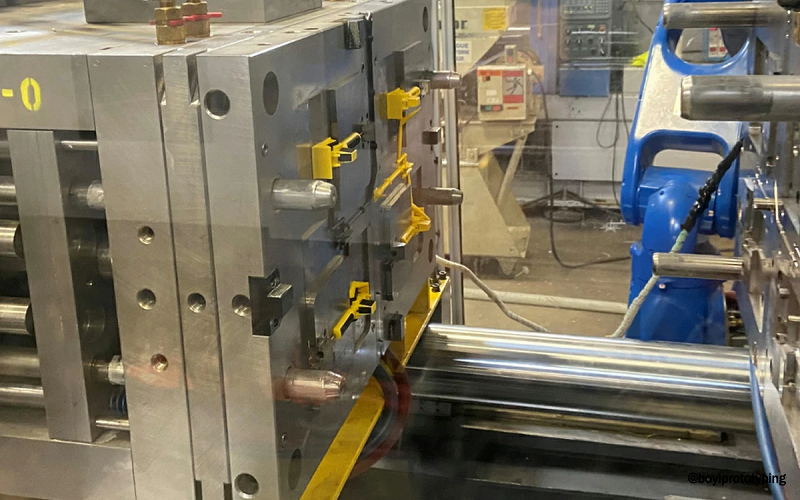
The double shot molding involves a specialized molding tool and machine equipped with multiple barrels and injection units, designed to handle two or more materials through two separate injection stages within a single production cycle to achieve maximum production efficiency.
First Injection: The process involves injecting the first material, typically a rigid plastic resin, into the mold chamber to form the substrate. This phase establishes the part’s rigid structure and base shape.
Mold Rotation : Once the first shot solidifies, the mold or substrate is rotated or shifted—often by a rotary plane or mold rotation mechanism—to align with the second injection station. This seamless transfer enables the second phase without removing the part from the tool.
Second Injection: The second material, which may be a softer material like thermoplastic elastomer (TPE), liquid silicone rubber, or other compatible soft materials, is injected around or over the substrate during this second injection stage.
Cooling and Bonding: After injection, the materials cool within the mold chamber, allowing a strong molecular bond to form between the two materials, ensuring consistent quality and durability.
Ejection: Finally, the fully molded multi-material part is ejected from the mold in a single machining cycle, ready for further processing or assembly.
This two shot process enables the production of complex geometries and multi-material parts with enhanced material properties, reducing assembly steps and waste, and is particularly advantageous for high volume production runs requiring consistent quality and intricate mold designs.
Critical Considerations Of Two Shot Injection Molding Process
Two-shot injection molding is precise and efficient for producing complex, multi-material parts. However, material compatibility and design precision are required for the positioning and bonding of materials.
Material Compatibility
Selecting compatible materials is crucial because the two plastic resins must chemically or mechanically bond during the molding process to ensure part integrity and durability. Materials that are chemically compatible prevent delamination and ensure a strong interface between layers.
Mold Design
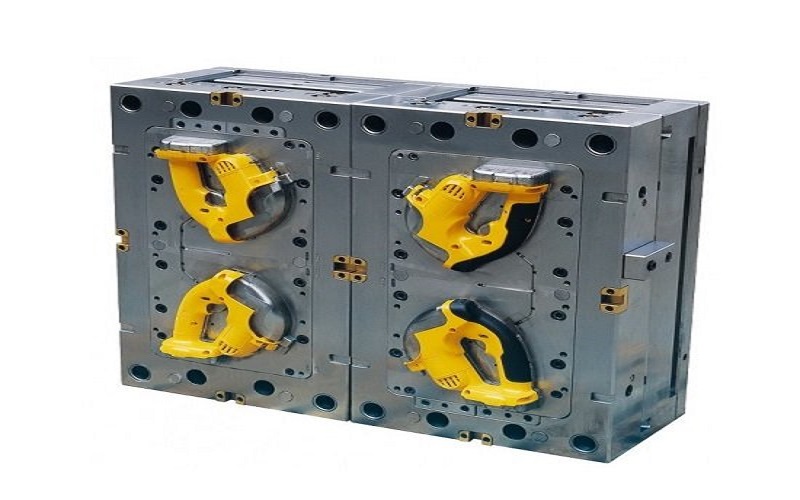
Another key consideration is the complexity of the mold design. Two shot mold must accommodate complex mold designs that enable the sequential injection of different materials without misalignment or defects.
This often involves sophisticated mechanisms such as mold rotation or indexing systems to transfer the part between injection stages seamlessly.
Equipment Requirements
Manufacturers must also consider the injection molding nozzle design and placement to optimize material flow and reduce cycle times. Proper nozzle design helps maintain consistent injection pressure and temperature, which are vital for achieving uniform material bonding.
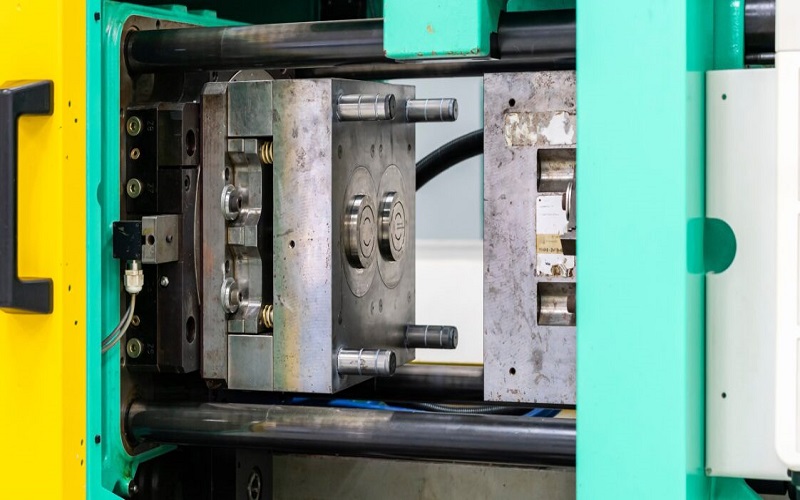
While two-shot injection molding offers many benefits, it typically involves higher initial costs due to the complexity of tooling and machinery required. Therefore, it is often more cost-effective for high volume production runs where the efficiency gains offset the upfront investment.
For projects with smaller quantities, alternative methods like overmolding two shot molding or traditional overmolding might be more suitable, as these processes can be less expensive to set up and allow greater flexibility with other material combinations.
Advantages Of Two Shot Injection Molding
Two-shot injection molding offers numerous advantages that make it a preferred manufacturing method for producing multi-material parts with enhanced functionality and aesthetics.
Improved Production Efficiency
The greatest advantage of two-shot injection molding lies in its ability to complete the production of multi-color or multi-material parts in a single molding cycle, eliminating the need for secondary molding, bonding, snap-fit assembly, or welding processes.
This technique significantly shortens the production cycle time, saving 30% to 60% of the molding cycle compared to multiple-step molding processes.
Enhanced Ergonomics & Aesthetics
By combining two materials in a single molding cycle, two-shot injection molding ensures a strong molecular bond between layers, resulting in parts with superior structural integrity and durability.
Two-shot injection molding results in higher part quality by minimizing these errors and alignment challenges during assembly, ensuring superior consistency and durability in the final parts.
Reduce Overall Costs
Two-shot injection molding is particularly efficient for high-volume production as it reduces labor and operational costs by completing the part in a single automated cycle, allowing for the production of complex multi-material parts.
In summary, two-shot injection molding combines enhanced product quality, design versatility, and production efficiency, making it an excellent choice for manufacturers seeking to produce advanced multi-material components with soft grips, improved functionality, and aesthetic appeal.
Applications Of Two-Shot Molding
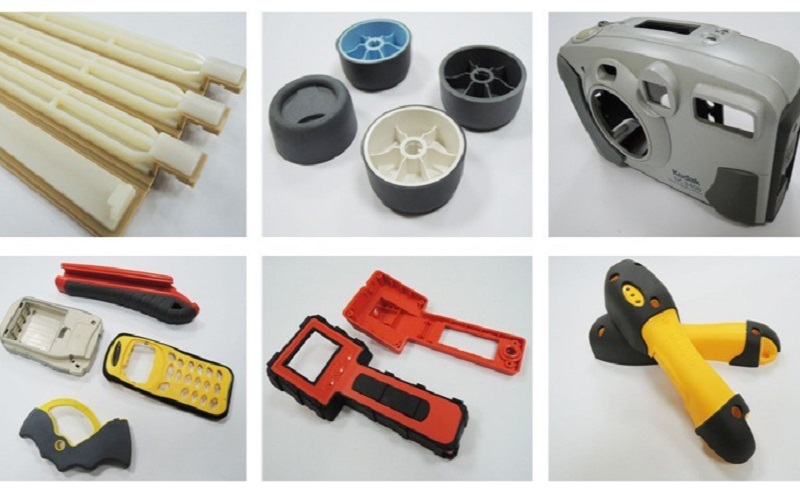
Two-shot injection molding technology is widely used across industries such as automotive, medical, and consumer electronics. Thanks to its excellent functionality and aesthetics, it has become the ideal choice for manufacturing complex multi-material products.
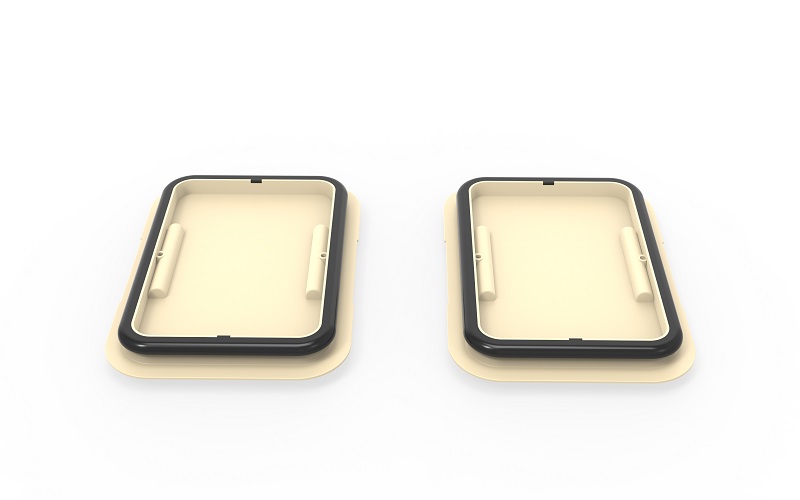
Products made using the two-shot injection molding process typically combine sturdy structural components with soft, ergonomically designed grips, greatly enhancing user comfort and product performance.
Automotive Industry
In the automotive industry, two-shot injection molding is extensively employed to produce multi-color buttons and soft-touch grips, which not only improve functionality but also enhance overall visual appeal and user experience.
Consumer Electronics
The consumer electronics sector leverages two-shot injection molding to create multi-material housings that skillfully blend different textures and colors, significantly elevating the product’s aesthetic and tactile qualities.
Medical Devices
Additionally, the medical device field benefits from two-shot injection molding by producing components with varied tactile properties and high durability, effectively ensuring user safety and comfort while meeting stringent industry standards.
Two-Shot Injection Molding vs Overmolding
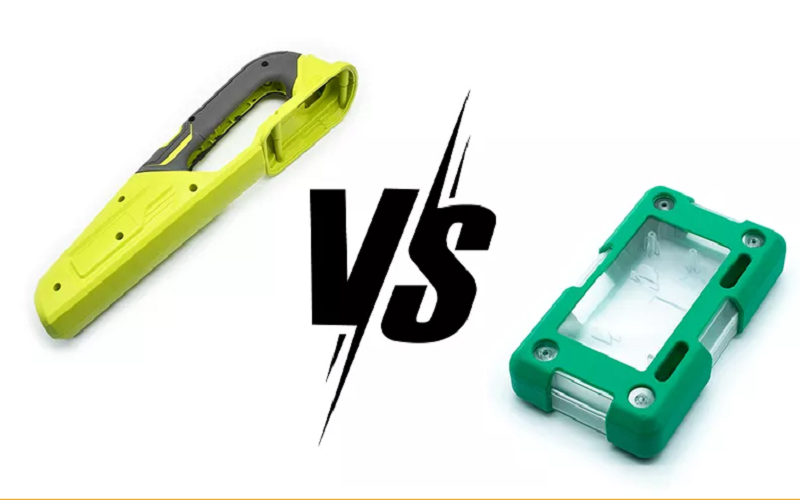
Two-shot injection molding and overmolding are both advanced manufacturing processes used to create multi-material or multi-color parts, but they differ significantly in their methods, costs, material compatibility, and ideal applications.
Process Differences
Two-shot injection molding involves molding two materials sequentially within the same machine cycle using a specialized mold that rotates or transfers the part between injection stages.
This results in a single, integrated component with a strong molecular bond between the materials. It requires compatible materials that can chemically adhere during the process, and the tooling is more complex and costly.
The overmolding process typically involves molding a secondary material over a pre-formed substrate, which may be plastic or even metal substrates.
This process is more flexible in terms of material combinations since the secondary material adheres mechanically rather than chemically, making it suitable for low volume production runs or prototyping where tooling costs and setup time need to be minimized.
Cost and Production Volume
In terms of cost,Two-shot injection molding is generally more cost-effective at high volumes due to its efficiency and speed, while overmolding can be more suitable for lower volumes or prototypes due to its simpler setup and lower initial costs.
Material Suitability
Two-shot molding demands materials that are chemically compatible to ensure a strong bond during the molding process. Overmolding allows more freedom in material selection since the secondary material only needs to adhere mechanically to the substrate, enabling combinations such as plastics over metal substrates.
In summary, two-shot injection molding excels in producing high-quality, multi-material parts at scale with integrated features and consistent performance, while overmolding offers greater flexibility and cost-effectiveness for smaller production volumes or parts requiring secondary material additions.
Comparison Table: Two-Shot Injection Molding vs Overmolding
Feature | Two-Shot Injection Molding | Overmolding |
|---|---|---|
Process | Sequential injection of two materials in one cycle with mold rotation or transfer | Secondary material molded over a pre-made substrate |
Material Compatibility | Requires chemically compatible materials for bonding | Allows mechanical or chemical bonding; more material flexibility including metal substrates |
Tooling Complexity | High; specialized molds with multiple cavities and mechanisms | Lower; uses standard molds with modifications for overmolding |
Initial Cost | Higher due to complex tooling and equipment | Lower tooling cost; simpler equipment |
Production Volume | Best for high volume production runs | Suitable for low to medium volume runs |
Applications | Multi-color, multi-material parts with tight tolerances in automotive, electronics, medical fields | Enhancing existing parts with added grip, cushioning, sealing; common in consumer goods and tools |
Advantages | High precision, strong material bond, reduced assembly, improved aesthetics | Greater material flexibility, lower upfront cost, easier prototyping |
Limitations | Higher upfront cost, limited material combinations | Longer production time, potential for weaker bonds |
Conclusion
In conclusion, two-shot injection molding stands out as a highly efficient and versatile manufacturing process, offering significant advantages in producing complex, multi-material parts with superior quality and reduced production costs.
Its ability to combine different materials or colors within a single molding cycle enhances product functionality and aesthetics, making it ideal for industries such as automotive, medical devices, and consumer electronics.
While the initial tooling investment is higher compared to overmolding, the long-term benefits in high-volume production runs are substantial.
Partnering with an experienced manufacturing partner who has extensive capabilities in two-shot molding is essential to maximize product quality and cost efficiency.
Therefore, FOWMOULD will be your top choice! As an industry-leading injection molding company, FOWMOULD possesses advanced multishot molding equipment and extensive process experience to meet the production demands of various complex products.
Choosing FOWMOULD means opting for efficient, precise, and innovative two-shot injection molding solutions that will help your products stand out in the market!