
In modern manufacturing, acrylic injection molding technology is highly favored for its high transparency, excellent mechanical properties, and outstanding weather resistance. By injecting molten acrylic resin into molds, it efficiently produces plastic products with complex shapes and superior optical performance.
Acrylic injection molding is widely used in fields such as medical devices, electronic products, and retail displays. Its lightweight and impact-resistant characteristics make it an ideal alternative to glass.
This article will delve into the acrylic injection molding process, key advantages, and its application prospects across various industries, helping readers gain a comprehensive understanding of this advanced manufacturing technology.
What Is Acrylic Injection Molding?
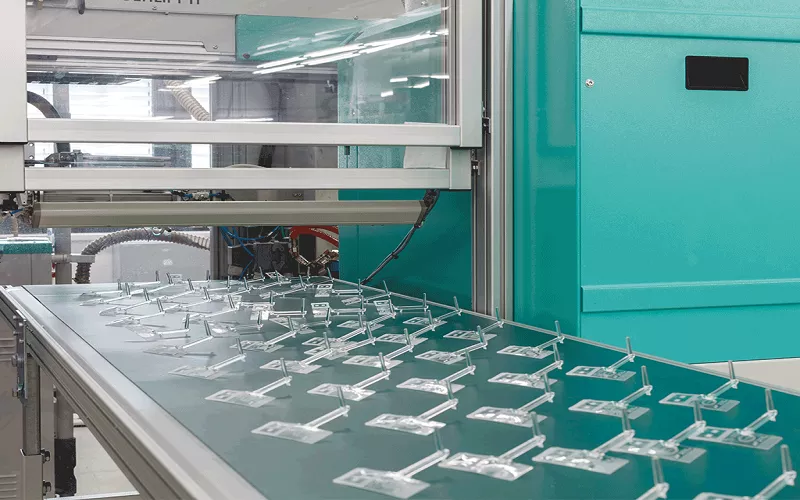
Acrylic injection molding is a manufacturing process that melts acrylic plastic (also known as polymethyl methacrylate, PMMA) and injects it into a custom mold cavity using an injection molding machine.
This process can produce injection molded acrylic parts with precise manufacturing tolerances and excellent dimensional stability. The molten acrylic material is injected into the mold under high pressure and high temperature, then cooled and solidified to form the final product.
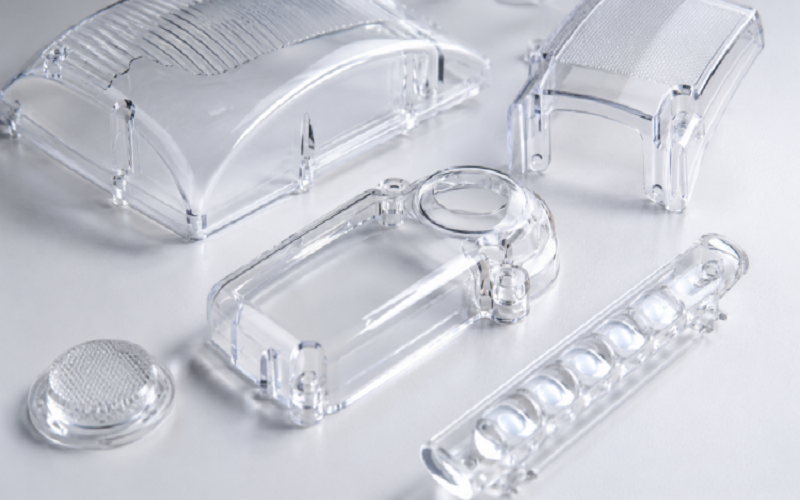
This technology is widely used to produce parts requiring extremely high optical clarity, such as display screens, lenses, light covers, and retail display holders. Acrylic material offers high light transmission, with a transmittance rate of up to 92%, making it an excellent glass substitute in optical applications.
Additionally, acrylic molding enables mass production of complex-shaped and dimensionally stable molded acrylic products at competitive prices.
In summary, acrylic’s ability to maintain high transparency while being molded into complex and intricate shapes makes it highly favored across various industries such as automotive, medical devices, consumer electronics, and retail displays.
Properties Of Acrylic Plastic
Acrylic plastic, scientifically known as polymethyl methacrylate, exhibits several unique properties that make it highly suitable for injection molding applications. These properties contribute to its widespread use in industries requiring clarity, durability, and precision.
Optical Properties
Acrylic is renowned for its exceptional optical clarity and transparency. It allows light to pass through with minimal distortion, boasting a light transmission rate of up to 92%.
This high optical transparency is superior to many other plastics, making acrylic an excellent choice for applications such as lenses, TV screens, and sign holders retail displays. Its refractive index ranges between 1.48 and 1.50, contributing to its excellent clarity and brilliance.
Mechanical Properties
Acrylic is a lightweight material with a density of approximately 1.17 g/cm³, making it significantly lighter than glass while maintaining comparable strength. It has a tensile strength ranging from 8,000 to 11,000 psi and offers good flexural strength and modulus, providing rigidity and resistance to bending forces.
However, acrylic is more brittle than some other plastics and can be prone to cracking under stress concentrations, especially near sharp corners. Despite this brittleness, it exhibits notable impact resistance and is shatter-resistant, offering safety advantages over glass.
Thermal Properties
The glass transition temperature of acrylic ranges around 100°C, with a melting temperature between 130°C and 140°C. These thermal characteristics define the processing window for acrylic injection molding.
Acrylic’s relatively low melting temperature compared to other plastics allows for energy-efficient molding processes. However, care must be taken to control injection pressure and cooling time to avoid surface defects and internal stresses that may affect optical properties.
Chemical Resistance
Acrylic exhibits good resistance to diluted acids, alkalis, and various aqueous solutions, making it suitable for applications exposed to such environments.
However, it is less resistant to organic solvents and may degrade if exposed to certain chemicals. Its water absorption is low, which helps maintain dimensional stability and clarity in outdoor environments.
Weather Resistance
One of acrylic’s key advantages is its excellent resistance to UV radiation and weathering. Unlike many other plastics, acrylic does not yellow or degrade significantly when exposed to sunlight, making it ideal for outdoor applications such as sign holders retail displays and skylights.
This UV resistance ensures the longevity and sustained optical clarity of acrylic products used in harsh environmental conditions.
Processing Characteristics
Due to its transparency, acrylic molded parts are susceptible to visible defects such as bubbles and imperfections. Acrylic exhibits a low shrinkage rate, typically between 0.4% and 0.61%.
It offers good melt flow characteristics, enabling the molding of complex shapes and thin-walled components. However, acrylic is relatively brittle and has lower impact strength compared to polycarbonate (PC).
In conclusion, acrylic’s combination of exceptional optical clarity, lightweight material properties, chemical and weather resistance, and mechanical strength make it a versatile and excellent alternative to glass and other plastics for a wide range of injection molded products.
|
Performance Parameter |
Description |
Range/Characteristics |
|---|---|---|
|
Optical Properties |
Light Transmittance |
90.3% – 92% |
|
|
Refractive Index |
1.48 – 1.50 |
|
Mechanical Properties |
Tensile Strength |
8000 – 11000 psi |
|
|
Density |
1.17 g/cm³ |
|
|
Impact Strength |
Good, shatter-resistant |
|
Thermal Properties |
Glass Transition Temperature |
Approximately 100°C |
|
|
Melting Point |
130°C – 140°C |
|
Chemical Properties |
Chemical Resistance |
Resistant to diluted acids, alkalis, and various aqueous solutions |
|
|
Organic Solvent Resistance |
May be damaged by certain solvents |
|
Environmental Properties |
UV and Weather Resistance |
Excellent, resistant to yellowing |
|
Processing Properties |
Shrinkage Rate |
0.4% – 0.61% |
Acrylic Injection Molding Process Overview
Acrylic injection molding process involves several critical steps to transform raw acrylic resin into high-quality, precision-engineered parts. Understanding each phase of the process helps manufacturers optimize production efficiency and ensure the final product meets stringent quality requirements.
1.Material Preparation
The process begins with selecting high-quality acrylic resin pellets, since acrylic is hygroscopic, it must be thoroughly dried before processing to remove moisture that can cause defects such as bubbles or cloudiness in the molded parts. Standard drying conditions involve heating the pellets at around 82°C (180°F) for approximately 4 hours.
2.Melting & Plasticizing
Once dried, the acrylic resin pellets are fed into the injection molding machine, where they are heated to a precise melting temperature typically between 130°C and 140°C. This controlled heating transforms the resin into a viscous molten state suitable for injection.
3.Injection Of Molten Acrylic
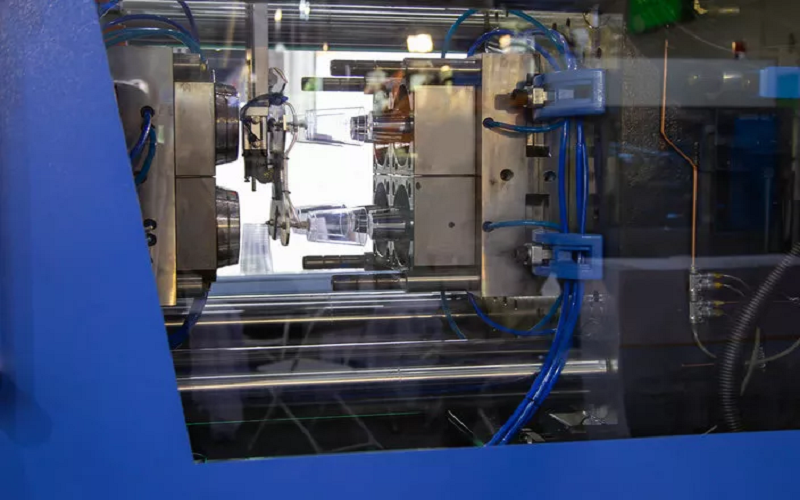
The molten acrylic is then injected under high pressure into a precisely engineered mold cavity. Injection pressure is carefully controlled to ensure complete filling of the mold, especially for complex geometries and thin wall sections.
4.Cooling & Solidification
After injection, the acrylic begins to cool and solidify within the mold. The cooling time is optimized to balance production speed and part quality, ensuring dimensional stability and minimizing residual stresses. Once solidified, the mold opens, and ejector pins push the finished part out without causing damage.
5. Mold Opening & Ejection
After cooling is complete, the mold opens, and the ejection mechanism (such as ejector pins or ejector plates) smoothly pushes the molded part out of the cavity.
Since PMMA material is relatively brittle, special care must be taken during ejection to avoid stress concentration that could cause cracking or surface damage.
6. Post-Processing And Finishing
After ejection, parts may undergo additional finishing processes such as trimming, polishing, or coating to enhance optical clarity and surface smoothness. Rigorous quality control checks assess dimensional accuracy, surface defects, and optical properties to ensure the parts meet required specifications.
By carefully controlling these process parameters and leveraging the unique properties of acrylic material, injection molding manufacturers can produce clear, durable, and dimensionally stable injection molded parts suitable for a wide range of applications.
Design Considerations Of Acrylic Injection Molding
Designing parts for acrylic injection molding requires careful attention to several critical factors to optimize manufacturability, part performance, and cost-effectiveness. Acrylic has distinct material properties that influence mold design, wall thickness, and dimensional tolerances.
Wall Thickness
Recommended wall thickness typically ranges from 0.025 to 0.150 inches (0.635 to 3.81 mm). Thicker sections increase cooling time and risk of shrinkage-related defects, while overly thin walls can cause incomplete filling or weak parts.
Mold Design
Mold design must accommodate acrylic’s relatively high viscosity and sensitivity to thermal degradation. Using high chrome tool steel for mold construction ensures durability and precision.
Effective cooling channels and temperature control are critical to achieving uniform cooling and reducing residual stresses. The mold should also incorporate appropriate venting to prevent gas traps and bubbles.
Draft Angle
Acrylic parts require a draft angle between 0.5° and 1° to facilitate easy ejection from the mold without damage. For optically clear parts, a slightly larger draft may be necessary to maintain surface finish quality.
Radii and Corners
Sharp corners should be avoided to reduce stress concentrations that can lead to cracking. A minimum radius equal to 25% of the wall thickness is recommended, with larger radii (up to 60%) preferred for enhanced strength.
Tolerances
Commercial tolerances for acrylic injection molded parts under 160 mm typically range from 0.1 to 0.325 mm. Fine tolerances of 0.045 to 0.145 mm can be achieved for smaller parts (100 mm or less) with precise mold making and process control.
Shrinkage
Acrylic exhibits a low shrinkage rate between 0.4% and 0.61%, but mold design must account for this to ensure dimensional accuracy. Shrinkage can vary based on wall thickness, injection pressure, and cooling rate.
Injection Pressure and Speed
Due to acrylic’s viscosity, higher injection pressures are often required to fill complex or thin-walled molds completely. Injection speed must be optimized to avoid defects such as burn marks or weld lines caused by too rapid or slow filling.
In conclusion, effective mold design and part engineering tailored to acrylic’s unique properties are vital for successful injection molding, enabling the production of clear, durable, and dimensionally precise components for a wide range of industries.
Benefits Of Acrylic Injection Molding
Acrylic injection molding offers several key benefits that make it a popular choice for manufacturing clear, durable, and complex plastic parts. These advantages contribute to its widespread use across industries such as automotive, medical, electronics, and retail.
Exceptional Optical Clarity
Acrylic provides outstanding optical clarity with a high light transmission rate of up to 92%, allowing light to pass through with minimal distortion as light passes.
This makes it an excellent alternative to glass for applications requiring transparency, such as lenses, display screens, and light covers. The clarity ensures that products maintain their visual appeal and functionality
High Impact and Weather Resistance
Despite being lightweight, acrylic exhibits good impact resistance and is shatter-resistant, providing safety advantages over glass. It also has excellent weather resistance and UV stability, allowing it to withstand prolonged exposure to sunlight and harsh environmental conditions without yellowing or degrading.
Design Flexibility and Precision
Injection molding acrylic enables the production of parts in various shapes and sizes with precise dimensional control. This flexibility allows manufacturers to create complex geometries and intricate designs that meet specific application requirements while maintaining tight tolerances.
Energy Efficiency and Cost-Effectiveness
Acrylic injection molding requires relatively low processing temperatures compared to other plastics, leading to reduced energy consumption and faster cycle times. This efficiency translates into lower production costs, making it suitable for both prototyping and mass production.
Lightweight and Recyclable
Acrylic is significantly lighter than glass, reducing shipping and handling costs while maintaining strength and durability. Additionally, acrylic is 100% recyclable, supporting environmental sustainability and reducing waste.
In summary, acrylic injection molding offers several advantages, including exceptional clarity, durability, design versatility, and environmental benefits, making it a top choice for manufacturers seeking high-quality transparent plastic components.
Applications Of Injection Molded Acrylic Parts
Injection molded acrylic parts are widely used across a variety of industries due to their unique combination of optical clarity, durability, and design flexibility. The material’s excellent properties make it suitable for applications that demand transparency, weather resistance, and precision.
Medical Devices
Acrylic is extensively used in the medical field for components such as syringes, IV connectors, incubator windows, and diagnostic equipment housings. Its biocompatibility, chemical resistance, and clarity allow healthcare professionals to monitor fluids and biological processes effectively while ensuring patient safety.
Consumer Electronics
In consumer electronics, acrylic injection molding produces clear and durable components like smartphone screens, LED light covers, and protective casings. Its scratch resistance and ability to be molded into complex shapes enhance both the aesthetic appeal and functionality of electronic devices.
Automotive Industry
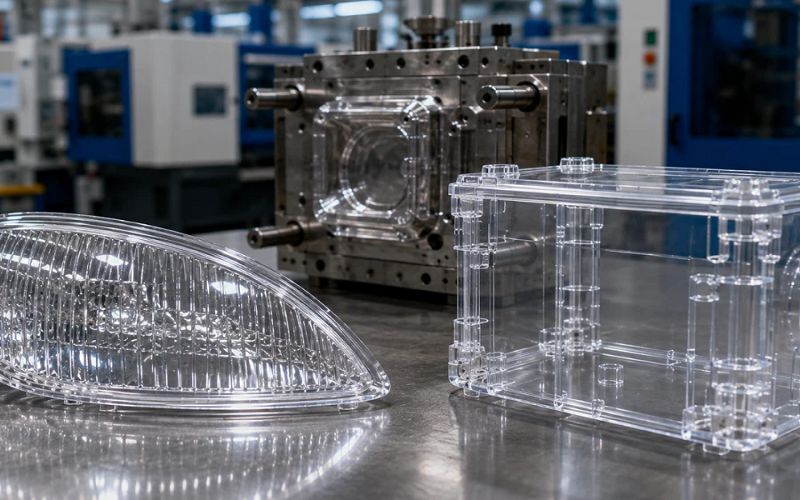
Acrylic parts are used for automotive lighting, instrument panels, and decorative trims. The material’s impact resistance and weatherability ensure these components withstand harsh environmental conditions while maintaining optical clarity and durability.
Retail Displays and Signage
The high transparency and UV resistance of acrylic make it ideal for retail displays, sign holders, and brochure holders. These applications benefit from acrylic’s ability to maintain clarity and resist yellowing over time, even when exposed to sunlight.
Other Industrial Applications
Acrylic injection molded parts are widely used in architecture for skylights, windows, and decorative panels due to their lightweight, weather resistance, and strength, making them a great glass alternative.
They are also ideal for submarine windows and large aquarium tanks because of their clarity, flexural modulus, and seawater resistance. Additionally, acrylic is preferred for lighting fixtures, providing excellent light diffusion and protection for internal components.
In conclusion, the versatility of injection molded acrylic parts combined with their required properties make them indispensable in numerous sectors. Their ability to be manufactured with precise shot size control and molded into complex geometries further expands their range of applications.
Conclusion
Acrylic injection molding is a highly efficient and versatile manufacturing process that produces clear, durable, and dimensionally precise plastic parts.
With its exceptional optical clarity, excellent weather resistance, and strong mechanical properties, acrylic serves as an ideal alternative to glass in many applications.
Its ability to be molded into complex shapes with tight tolerances makes it suitable for diverse industries such as medical devices, consumer electronics, automotive, and retail displays.
Moreover, acrylic’s lightweight nature and recyclability contribute to environmental sustainability and cost-effectiveness.
By understanding the unique properties and design considerations of acrylic injection molding, manufacturers can optimize production quality and meet the growing demand for high-performance transparent plastic components.